
The Patent Court’s 11 November 2026 judgment in case 2026Heo10173 concerned ÉCLAT DE and an earlier Korean word mark. The decision illustrates why a foreign-language logo must be assessed as Korean customers are likely to encounter and pronounce it.
The application and the earlier mark
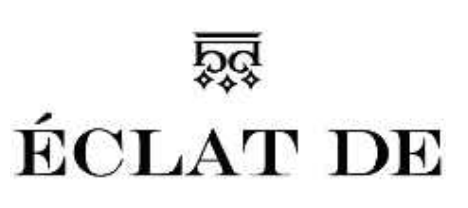
The application, filed on 11 April 2022, placed a device above ÉCLAT DE and designated Class 44 services including hospitals, dermatology, skin care, laser skin treatment and skin-care advice. The earlier mark, No. 2082457, combined Ekkeulladu with Korean words meaning “confidence in your skin”; it was filed in January 2022 and registered in September 2023. After the examiner and tribunal maintained the refusal, the applicant sought annulment.

Identifying the distinctive elements
The device and ÉCLAT DE were visually separated and did not create an inseparable new meaning. Evidence did not establish that Korean consumers would readily understand ÉCLAT’s French meaning. Even if understood as alluding to radiance or vitality, the phrase ending in DE did not directly describe the designated services. The 89 cited registrations generally contained different added words or modified expressions, not the same phrase. In the earlier mark, the skin-confidence wording weakly suggested the services’ purpose or effect, leaving Ekkeulladu as the likely short name.
Why the pronunciations were close
Actual Korean portal usage supported reading ÉCLAT DE as “e-kkeul-la-deu”. Compared with “e-kkeul-la-du”, both expressions had four Korean syllables, the same first three syllables and the same initial consonant in the final syllable. The final vowels were close in articulation. Although Roman and Korean lettering looked different and the invented expressions offered no reliable conceptual comparison, their sound was sufficiently similar to create a risk of confusion.
The services had to be compared in context
Hospitals, dermatology and skin-care services overlapped directly or shared relevant content, places of provision and customers. The reasoning was not simply that both specifications fell within Class 44. Nor did uses of ÉCLAT for perfumes or cosmetics establish weak distinctiveness for the medical services at issue: providers, outlets and customers could differ. The court applied Article 34(1)(7) of the Korean Trademark Act and dismissed the annulment action, leaving the refusal in place.
A practical clearance approach
Search the logo, foreign spelling and plausible Korean transliterations together. A changed final vowel, spacing or script may make little difference in spoken enquiries or telephone bookings. Distinctiveness must be supported for the actual phrase and services, not inferred from scattered registrations sharing one word. Service similarity likewise calls for evidence of what is supplied, where and to whom.
The original figure labels and forms are preserved; the text explains the source material.