
Korea’s Patent Court dismissed the challenge in case 2026Heo10108 on 12 November 2026. Although the shoe used familiar upper, lace and sole features, the court assessed their specific arrangement rather than treating a collection of known parts as proof of easy creation.
The sports-shoe registration and invalidity challenge
Design No. 1300944 for a sports shoe was filed on 9 December 2024 and registered on 28 March 2025. The challenger contested it on 21 July 2025, relying on Article 33(2) of the Korean Design Protection Act. The tribunal rejected invalidity on 27 February 2026 in proceeding 2025Dang2217. The subsequent action argued that an earlier Le Mouton shoe, alone or combined with stitching and sole features from four other designs, made the registration readily creatable.
Familiar features did not decide the comparison
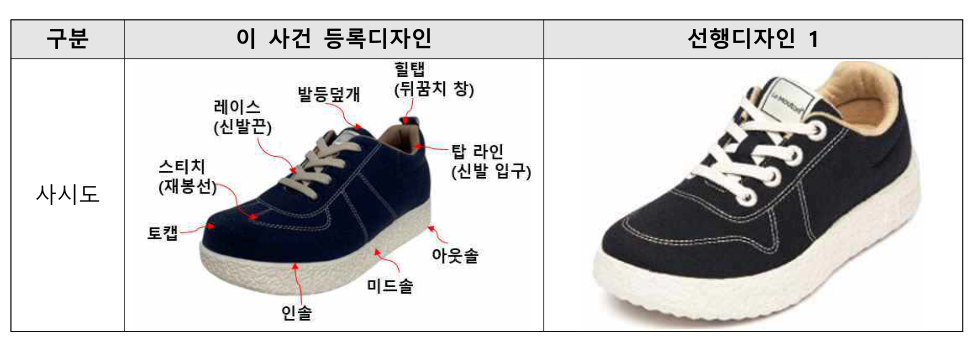
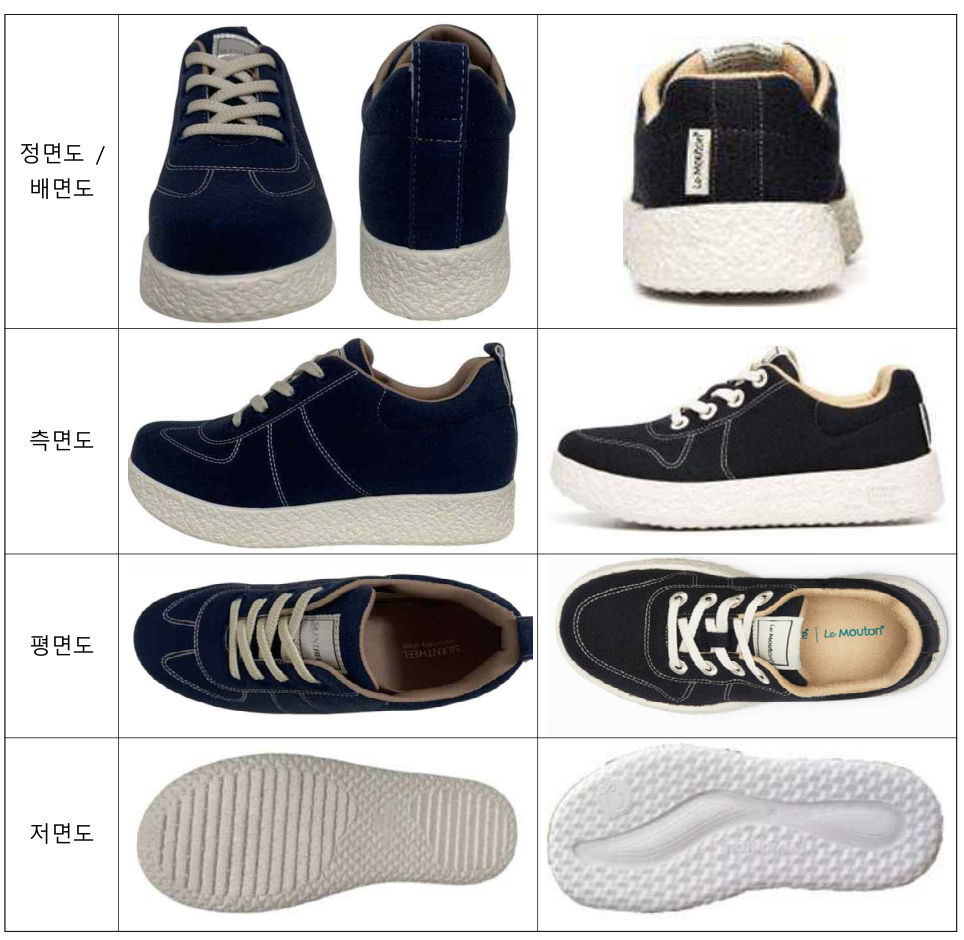
Both shoes had a one-piece upper, stitching around the instep and sides, four round lace eyelets on each side, a tongue and a crepe sole raised slightly at the toe and heel. The fine irregular sole texture and basic arrangements were longstanding or functional. They therefore carried limited weight in assessing visual similarity. The drawings compare perspectives and front, rear, side, top and bottom views; the specific proportions and seam layout remained important to the whole impression.
The seams and heel created a different appearance
In the registered design, two seams enclosed the instep seam and formed ear-like areas when viewed from above. Two side curves had different inclinations, with the rear curve steeper, producing a more detailed, forward-moving and slender impression. The earlier shoe had a simpler oval instep seam and one side curve. A rectangular heel tab projecting above the opening also differed from the earlier label, as did upper proportions and the heel-side slope of the sole.
The outsole was visually significant too
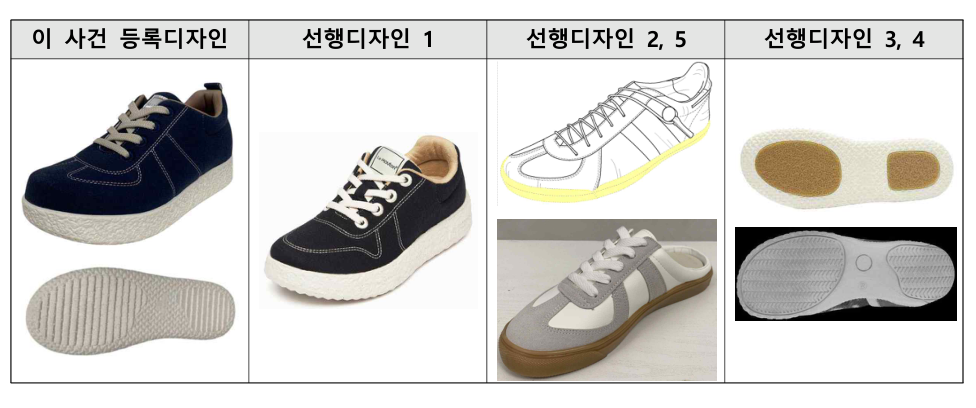
The registered outsole had oval forefoot and heel grip pads, a narrow waist and regularly arranged elongated rectangular grooves. The earlier design used a different central brand area, flowing grooves and circular detail. Other cited designs disclosed related patterns or pads, but not the same proportions, curvature and internal layout. Grip is functional, yet many patterns can serve that purpose, and buyers inspect the underside. Altering its pattern was not automatically a merely technical change.
Why the proposed combinations were insufficient
Easy creation requires attention to the relationship between features and the overall appearance, not only proof that each feature was known. The challenger combined design 1 with stitching from design 2 or 5, a sole pattern from design 3 and pads from design 4. Those sources differed in seam angles and spacing, pad proportions, curvature and pattern. Additional changes, including the heel tab, were still required. Given their combined aesthetic effect, the court did not regard the result as a routine technical or commercial variation.
Preparing a design comparison
Explain seam angles, spacing and connections, pad geometry, heel details and upper-to-sole proportions together. An invalidity argument must show why a designer would readily arrive at the actual final configuration, rather than assemble a catalogue of analogous features. Conversely, functionality alone does not eliminate visual choices. The court found no easy creation from design 1 alone or the proposed combinations and left the tribunal’s rejection of invalidity intact.
The original figure labels and forms are preserved; the text explains the source material.