

Does design comparison stop at the exposed front of a socket fitted into furniture? In case 2026Heo10255, decided on 11 November 2026, Korea’s Patent Court considered the registered article as a whole and the way it is seen in trade.
The registered and earlier designs
Design No. 1289200, filed on 17 October 2024 and registered that December, covered a furniture-mounted recessed socket. The challenge relied on design No. 30-913932, published in 2017. The tribunal rejected invalidity, considering the appearance different despite the same function. In comparing the drawings, the court aligned the actual plug-facing front and the rear, rather than treating inconsistent view labels as a physical difference.
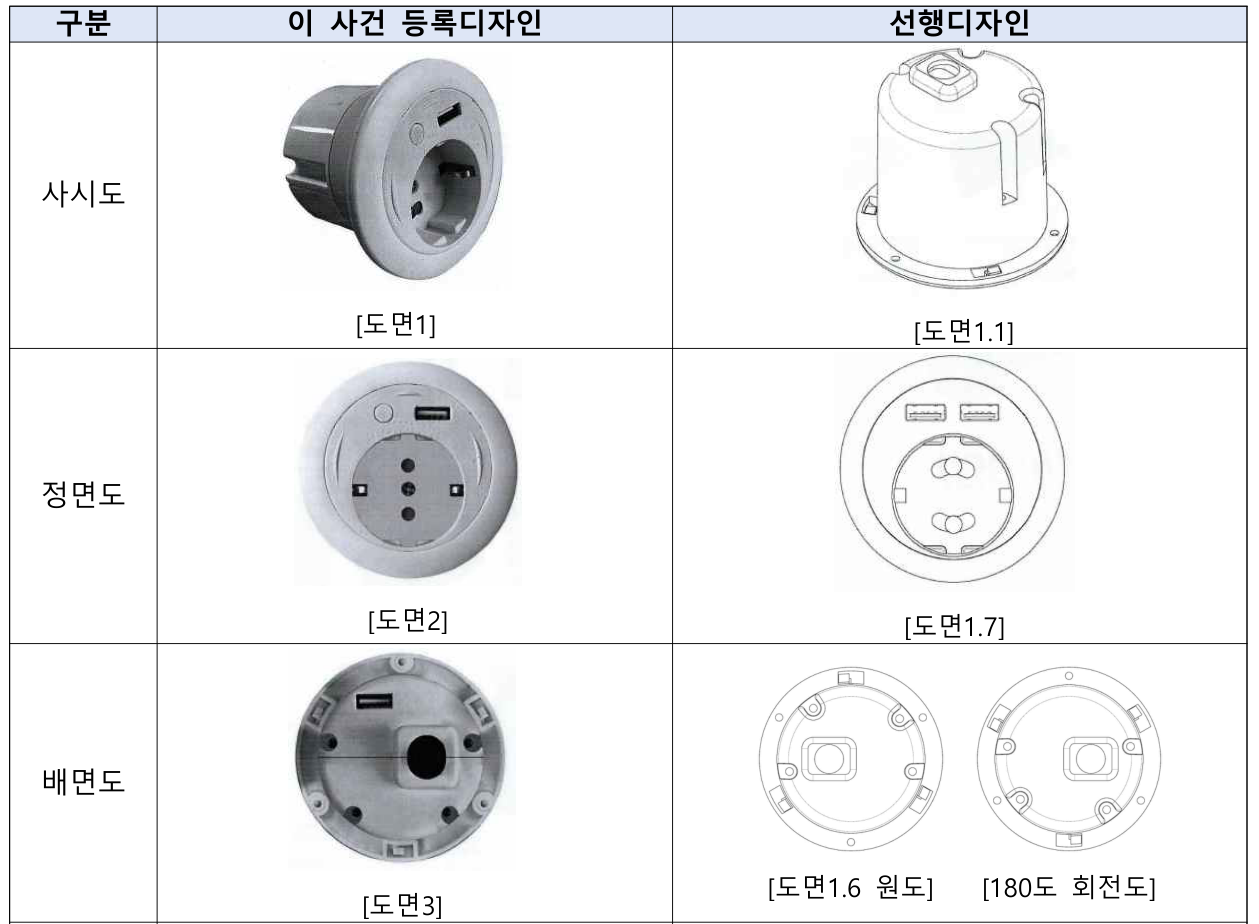
The shared configuration
Both designs combined a cylindrical body with a wider circular flange. A large circular plug opening sat below the centre, with two smaller shapes above it. Four elongated slots ran from the rear towards the body’s middle. The rear carried an off-centre rectangular projection with a circular opening. Three circular screw holes alternated with three rectangular fastening openings around the flange. The common impression came from this specific arrangement, not merely from the presence of ordinary socket components.
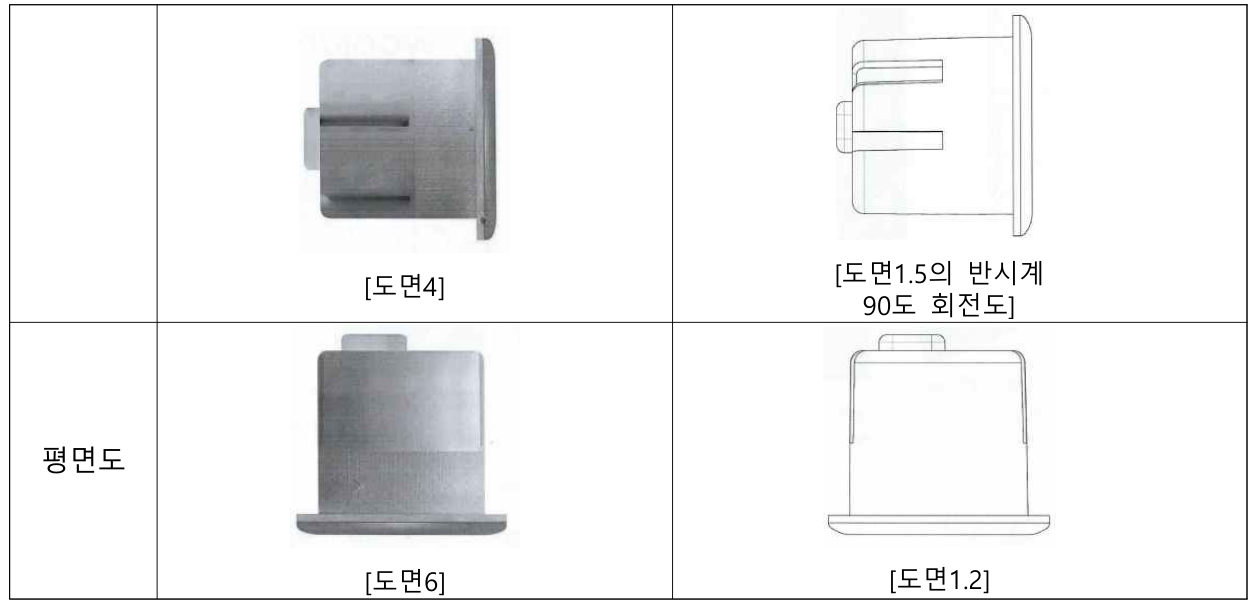
Why the differences did not change the result
The registered design had a power button and one USB port on the front, while the earlier design had two USB ports. A thin crescent-shaped ridge, rear USB details, surface texture and the ends or positions of slots also differed. The court considered those variations together but found that they did not overcome the shared overall visual impression. The comparative figures allow the front, rear and side details to be read in the same physical orientation.
Visibility and function were not automatic exclusions
The registration covered the whole article, not a partial design limited to its front. Customers can see the sides and rear when selecting or purchasing the socket, even if furniture later conceals them. Features dictated indispensably by function may carry less weight, but a functional connection alone is insufficient when alternative shapes are available. No evidence established that the precise slots, projection and hole arrangement were unavoidable. Under Article 33(1)(3) of the Korean Design Protection Act, the court found similarity to the earlier published design and annulled the rejection of invalidity.
What designers and litigants should document
Collect views of the product both installed and as sold, including its sides and rear. A functionality argument should identify genuine constraints, standards or compatibility requirements and address alternative shapes. At the filing stage, consider whether protection should target the entire article or a properly defined partial design. The later comparison must follow the design actually registered, not a narrower commercial emphasis adopted during the dispute.
The original figure labels and forms are preserved; the text explains the source material.