
In case 2025Na10257, decided on 26 August 2026, Korea’s Patent Court awarded KRW 16,878,483 plus delay interest but rejected the requested injunction and destruction of products. The outcome turned on which right existed when the defendant acted, and whose loss the claimant was pursuing.
The tyre licence and the gap before registration
B owned the registered tyre design and was the claimant company’s representative and controlling shareholder. On 1 November 2022, B agreed to grant the company exclusive use throughout Korea. The exclusive licence was not registered until 12 December 2023.
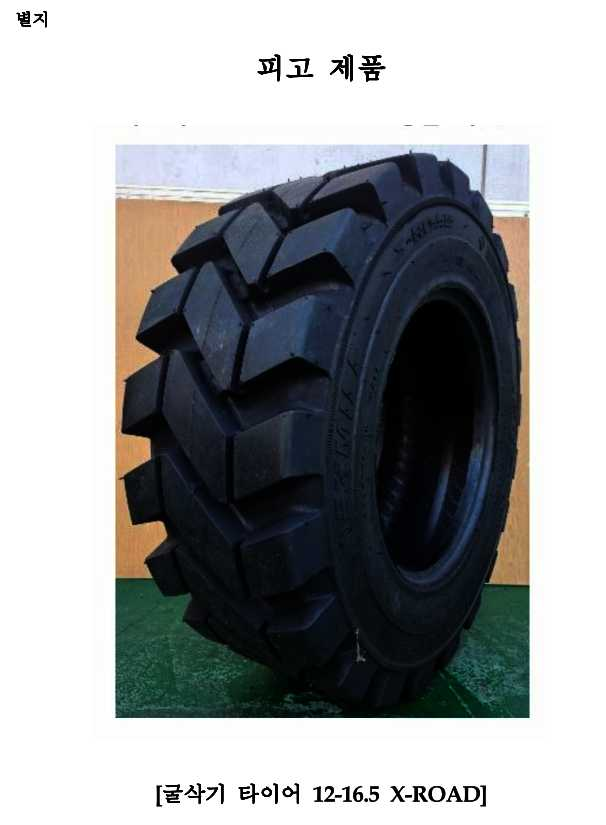
The defendant imported and sold excavator tyres falling within the registered design’s scope. It received a warning on 14 August 2023, stopped importing after that warning and ceased sales on 5 September 2023. All of those sales therefore preceded registration of the claimant’s exclusive licence. The source photograph identifies the defendant’s tyre as 12-16.5 X-ROAD.
On appeal, the company separated three claims: damages assigned by B for infringement of B’s design right; damages for interference with the company’s own contractual licensing interest; and an injunction and destruction order based on the subsequently registered exclusive licence.
Contractual exclusivity did not create the registered right
Under Korean design law, a statutory exclusive licence takes effect upon registration. Describing an agreement as an exclusive-licence agreement does not confer that registered right retrospectively. Its registration date must be distinguished from the date on which the parties signed their contract.
The unregistered agreement nevertheless had contractual effect. The court found that B and the company intended the company alone to exploit the design. From 1 November 2022 until registration, the company consequently held an ordinary licence carrying contractual exclusivity, often described as an exclusive non-exclusive licence in Korean licensing terminology.
That interest bound the licensor contractually, including through the promise not to license others within the agreed scope. It was not, by itself, a right excluding every third party from working the design. This distinction explained why the company could establish a civil wrong without receiving every statutory remedy available to a design owner or registered exclusive licensee.
Why sales after the warning were a civil wrong
Interference with another person’s contractual claim does not automatically amount to a tort. The court considered the interest affected, the manner of interference, the defendant’s knowledge and the balance between legitimate competition and protection of the creditor’s interest. Knowing, unlawful interference can cross that threshold.
The warning enclosed the design register, which named B as the owner, and identified B as the claimant’s representative. The accompanying material alerted the defendant to B’s ownership, the possibility of a licence to the company and the possibility that its tyres fell within the protected scope.
The defendant nevertheless continued selling from 15 August to 5 September 2023. On these particular facts, the court found knowing interference with the claimant’s legally protected contractual licensing interest. The finding depended on the contents and attachments of the warning and the subsequent conduct, not simply on the dispatch of a demand letter.
B’s assigned damages claim retained its own legal basis
The company also acquired B’s claim for damage to the design right. Assignment transfers the claim; it does not turn the assignor’s loss into the assignee’s own licensing loss. The court therefore assessed this part by reference to B’s position as the registered design owner.
For the period from 1 November 2022 to 14 August 2023, sales of KRW 99,750,000 multiplied by a profit margin of 14.49% produced KRW 14,453,775. Article 115(3) of the Design Protection Act permitted the infringer’s profit to be presumed to represent the design owner’s loss.
B’s lack of production in B’s personal name did not establish an absence of loss. B had licensed the company that B managed and controlled, and the company actually produced and sold tyres embodying the design. That commercial use supported a real competitive relationship and a likelihood of lost economic benefit. The conclusion was fact-specific, not a rule that every controlling shareholder necessarily suffers compensable loss.
The licence holder could not use the special damages rules
For its own contractual-interest claim, the company sought both the infringer-profit presumption and enhanced damages of up to three times the loss under the former Article 115(7). The threefold ceiling concerned the historical provision at issue in this dispute, not a statement of the current ceiling for all Korean design cases.
The court rejected both direct and analogous application. The provisions were special rules for infringement of a design right or a registered exclusive licence. An ordinary licence with contractual exclusivity had a different legal nature and effect, and the statutory wording confined those special remedies to the specified right holders.
This did not eliminate the company’s tort claim. It separated the existence of compensable injury from the availability of a particular statutory method of measuring or increasing damages. The company still had to establish and quantify its own loss through the ordinary civil-law framework.
Why KRW 1,243,242 was assessed but KRW 2,424,708 remained
The court found injury but considered its precise amount exceptionally difficult to prove by the nature of the case. Under Article 202-2 of the Civil Procedure Act, it assessed reasonable damages from the circumstances and evidence. Post-warning sales of KRW 8,580,000 and the 14.49% margin supported an assessment of KRW 1,243,242.
Only the claimant had appealed. The appellate court could not make the first-instance result less favourable to that sole appellant, so it retained the earlier award of KRW 2,424,708 for this part. That procedural constraint, rather than application of the design-law profit presumption to an ordinary licensee, explains the amount maintained.
Adding the assigned claim of KRW 14,453,775 produced the total of KRW 16,878,483. Keeping the two periods and legal bases separate is essential: the design owner’s assigned claim and the company’s own contractual-interest claim were neither interchangeable nor valued in the same way.
Compensation for past conduct did not justify a future injunction
The need for an injunction under Article 113 was assessed at the close of the factual hearing. The defendant had stopped importing and selling about three months before the exclusive licence was registered. There was no evidence of resumed activity through that hearing or a concrete, realistic threat of future infringement of the registered licence.
Contesting the legal character of past sales in the litigation was not, by itself, evidence of an intention to resume them. The court therefore rejected the injunction and product-destruction claims based on the registered exclusive licence, while preserving compensation on the separate grounds explained above.
A practical review should align the contract, registration, warning and sales chronology, identify whose damages claim is being enforced and distinguish past injury from future risk. This decision gave contractual exclusivity meaningful protection, while declining to treat it as identical to the registered statutory right.
The original figure labels and forms are preserved; the text explains the source material.