
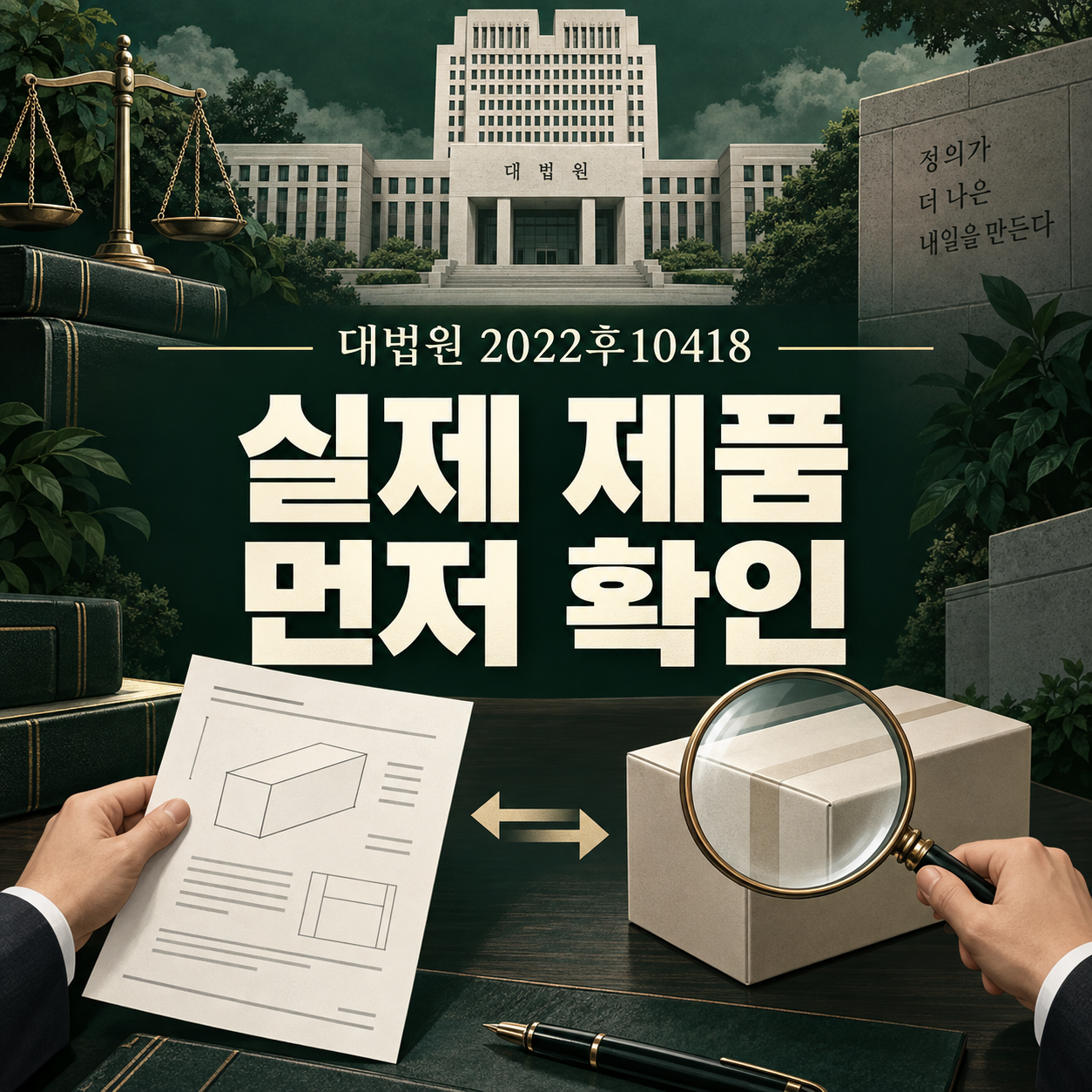
Three designs must be kept separate
In 2022Hu10418, decided on 15 January 2026, the Korean Supreme Court addressed a positive confirmation-of-scope proceeding. In this procedure, the design proprietor asks the Intellectual Property Trial and Appeal Board to determine that a specified design falls within the registered right. It is important to distinguish the registered design, the comparison target described in the petition, and the respondent’s actual product.
The Patent Court had found on 10 June 2022, in 2021Heo5365, that the specified target was not the design used by the respondent when the tribunal ruled. Accordingly, the proprietors lacked a legally sufficient interest in obtaining the requested declaration.
Factual identity comes before similarity
A scope decision binds the specified comparison target. If that target is not factually identical to the design actually used, the decision has no effect on the respondent’s real product and cannot resolve the concrete dispute. The petition must therefore be dismissed as inadmissible, without reaching its substantive merits.
This is a factual inquiry into use of the specified design, not the separate legal comparison between the registered design and the comparison target. Showing that two drawings look similar cannot substitute for proving that the respondent uses the target identified in the petition.
What the Supreme Court affirmed
The Supreme Court dismissed both proprietors’ appeals and found no material error in the lower court’s fact-finding or procedural assessment. Other appeal grounds concerned alternative reasoning premised on an admissible petition; they could not affect the outcome once the lack of a proper interest in the declaration was upheld.
The judgment should not be read as determining every infringement issue for the actual product. To illustrate the distinction, if a proprietor complains about product A but submits drawings of a different version B, similarity between B and the registration does not establish that the respondent uses B. This is an illustration, not a fact of the case.
Build a traceable product record
Before preparing a similarity chart, secure the relevant product and match it to the drawings and description used in the petition. Photographic viewpoints, model identification, purchase date and transaction documents should consistently identify the same item.
Where a product has changed or exists in several versions, specify which version and period are at issue. Mixing photographs and drawings from different versions creates a preventable evidentiary gap. Respondents should likewise document any mismatch between the petition’s target and their actual product.
The original figure labels and forms are preserved; the text explains the facts and the court’s reasoning.