
The application and the earlier tile
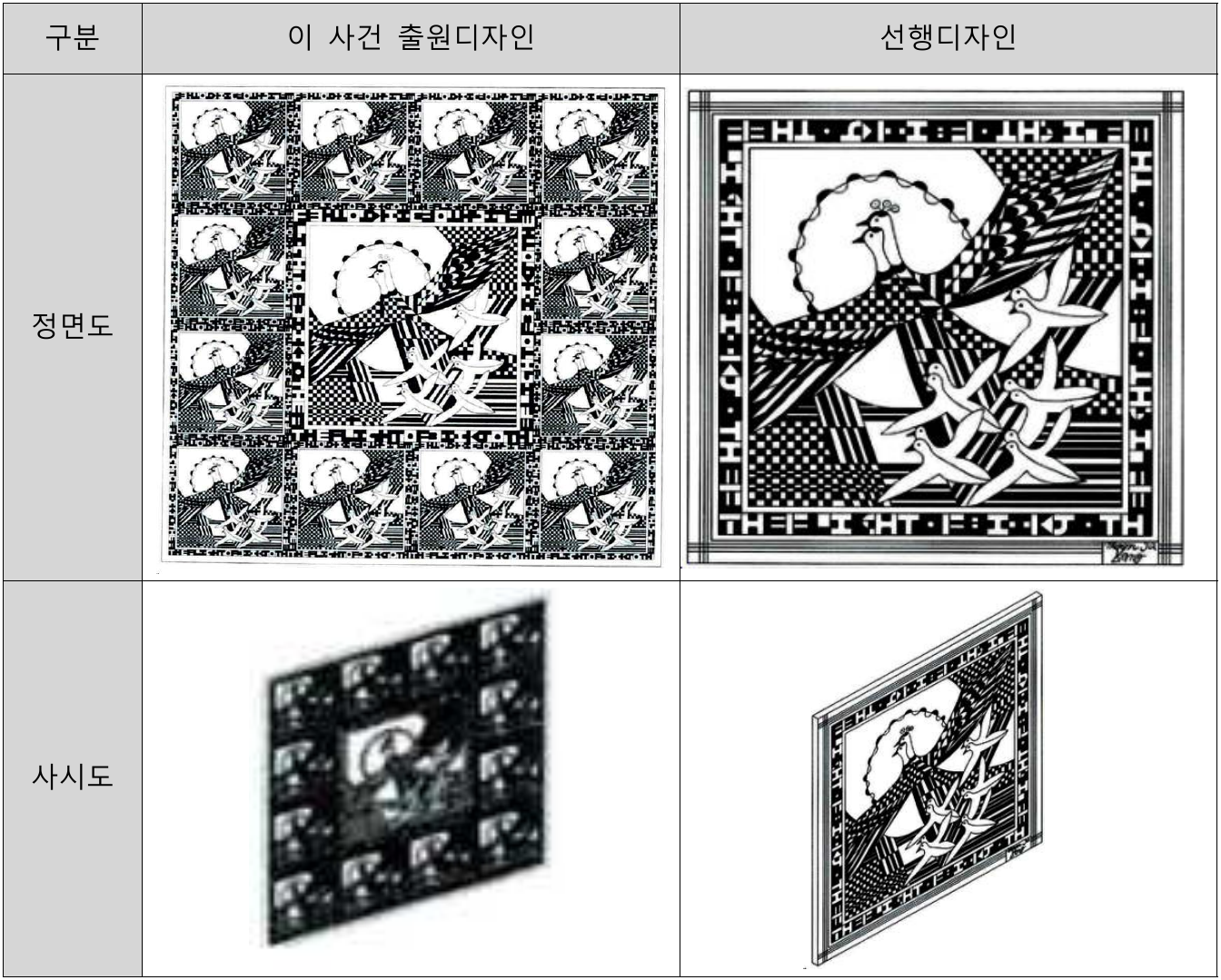
On 17 April 2025, the Korean Patent Court dismissed the claim in case 2024Heo71. Application 30-2022-27784[M004], filed on 11 July 2022, concerned a glazed clay or ceramic tile for walls and floors. The cited design, registration 648665, had been published on 20 June 2012. Both depicted flying birds with a surrounding “THE FLIGHT OF BIIKJO” lettering pattern.
The earlier design contained one bird motif. The application placed twelve quarter-sized motifs around a large central motif, removed a lattice border and an apparent creator’s name, and modified the lettering. The examiner refused the application for lack of novelty; the trial board upheld refusal on similarity and ease-of-creation grounds in decision 2023Won1933 of 24 July 2024.
Two tests address different issues
Article 33(1)(3) of Korea’s Design Protection Act addresses similarity to a previously disclosed design. The court compared the appearance as a whole, paying attention to prominent features and the aesthetic impression in trade and use. Article 33(2) asks whether a designer of ordinary knowledge in the field could readily create the design from the relevant known forms or their combination. A different impression does not necessarily answer that second question.
Here the front face was the most revealing part of the tile. Although the bird motif was shared, the twelve surrounding motifs made the applied-for design more complex and ornate. Repeating complete tiles in a grid also produced a significantly different overall impression. The placement attracted consumers’ attention, while the fine lettering changes and removal of the lattice border and name were comparatively minor. The designs were therefore not similar for the cited Article 33(1)(3) ground.
Why the new arrangement was still easy to create
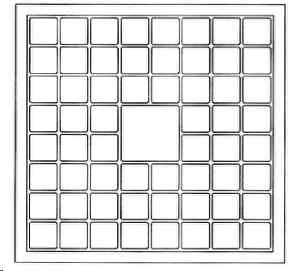
The court reached a different conclusion on creative difficulty. Reducing the existing bird motif and lettering border proportionally and repeating them within a tile was an ordinary design technique. The particular arrangement of twelve quarter-sized motifs around the centre did not demonstrate a special creative contribution. Previously disclosed tile arrangements with smaller or differently sized squares around a central square provided supporting context.
Removing relatively minor border and name elements, making slight changes to letter shapes, and reversing shading while retaining the basic colour arrangement were also changes an ordinary designer could readily attempt. Considered together, they did not overcome Article 33(2).
Refusal survived a correction to the reasoning
Although the trial board’s similarity reasoning was partly inappropriate, refusal remained justified because the design was readily creatable. The court dismissed the request to revoke the board’s decision. This was a refusal case concerning a specific application, not an infringement ruling or invalidation of an existing registered design. Nor did the finding of dissimilarity establish compliance with every other novelty or registration requirement.
Prepare evidence of both appearance and creative contribution
An applicant should explain how the overall composition and visually prominent features differ, including the impression produced when tiles are installed together. Separately, identify what goes beyond customary reduction, repetition, deletion or combination in the field. Time spent drawing or greater visual richness does not alone answer an ease-of-creation objection.
The ruling does not exclude all repeating-pattern designs from registration. Its conclusion depended on the shared motif, this particular arrangement and the limited changes. Compare the concrete forms, their combination and ordinary design practice, and prepare distinct arguments on visual difference and the required level of creation.
The original figure labels and forms are preserved; the text explains the facts and the court’s reasoning.