

Can a restaurant name be distinguished from an earlier mark by adding a menu reference and a drawing? In its judgment of 7 May 2026, case 2025Heo10460, the Korean Patent Court considered the refusal of Daedong Myeonok, a mark combining words with a chopsticks-and-noodles motif.
The court asked what each component conveyed to customers. Elements describing a noodle restaurant performed a different role from the part by which customers identified the business. That distinction guided the comparison with the earlier marks.
1. The eleven services covered by the refusal
The applicant filed application No. 40-2023-121506 on 7 July 2023 for Daedong Myeonok in Class 43. The original list included restaurant, café and hotel services, among others.

On 13 November 2023, the examiner refused eleven services based on one earlier service mark and four earlier trade marks: restaurant chains, franchised restaurants, restaurants, bakeries, bars, cafés, cafeterias, fast-food restaurants, Korean restaurants, and restaurants specialising in makguksu noodles and suyuk boiled meat, including their franchise services. Hotel services were in the original application but were outside this refusal and the court’s ruling on those eleven services.
The applicant appealed. On 27 June 2025, the Intellectual Property Trial and Appeal Board dismissed the appeal in case 2023Won2694. The Patent Court then considered the applicant’s action to revoke that decision. Because registration had been determined through an appeal against refusal, the court assessed the relevant circumstances as at the Board’s decision.
2. Why the distinctive core matters
Article 34(1)(7) of the Korean Trademark Act restricts registration where the applied-for sign is identical or similar to another person’s earlier registered mark and the designated goods or services are identical or similar. All five earlier marks in this case belonged to the same owner and covered restaurant-chain services and related activities.
A composite mark is normally assessed as a whole by its appearance, sound and meaning. Where one part independently identifies commercial origin in customers’ memory, Korean case law treats it as a distinctive core. Its prominence, meaning, arrangement, relationship with the designated services and actual use all inform that assessment.
3. Daedong, Myeonok and the noodle motif
The application placed a chopsticks-and-noodles motif above the vertically arranged words Daedong Myeonok. The court found that the stylisation did not create distinctiveness exceeding that of the wording, or an independent name or concept. Customers would therefore refer to and understand the mark primarily through its words.
Myeonok means a restaurant selling noodles. For the services at issue, it described what was supplied and where, so its ability to distinguish one business from another was weak. Daedong can carry meanings such as a large neighbourhood or accompanying others. It did not describe the nature or content of the restaurant services in this case, and the court found it inherently distinctive.
Writing Daedong Myeonok without a space did not make it indivisible. Customers could readily recognise the two words, and their combination did not create a special new meaning or such a close connection that only the whole expression could identify the business. The court accordingly identified Daedong as the mark’s distinctive core.
4. The same core in the five earlier marks
The earlier service mark read Daedong Guksu. The principal Korean wording of earlier trade marks 1 to 4 was, respectively, Daedong Jip, Daedong Kodari, Daedong Guksu and Daedong Jip. Some also included Chinese characters meaning accompaniment, a fish motif or wording describing a drinking establishment that serves meals.
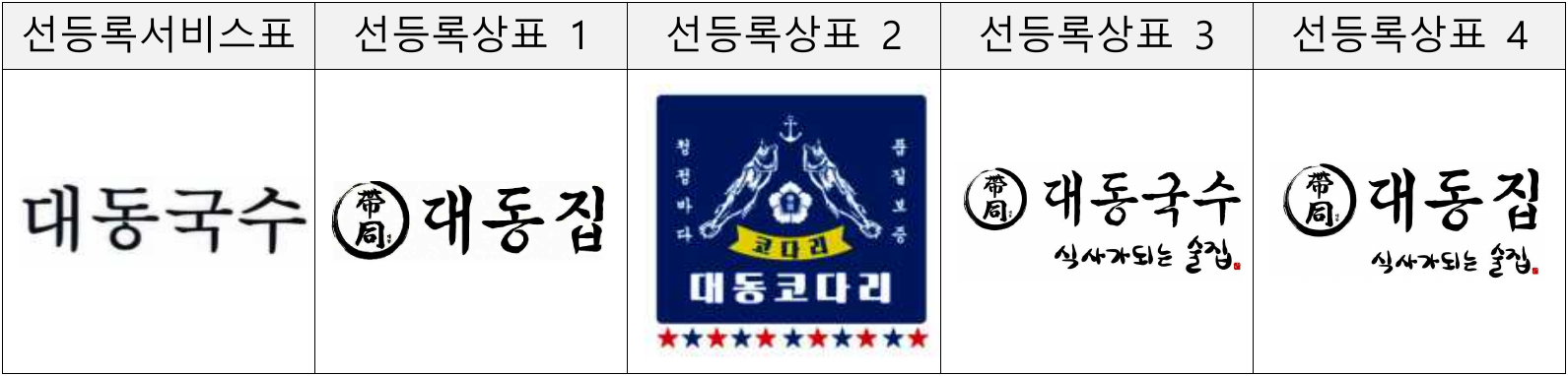
Guksu refers to noodles, jip to a house or establishment, and kodari to a type of semi-dried pollock. The court treated these additions as weak because they conveyed food or a place of business. Daedong did not directly describe the restaurant services and could independently identify their commercial origin in each of the five marks.
Actual use reinforced that conclusion. The owner had operated a Korean-food franchise under Daedong Jip since 2017 and introduced related brands, including Daedong Guksu, on its website. Taking the business scale and use evidence together, the court found that the marks were already known to some extent as indicators of a particular business by the Board’s decision date. That use strengthened the distinctive character of Daedong.
5. Other Daedong marks and place names
The applicant pointed to other applications and registrations containing Daedong, including Daedong Myeonjido, Daedong Ok and Daedong Gwan, as well as restaurant trading names. It also argued that Daedong appeared in numerous place names, such as Daedong-myeon and Daedong-ri, and could not readily distinguish commercial origin by itself.
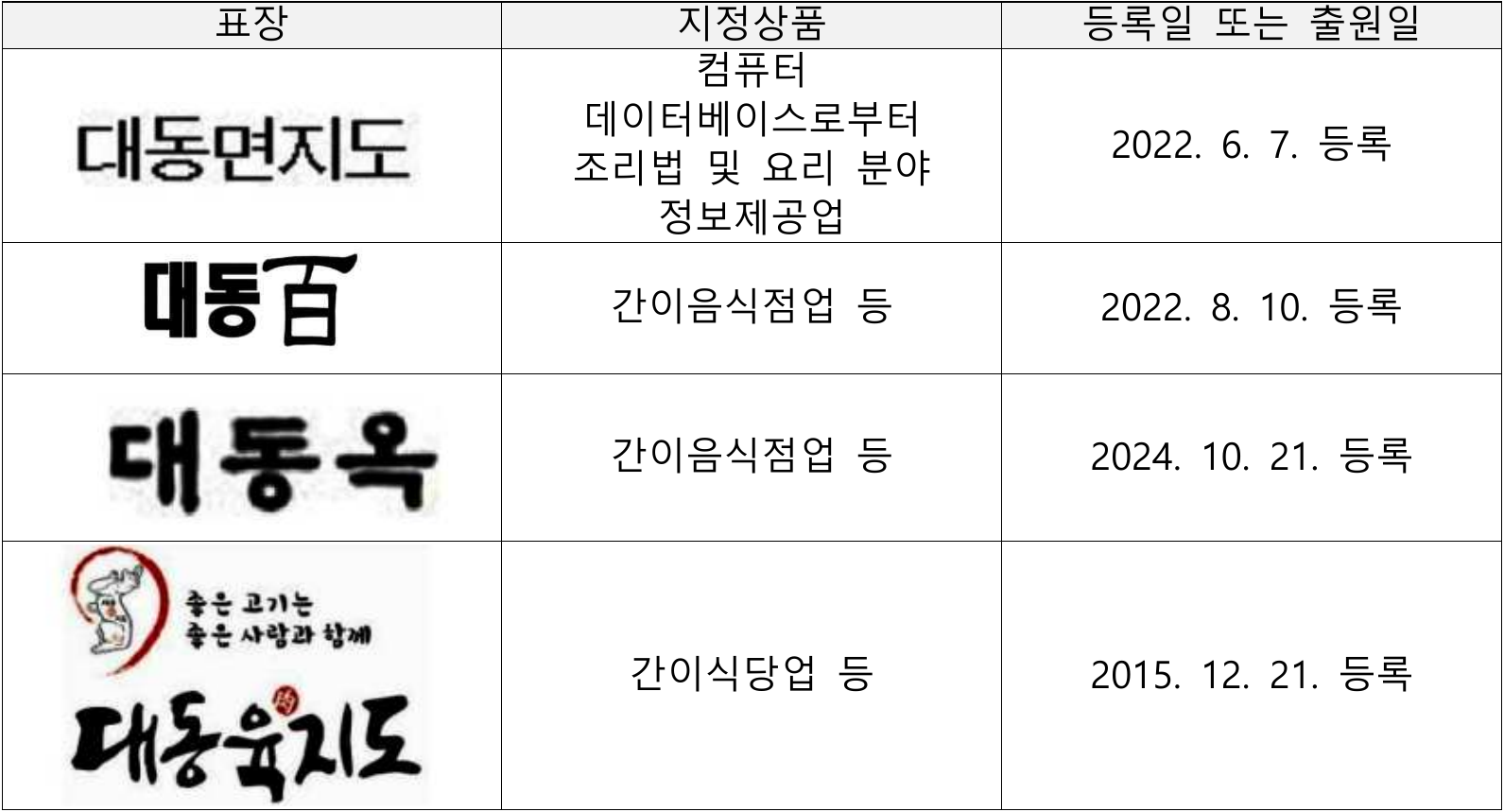
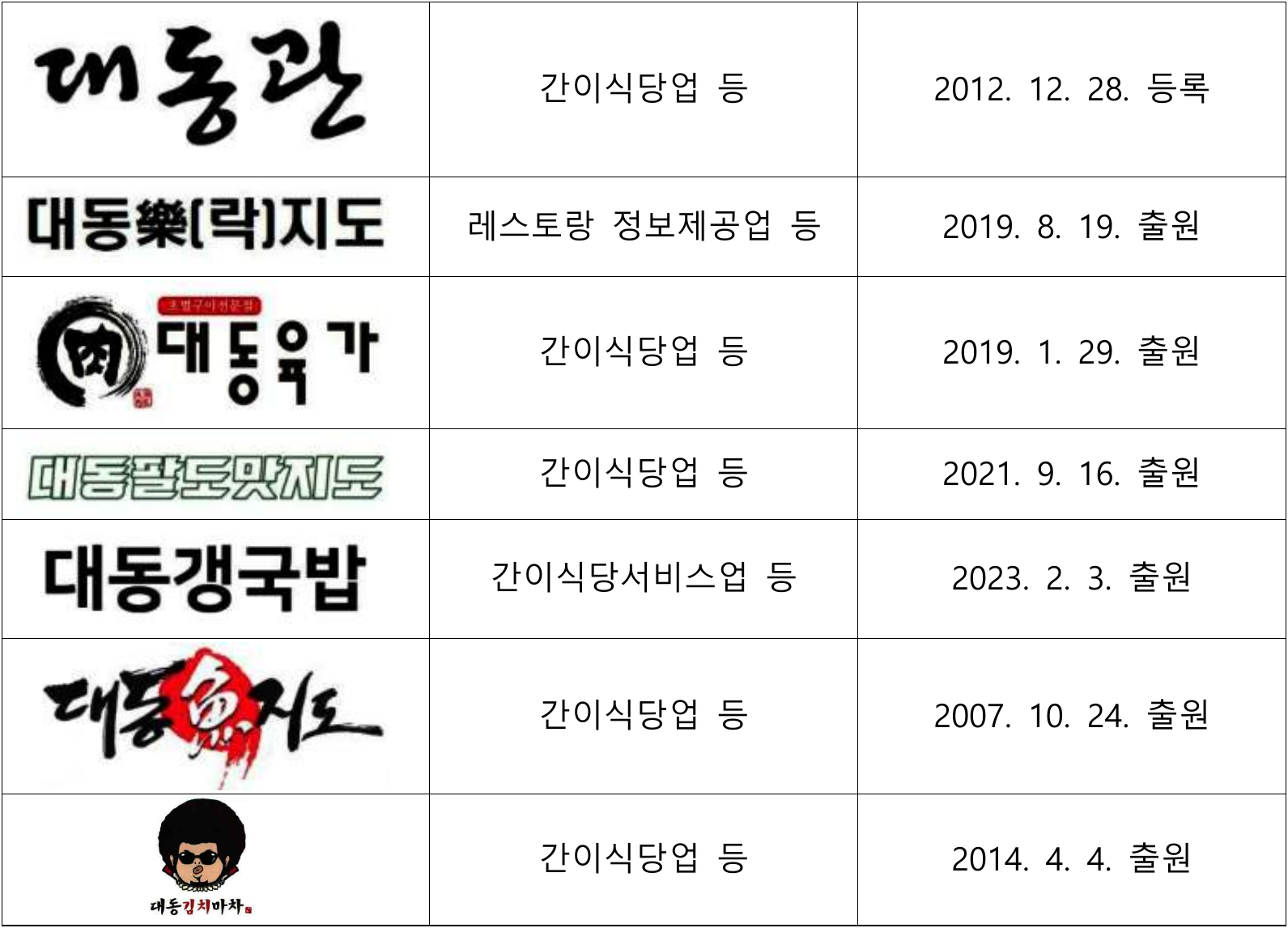
The court considered registrability separately for each mark and its designated services. Some examples relied on by the applicant combined Daedong with other distinctive words or graphics, creating a different overall impression. The defendant also cited applications refused because they conflicted with earlier marks whose distinctive core was Daedong.
Use by multiple restaurants meant that Daedong could not be regarded as exceptionally strong. But it did not establish that the word had lost the ability to identify commercial origin independently. Nor did the existence of several place names show that customers would immediately read Daedong in this mark as a particular geographical reference.
6. Similar marks for identical or similar services
The distinctive cores coincided in sound and meaning. Even when Daedong Myeonok and Daedong Guksu were considered as wholes, customers could remember both as a Daedong noodle restaurant. The applicant distinguished a traditional specialist restaurant from a more casual noodle shop, but did not establish that consumers clearly drew that conceptual distinction. Encountered at different times or places, the names could lead customers to confuse the service providers.
The eleven refused services were also identical or similar to the earlier registrations’ restaurant-chain, casual restaurant, bakery, bar, café, cafeteria, fast-food and Korean-restaurant services. The parties did not dispute this point. The court therefore dismissed the action to revoke the Board’s decision.
7. Searching and assessing a proposed restaurant name
A clearance review should consider both the proposed name as a whole and the element customers are likely to use to identify the business. If the name includes a menu or business-type description, searching the remaining words separately can reveal earlier rights that a full-name search may miss. The services covered by those registrations also matter.
Graphics require the same contextual assessment. A drawing of food or utensils may tell customers what the restaurant offers; whether it also becomes an independently memorable badge depends on the particular combination of artwork and words. In this case, Daedong remained an independent indicator of origin after the court considered the name, imagery and restaurant services together.
The original figure labels and forms are preserved; the text explains the source material.