

The dispute and the claim actually examined
An archery finger tab protects the fingers when drawing a bowstring; an adjustable finger support can help accommodate different hands and shooting habits. In case 2026 Heo 10096, decided on 7 October 2026, Korea’s Patent Court examined whether the MK Archery MK Pro Tab fell within claim 1 of Fivics’ Korean patent No. 1968682, entitled “Finger Tab”. The patent was filed on 20 January 2017 and registered on 8 April 2019.
The patentee sought an affirmative determination of patent scope. On 13 February 2026, the Intellectual Property Trial and Appeal Board rejected that request in case 2025 Dang 2186. The patentee then sought cancellation of the Board’s decision.
The comparison concerned the target product as finally specified in the description and drawings amended on 26 December 2025. The parties did not dispute the amendment’s admissibility. This was a claim-specific scope proceeding, rather than a claim for damages or an injunction.
Why the literal comparison failed
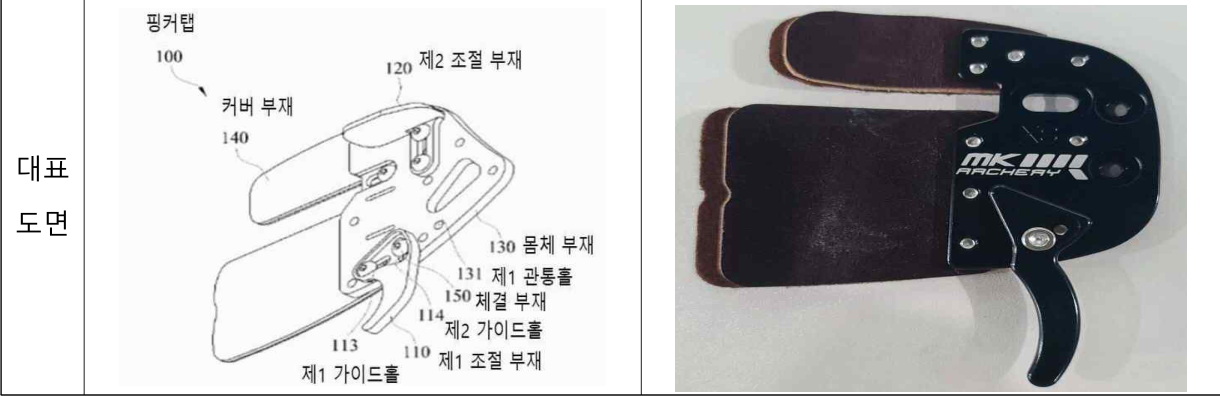
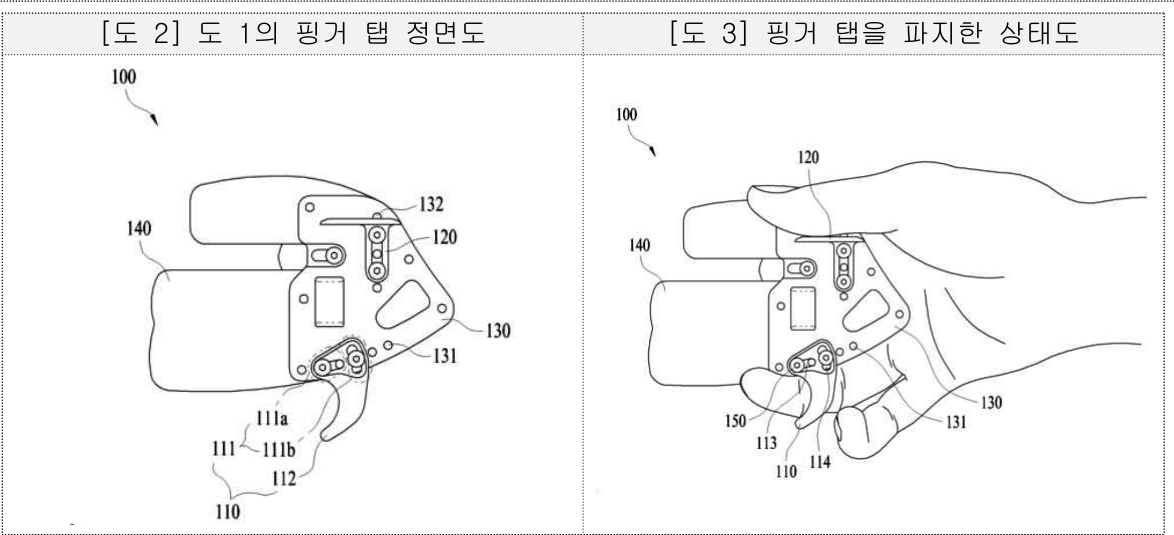
Claim 1 requires multiple through-holes spaced around the body’s edge. Its first adjusting member has a horizontal first guide slot and a vertical second guide slot. Fasteners pass through those slots into corresponding body holes.
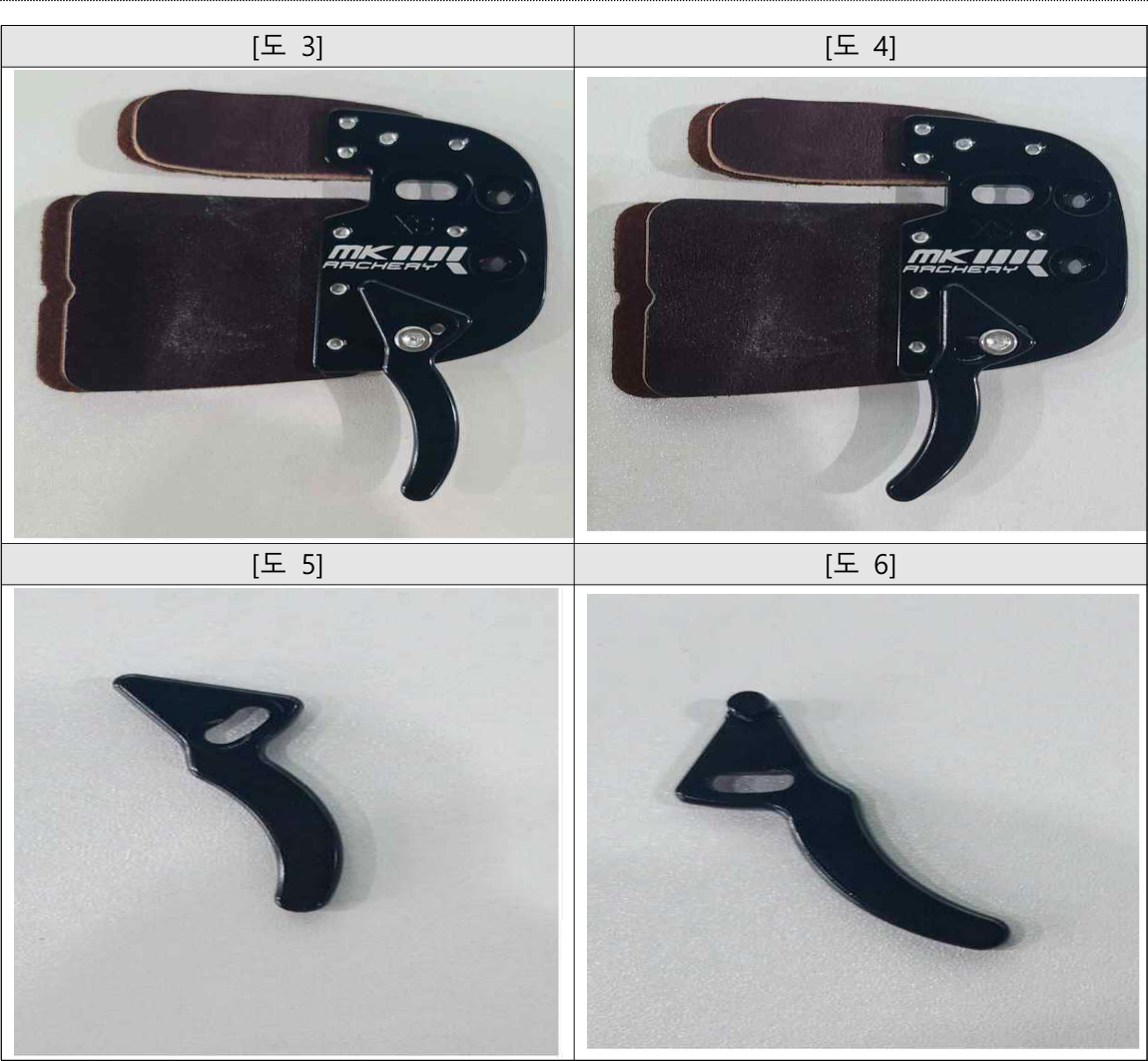
The target product instead has one through-hole and a separate fastening recess above it. A projecting guide fastening portion on the adjusting member fits into that recess, while another fastener passes through a diagonal guide slot. The projection-and-recess connection remains in a fixed location and acts as a pivot.
These were differences in the attachment arrangement itself, not merely in the shape of a fastener. The target lacked the claimed first guide-slot connection and the ability to select its attachment position among multiple body holes. It therefore did not contain all elements of claim 1 literally.
The same purpose does not establish equivalence
Under the Korean approach applied by the court, equivalence requires the same problem-solving principle, substantially the same operative effects and a modification readily conceivable by a person skilled in the art, subject to relevant exceptions. The principle must be identified from the claim’s combined structure, the specification and the prior art.
Here, the claimed solution combined selection of an attachment point among several body holes with further positional and angular adjustment through two differently oriented guide slots. The target adjusted the angle by turning around a single fixed connection, with relative movement occurring along a diagonal slot.
Both mechanisms sought a suitable fit for the archer, but they did not implement the same concrete solution or provide substantially the same adjustment effects. Having found those differences, the court did not need to determine whether the substitution would have been easy for a skilled person.
Known components remain relevant to the combination
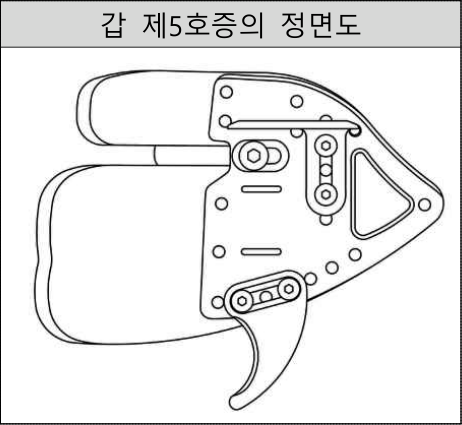
The patentee relied on Exhibit 5, which already disclosed multiple body holes and a horizontal guide slot permitting selection of the attachment position. It argued that this known arrangement should be excluded from the invention’s technical core.
The court accepted that the arrangement was known, but rejected the proposed subtraction. A component’s presence in the prior art does not automatically remove its role in the particular combination claimed. The invention’s solution must be understood through the components’ interaction as a whole.
The patentee also characterised the invention as rotation around one of two fastening points. The court found that claim 1 did not adopt the fixed-pivot mechanism advanced in that argument. The claim could not be reconstructed around the target product after discarding inconvenient features.
The outcome and its limits
The court dismissed the patentee’s cancellation claim, leaving the Board’s determination intact: the specified target product lay outside claim 1, both literally and under the doctrine of equivalents. Litigation costs were borne by the patentee.
That conclusion did not invalidate the patent. Nor did it decide infringement, damages or injunctive relief for every product marketed under a similar name, or determine the scope of other claims.
The decisive comparison was between selectable attachment positions plus additional slot-based adjustment, and angular movement about a fixed pivot. A shared ability to adjust an angle was too general to resolve that comparison.
Practical points for claims and product analysis
Identify which attachment points can change position, which remain fixed and how each movement affects the support. Distinguish choosing a mounting position from rotating around an existing mounting point.
When drafting or interpreting claims, connect structural relationships to the effects produced by their combination. In a dispute, photographs of two end positions alone may not explain the mechanism; drawings and evidence of the actual movement can matter.
A fixed pivot is not a universal route around a patent, just as a known component is not automatically irrelevant to equivalence. The assessment remains tied to the particular claim, its disclosed solution and the product as actually specified.
The original figure labels and forms are preserved; the text explains the source material.