

A favorable tribunal decision was overturned
On 9 July 2026, the fifth division of Korea’s Patent Court annulled the scope-confirmation decision in case 2025Heo10606. Registered design 899917, for a portable gas burner, had been filed on 25 August 2016 and registered on 20 March 2017. The right holder had obtained a favorable decision on 30 September 2025 in proceeding 2024Dang1907. The manufacturer challenged that decision, and the court held that the comparison design was dissimilar and outside the registered design’s scope. This was not an invalidation of the registration.
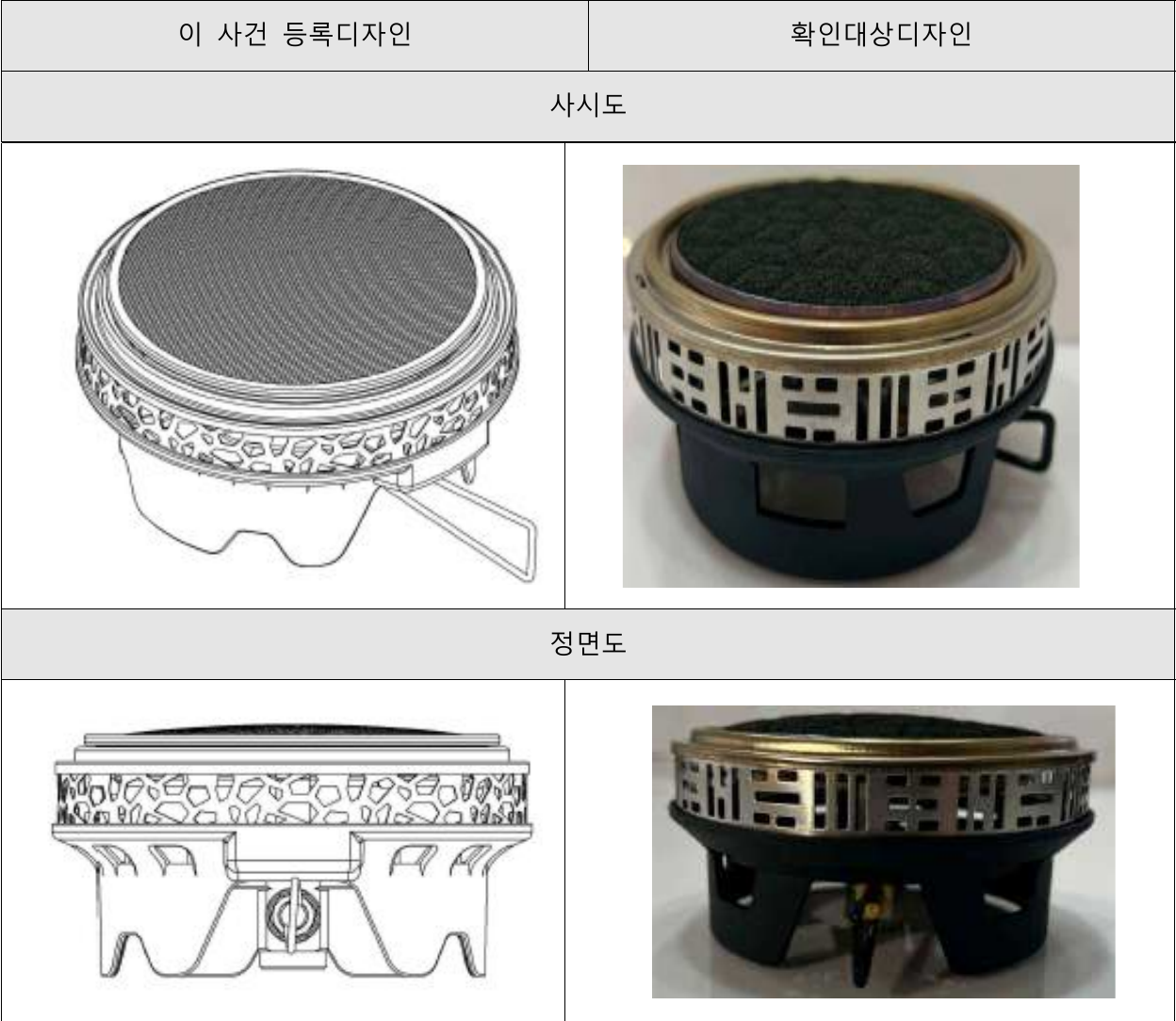
Common structure needs to be placed in context
Both burners had three tiers—a burner head, side ring and support—with a circular, slightly domed head, a gas connection and an operating ring. The support was wider at the top. But several similarities were already disclosed in earlier designs: the three-tier structure appeared in prior designs 1 and 4, and a circular head appeared in all four cited designs. Familiar features receive less weight when assessing overall aesthetic impression; simply counting shared components would overstate their significance.
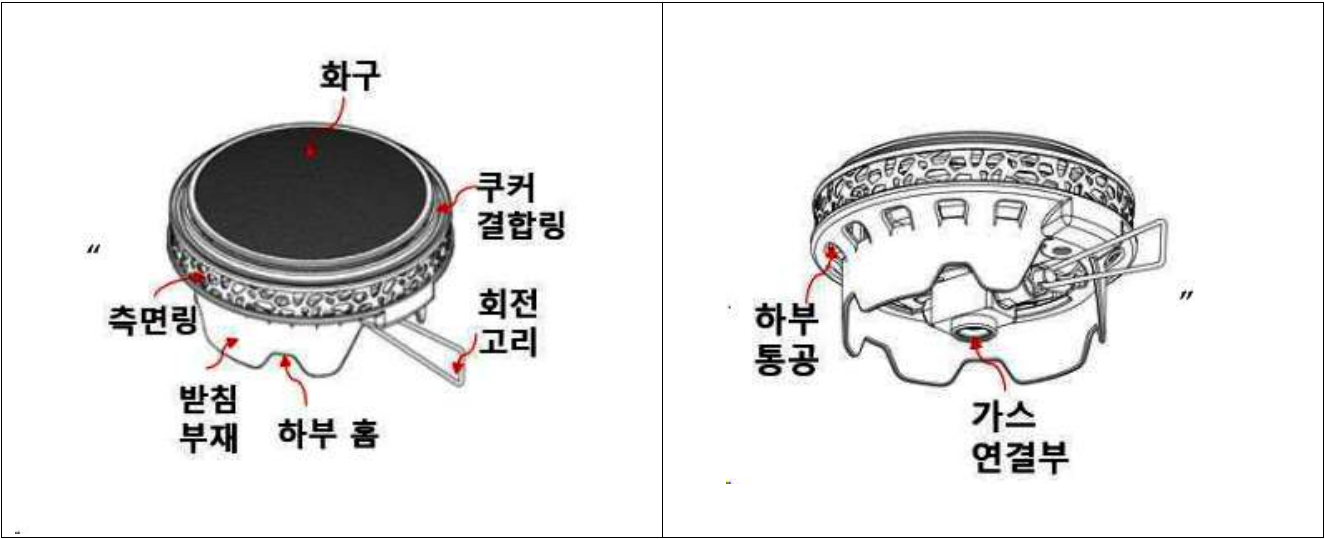
What users can see before and during operation
The court considered how the product was normally used. Users look at the burner head when connecting a gas container or checking ignition and flame intensity. Once a cooking vessel is in place, the head and vessel-coupling ring become obscured, while the side ring, support and operating ring remain visible. The concealed coupling ring and the internal frame on the underside therefore carried less weight than features that readily attract attention.
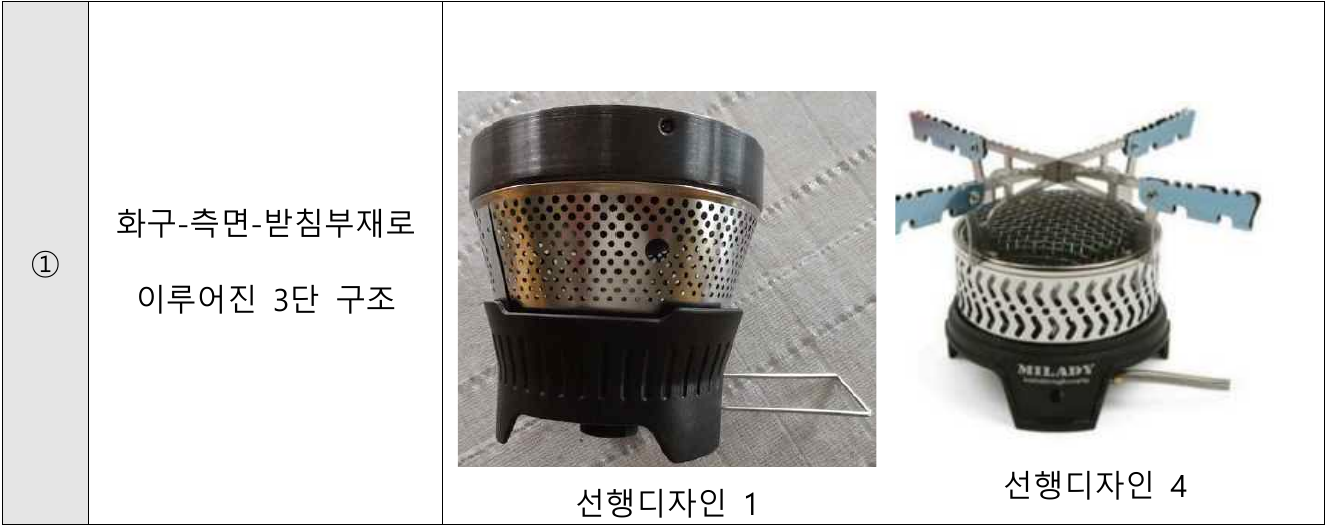
The patterns and openings created meaningful differences
The registered head was plain, whereas the comparison head carried a regular pattern of linked diamonds. Its side ring used regularly arranged openings resembling the four Korean flag trigrams, rather than the registered design’s irregular pebble-like openings. The registered support combined rounded rectangular upper openings with curved lower grooves; the comparison used trapezoidal openings around the middle and no lower grooves. Its operating ring was also shorter, and the word “snowline” appeared in white at the bottom.
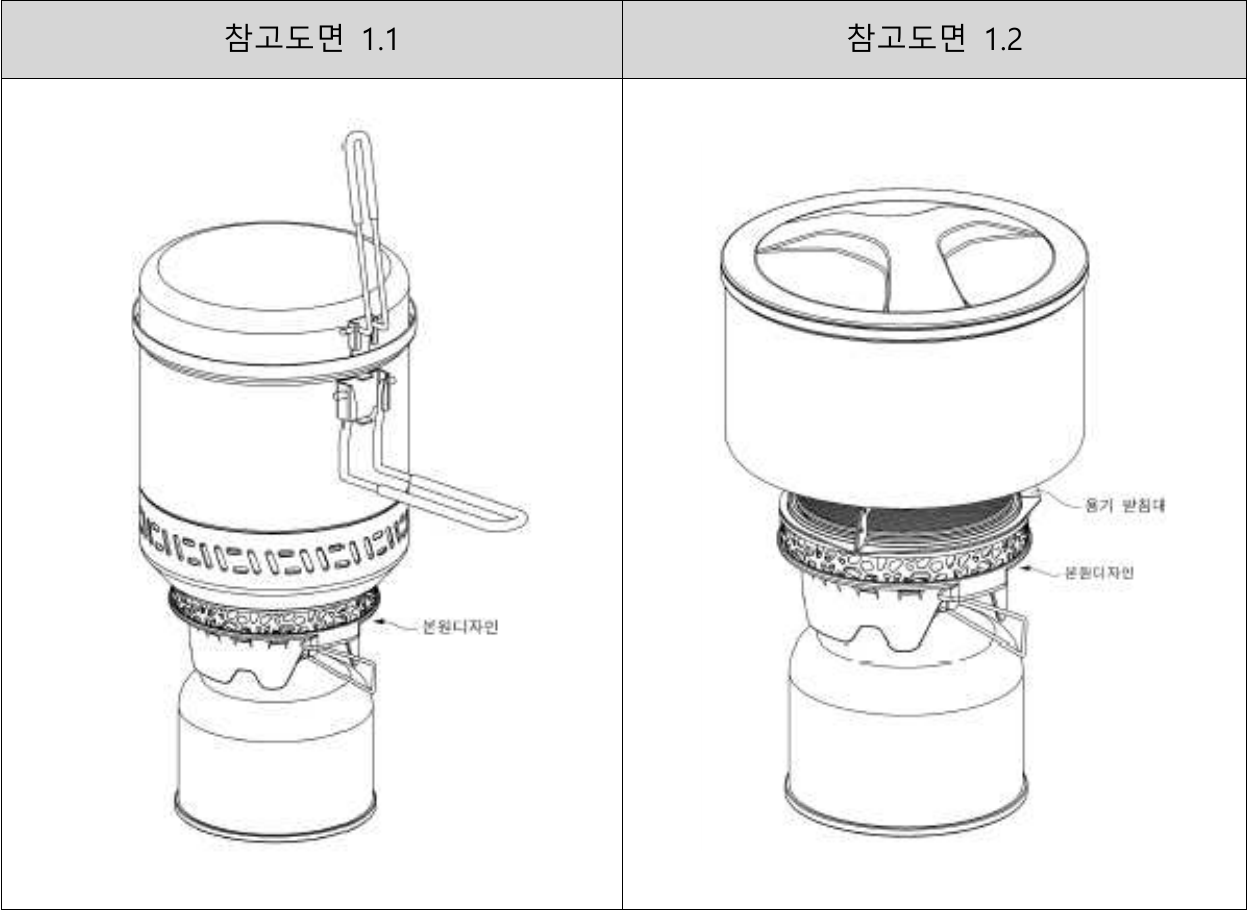
Overall impression, not an isolated ornament
The openings and lower grooves were among the registered design’s stated creative features. Their differences could not be dismissed as minor decoration. Similar width proportions were an overall structural feature and did not outweigh the distinctive visible details. Taken together, the registered design conveyed an irregular, dynamic impression, while the comparison design appeared regular, static and stable. Those different aesthetic impressions supported the finding of dissimilarity.
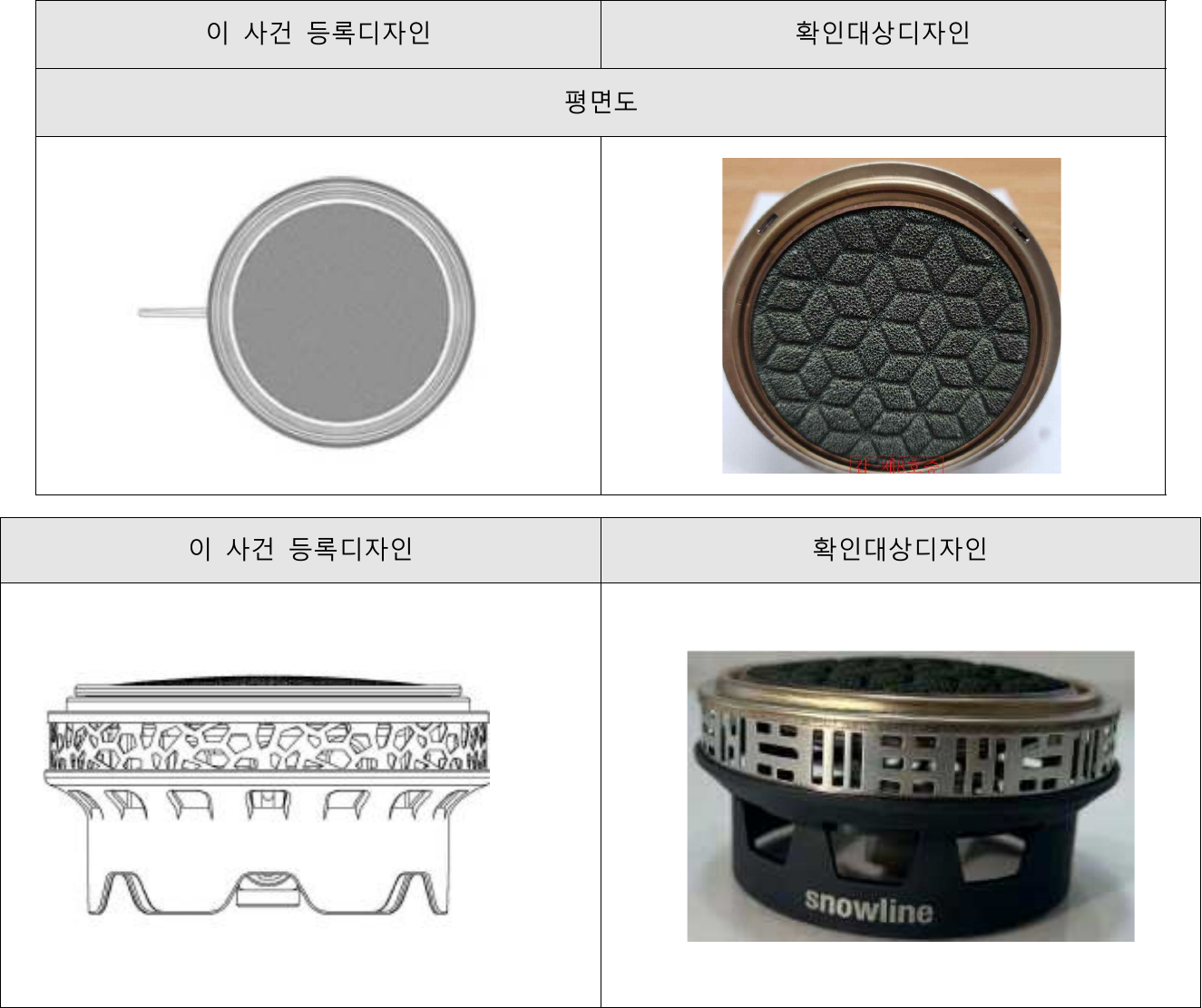
A practical framework for comparison
A useful design comparison brings together the registration drawings, relevant prior designs, photographs of normal use and a clear explanation of the features that draw consumer attention. It must then return to the impression of the whole. The judgment does not mean that adding lettering or shortening one ring will always avoid a design right. The outcome depended on the combined visible differences and the reduced significance of the familiar common features in these particular burners.
The original figure labels and forms are preserved; the text explains the facts and the court’s reasoning.