
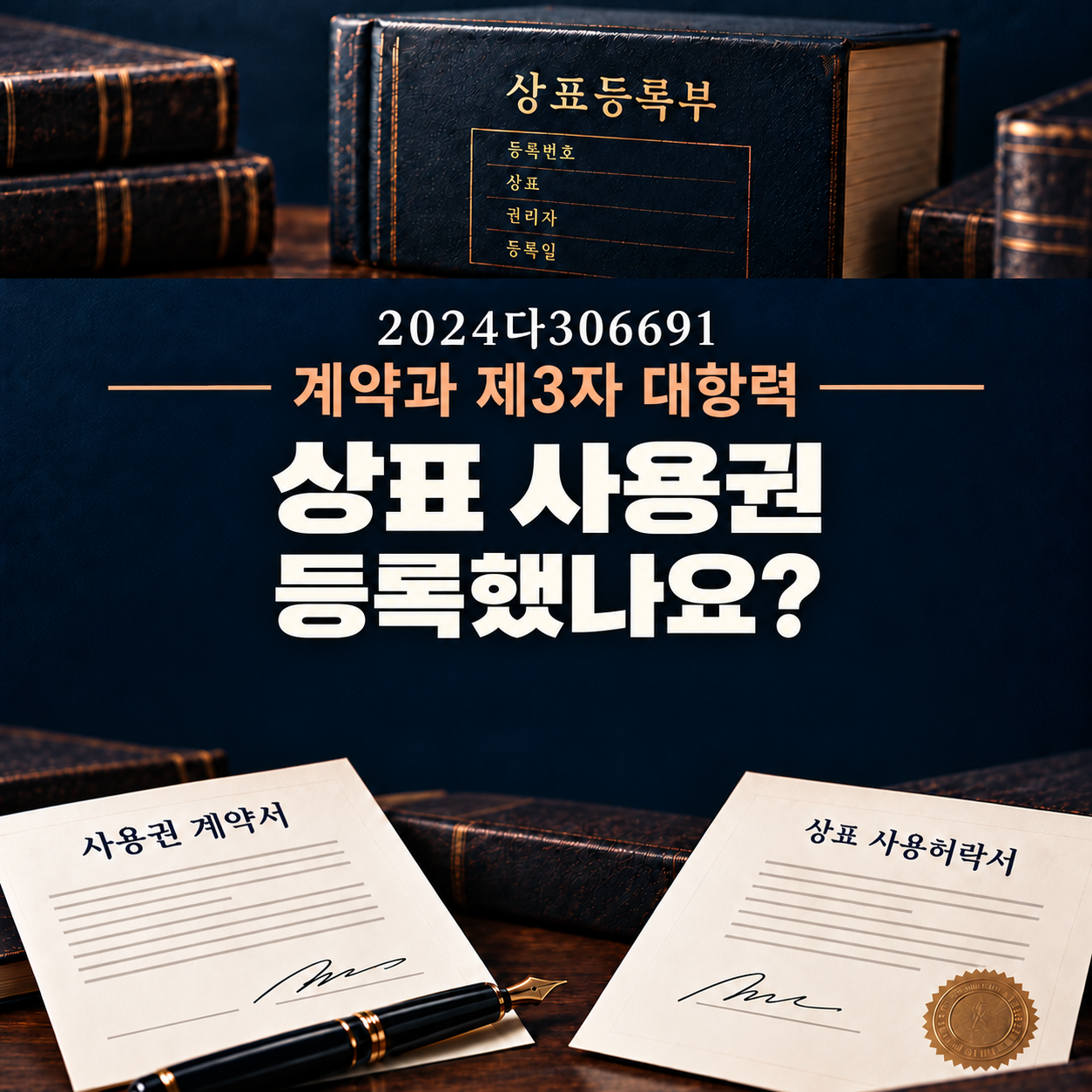
One mark, two competing licences
In its decision of 27 March 2025, case 2024Da306691, the Supreme Court of Korea examined whether an earlier non-exclusive trademark licence could be asserted against a later registered exclusive licensee. The mark, registered on 23 June 2020, covered goods including instant udon and dumplings and services including snack restaurants.
The proprietor granted the defendant a royalty-free licence throughout Korea on 11 July 2021. Its initial term ended on 10 July 2023 and was extended to 10 July 2031, but the licence was never registered. On 17 March 2022, the proprietor granted a second claimant an exclusive licence throughout Korea until 22 June 2030; that licence was registered the same day.
A valid contract does not resolve every claim
Both claimants sought relief for infringement, arguing that the earlier agreement had ended and, alternatively, that the unregistered licence could not bind the exclusive licensee. The Patent Court found that the agreement remained in force. The Supreme Court upheld that finding and dismissed the proprietor’s appeal; challenges directed merely at the lower court’s assessment of evidence supplied no proper ground for reversal.
Non-registration did not itself invalidate the agreement between the proprietor and the defendant. However, permission from a contracting party and an entitlement that can defeat another rights holder’s claim are separate questions. An exclusive licensee has the exclusive right to use the registered mark for the designated goods within the licensed scope.
Registration and the position of third parties
Under Article 100(1)(1) of Korea’s Trademark Act, an unregistered non-exclusive licence cannot be asserted against a third party. Here, that means someone who acquires a legal position incompatible with that of the non-exclusive licensee, rather than every person absent from the contract. The registered exclusive licensee occupied such a position. The defendant could not rely on its earlier unregistered licence against that claimant.
The Supreme Court reversed only the part concerning the exclusive licensee and remanded it to the Patent Court. The court still had to examine use or threatened use of identical or similar signs for identical or similar goods and, for damages, intent or negligence and resulting loss. Neither infringement liability in full nor a damages amount was finally determined.
Review the agreement and the register together
A long contractual term does not automatically secure enforceability against competing rights. Licensees should check the goods and services, territory, duration and responsibility for registration formalities. Proprietors and prospective exclusive licensees should also examine existing permission to use the mark and the registered position.
The practical lesson from this Korean decision is to distinguish contractual continuity from enforceability against another rights holder. Those two inquiries produced different outcomes for the two claimants.
The original figure labels and forms are preserved; the text explains the facts and the court’s reasoning.