
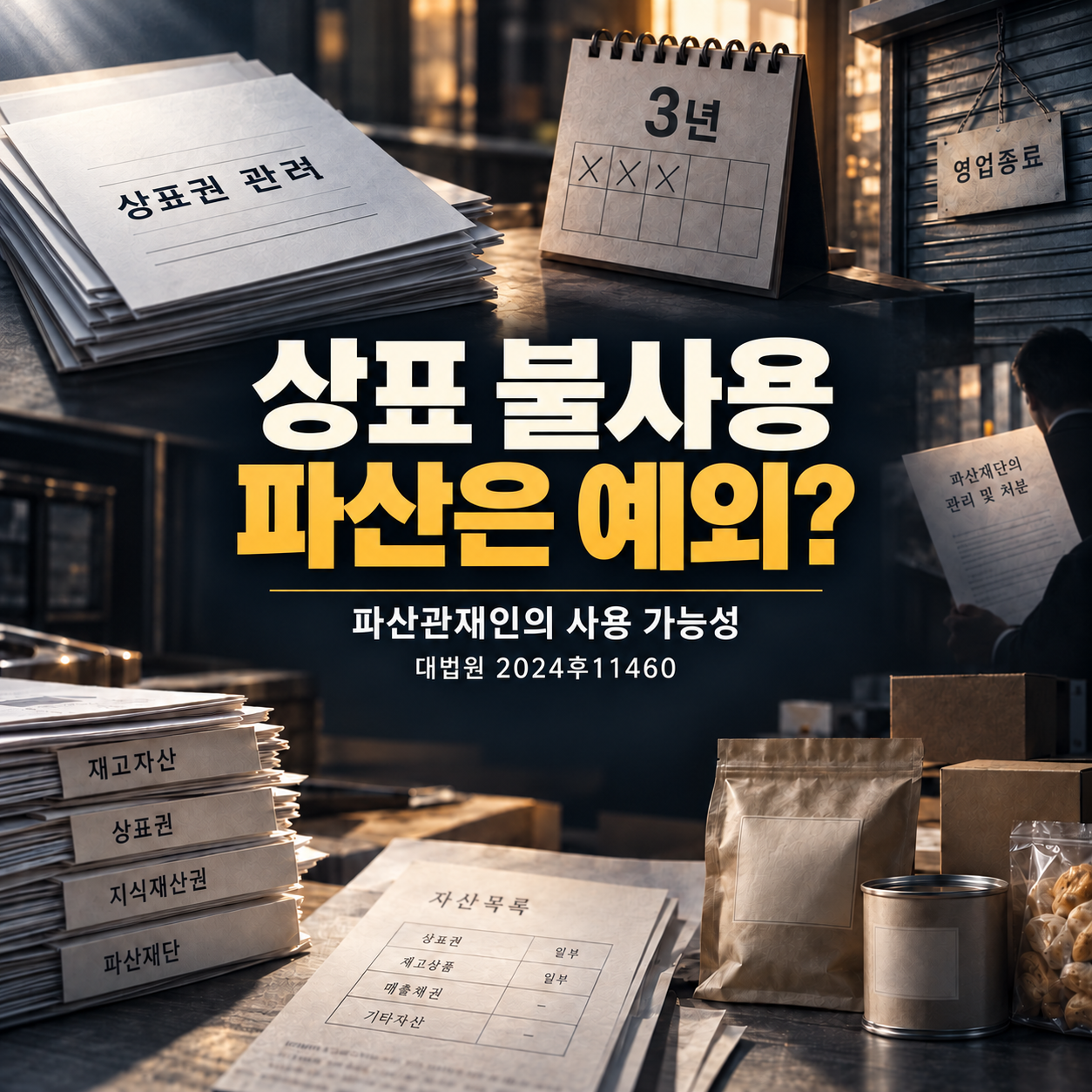
A purchaser and a secured creditor on opposite sides
On 12 March 2026, the Korean Supreme Court dismissed the appeal in case 2024Hu11460. The disputed mark had been registered on 15 November 2005 for Class 29 goods including beans and sweet potatoes. During rehabilitation, its owner borrowed KRW 400 million with court approval on 14 September 2009. On 23 November it granted the lender a revolving pledge over eight trade mark and service mark rights, including this one. Only one registration was at issue in the cancellation proceeding.
After termination of rehabilitation and two rejected applications to reopen it, the owner filed for bankruptcy and was declared bankrupt on 25 April 2016. Around July 2017 the trustee sold the mark with court approval. The purchaser did not register the transfer, so the bankrupt company remained its proprietor. On 10 August 2022, the purchaser sought cancellation for non-use against the trustee; the secured lender intervened in support of maintaining the registration.
The three-year period and the evidential burden
The trial board ordered cancellation on 24 January 2024. The Patent Court upheld that outcome on 31 October 2024 in case 2024Heo26. Article 119(1)(3) of Korea’s Trademark Act concerns continuous non-use in Korea for at least three years before the cancellation request by the proprietor or either an exclusive or non-exclusive licensee, without a justifiable reason.
Under Article 119(3), the respondent must establish proper domestic use during that period for at least one designated good covered by the request, or prove a justifiable reason for non-use. The mere existence of the registration is insufficient. The reason must involve a continuing inability to use the mark caused by unavoidable, objective and external circumstances beyond the control of the person able to use it, such as legal sales prohibitions or import restrictions. Poor business performance or concern about litigation ordinarily falls short.
The trustee’s ability to use the mark mattered
A mark belonging to the bankruptcy estate is managed and disposed of by the trustee. Because the relevant three-year period fell within the bankruptcy proceedings, the Court assessed justification from the trustee’s position. The company’s path through failed rehabilitation to voluntary bankruptcy did not, by itself, show a continuing external impediment to use.
Article 486 of Korea’s Debtor Rehabilitation and Bankruptcy Act permits a trustee to continue the debtor’s business with court approval. The trustee could potentially have used the mark on the designated goods by continuing the business to the necessary extent. There was no indication of an application for permission aimed at such use, and no other unavoidable obstacle preventing the trustee from using it was established.
The appeal failed on the circumstances of this mark
The Supreme Court upheld the finding that non-use lacked justification and dismissed the lender’s appeal. The unregistered sale had not changed the registered proprietor or displaced the trustee’s management role. The judgment did not cancel all marks of bankrupt companies automatically; it applied the statutory test to this registration and the evidence in this proceeding.
Due diligence for acquisitions and security
A purchaser or lender should check who has used the mark, on which goods and when. Dated product photographs, transaction records and advertisements may help, but must correspond to the registered sign and relevant goods. Confirm the transfer registration and current management authority as well as the sale agreement. The number of pledged rights alone does not establish their continuing value.
Where bankruptcy is relied on, identify the specific obstacle to use, its duration and the trustee’s available options. Seeking court permission is not itself trade mark use. Permission, actual commercial use and evidence of unavoidable inability to use are separate matters. A break in use may affect both the registration and the value of the lender’s security.
The original figure labels and forms are preserved; the text explains the facts and the court’s reasoning.