

The registration and the challenge
In case 2025Heo10516, decided on 23 April 2026, Korea’s Patent Court reviewed the KAHI registration for 15 Class 5 goods, including protein, beauty and vitamin supplements. The application was filed on 18 May 2021, approved on 15 December 2023 and registered on 4 January 2024 as No. 2135127. The claimant had used its earlier Korean and Latin-script KAHI marks, Nos. 1656598 and 1739232, for cosmetics since April 2020.
The Intellectual Property Trial and Appeal Board rejected the invalidation request in case 2024Dang1198 on 30 July 2025. The court reached a different conclusion under the consumer-deception limb of Article 34(1)(12) of the Korean Trademark Act. It did not treat goods similarity and mistaken commercial origin as interchangeable tests.
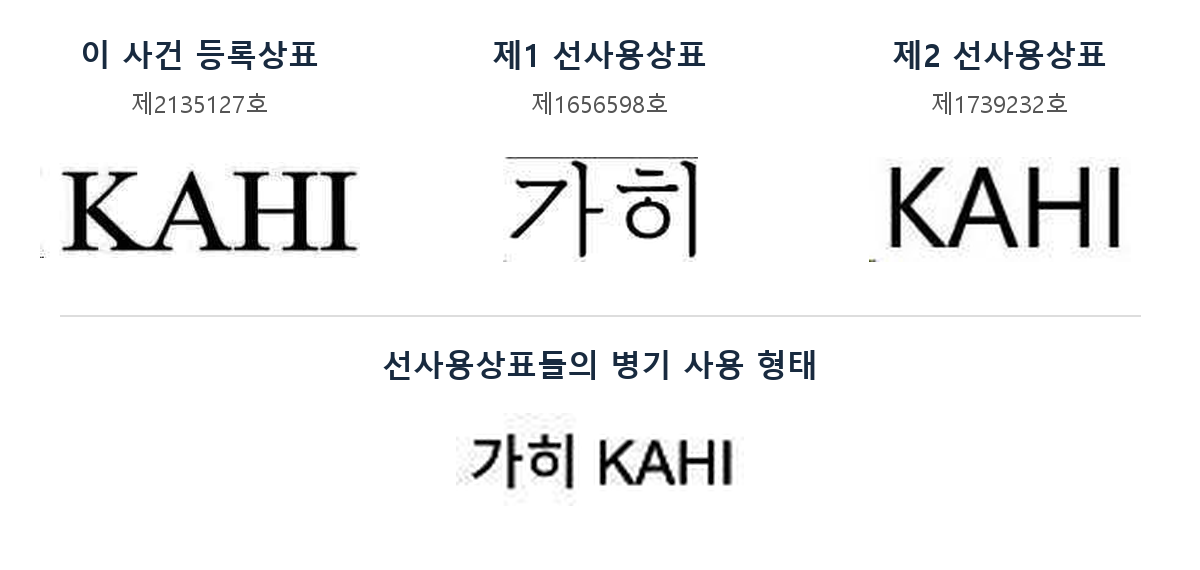
Recognition at the decision to register
The relevant date was 15 December 2023, when registration was approved, rather than the filing date. The earlier mark needed to identify a particular commercial source to consumers or traders in Korea; nationwide fame was not indispensable. Duration, manner and extent of use, assessed against actual market conditions, were material.
Evidence included placement in 25 television dramas, promotion through approximately 130 bloggers, sales exceeding ten million units within roughly eighteen months of launch and continued advertising. The products represented around 80% of the claimant’s KRW 250 billion revenue in 2021; advertising expenditure was about KRW 49.6 billion. The court considered how this recognition was maintained through the relevant date, rather than relying on historic figures alone.
Why different products could suggest the same source
Cosmetics and dietary supplements were not regarded as identical or similar in their purpose and form. Nevertheless, the Latin-script signs were essentially identical apart from typeface, and the Korean mark shared their pronunciation. Use of the Korean and Latin forms together reinforced that connection.
Beauty and health functions, cosmetics companies’ expansion into supplements, shared internet and drugstore channels, and ingredients such as vitamins, minerals and collagen provided a specific economic connection. In that setting, consumers could take the supplements to be an extension of the cosmetics business despite the difference between the goods.
Holding and practical implications
The court found a ground for invalidity and set aside the tribunal decision. It did not separately determine the other pleaded grounds under Article 34(1)(7), (9), (11), (13) or Article 35(1). Nor does this judgment establish that every similar mark in an unrelated class is invalid.
Clearance should address commercially connected sectors as well as nominal classifications. Preserve dated evidence of the actual sign, goods, sales, advertising and distribution, and explain the consumer inference linking them. A different product category alone is not a sufficient answer to a properly evidenced consumer-deception claim.
The original figure labels and forms are preserved; the text explains the facts and the court’s reasoning.