
The invalidity challenge
The Korean Patent Court’s decision of 9 April 2026 concerned hairband design registration 1221797, filed on 24 March 2022 and registered on 23 June 2023. The design combined side-hair pressing plates, recesses for the ears and a support passing around the back of the head. The owner challenged Board decision 2024당3608 of 29 July 2025, which had invalidated the registration. The issue under Article 33(2) of Korea’s Design Protection Act was whether a designer of ordinary skill could readily create the design from the cited prior designs.
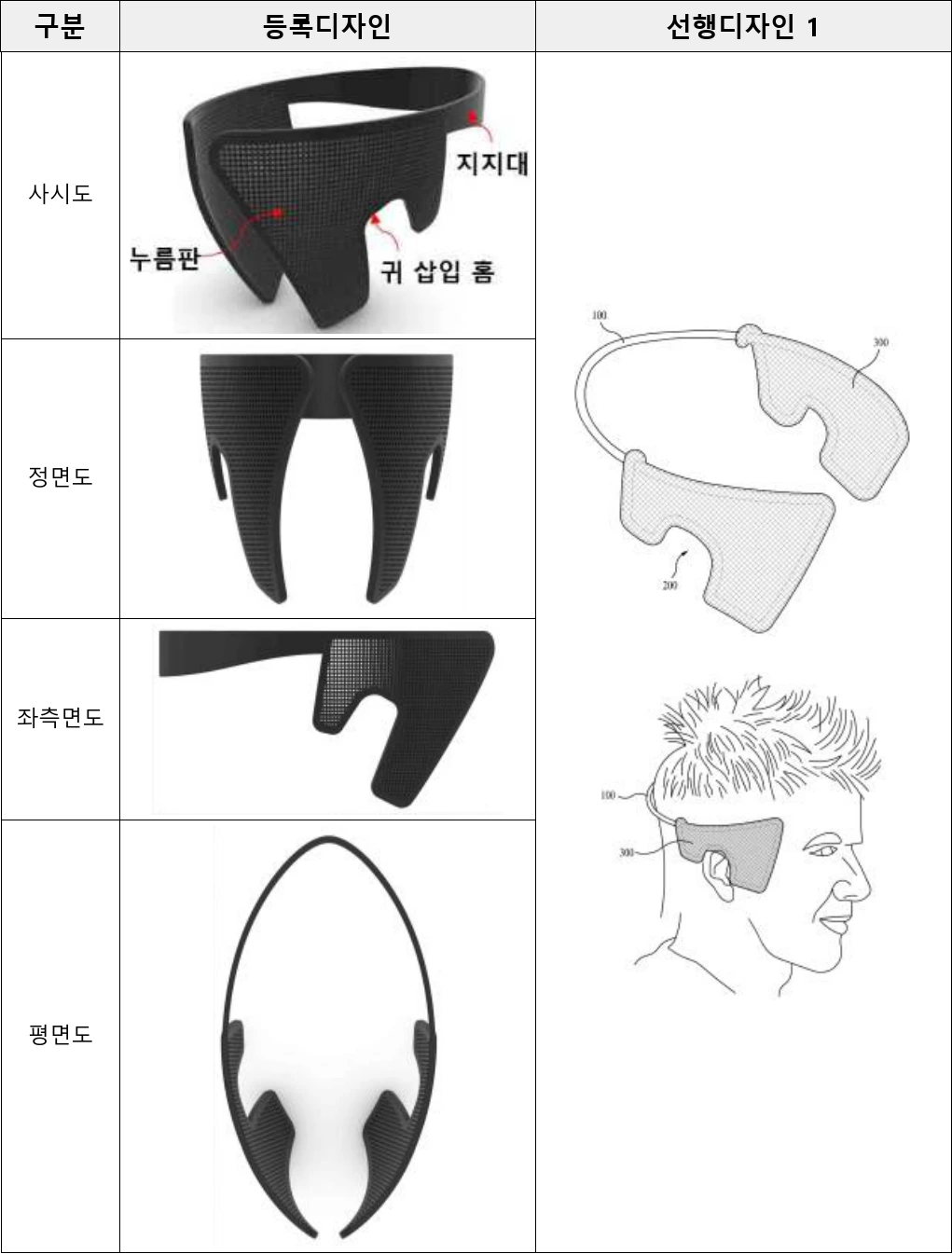
Some differences were routine
The court identified common structures and five groups of differences, but did not give each difference equal weight. Longer pressing plates and deeper ear recesses served a functional purpose and were substantially available in another cited design. An oval rather than circular plan shape was not decisive either: the support followed the head and could bend during use. Those differences alone did not establish a sufficient visual contribution.
The features that mattered
The acute angle between plate and support produced a sharper impression than the obtuse or approximately right-angle connections in the cited designs. The support widened towards the rear, first steeply and then more gradually, while its upper boundary remained horizontal and its lower boundary formed a flowing curve. The prior wire-like or constant-width supports did not readily yield that appearance. Regular rectangular perforations also created a crisp impression distinct from a dense mesh. Coordinating the shape and arrangement of those openings called for more than a low-level alteration.
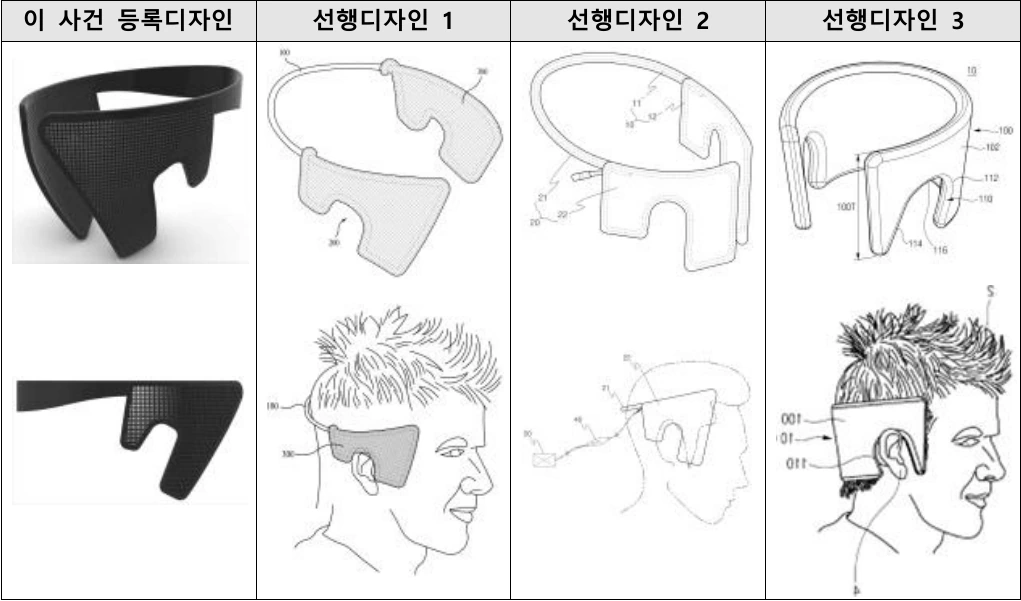
The overall appearance and the result
The rear support remained significant even though it was less prominent in frontal advertising or partly concealed when worn. It occupied a substantial part of the design and could be observed from the side and rear during purchase and use. Considering the connection angle, support contour and perforation pattern together, the court set aside the invalidity decision. This was a validity dispute on the grounds advanced, not an infringement ruling, and it does not establish that any small difference will preserve registration.
Presenting a design case
A persuasive comparison explains how angles, curvature, changing widths and repeated patterns combine to create an overall visual impression. It should distinguish functional adjustments from aesthetic choices and address whether the cited forms could readily produce the combination. Filing drawings and dispute exhibits should include the views in which the claimed visual contribution is actually apparent.
The comparison figures retain the forms and labels shown in the Korean source.