

The railing-pipe dispute
In case 2025Heo10295, decided on 14 August 2025, the Korean Patent Court reviewed a positive scope-confirmation trial concerning a pipe installed to rotate between railing posts. Registered design No. 1223697 was filed on 11 November 2022 and registered on 7 July 2023.
The proprietor argued that the other company’s pipe fell within its design right. On 20 February 2025, the Board accepted that position in case 2023Dang3587, treating the registered design as sufficiently novel in appearance to warrant a broad similarity range. The other company sought cancellation. The Court found different overall visual impressions and cancelled the Board’s decision.
The concrete features under comparison
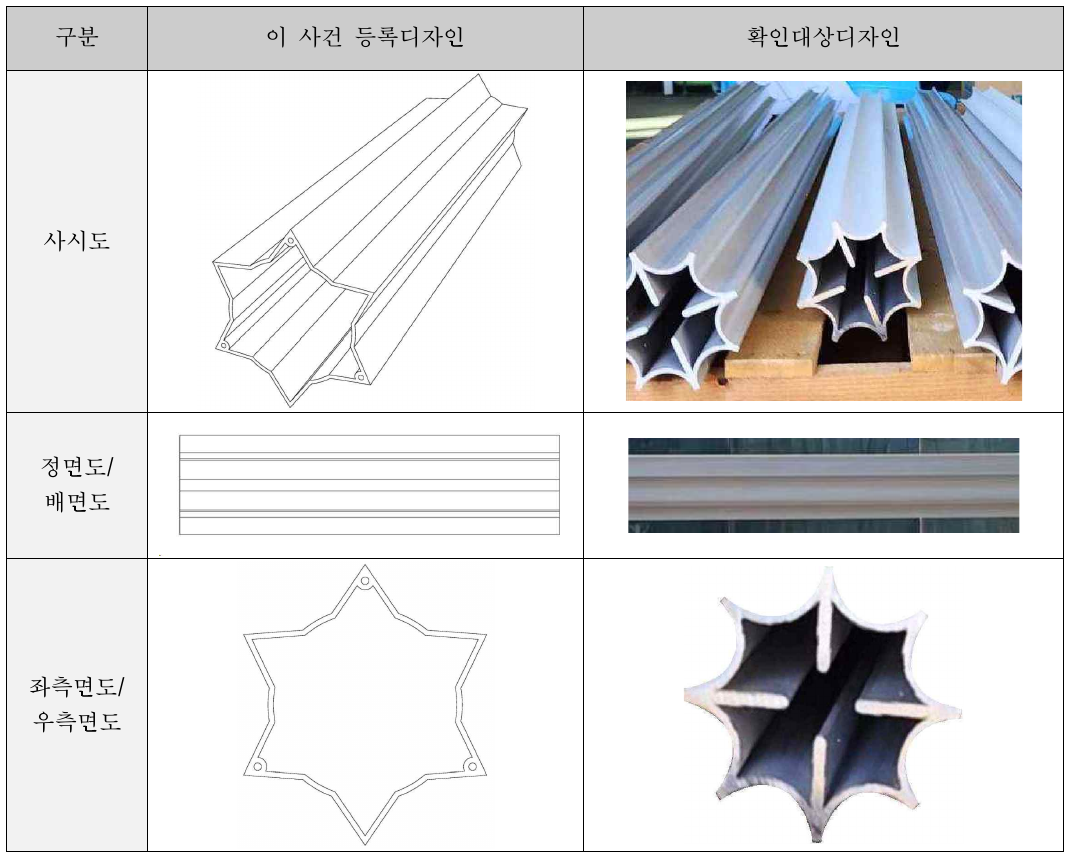
Both articles were elongated pipes with repeated projections and recesses. The registered design had six projections in end view; the compared design had eight, together with four inwardly directed fixing bars surrounding a central void. The registered design’s connecting profile had two angular steps, while the other design used a single deep, smooth curve.
The projection tips, holes and arrangement of lines in front view also differed. These were not assessed simply by counting differences. Their combined effect on the overall aesthetic impression was the relevant question.
Known shapes receive less weight
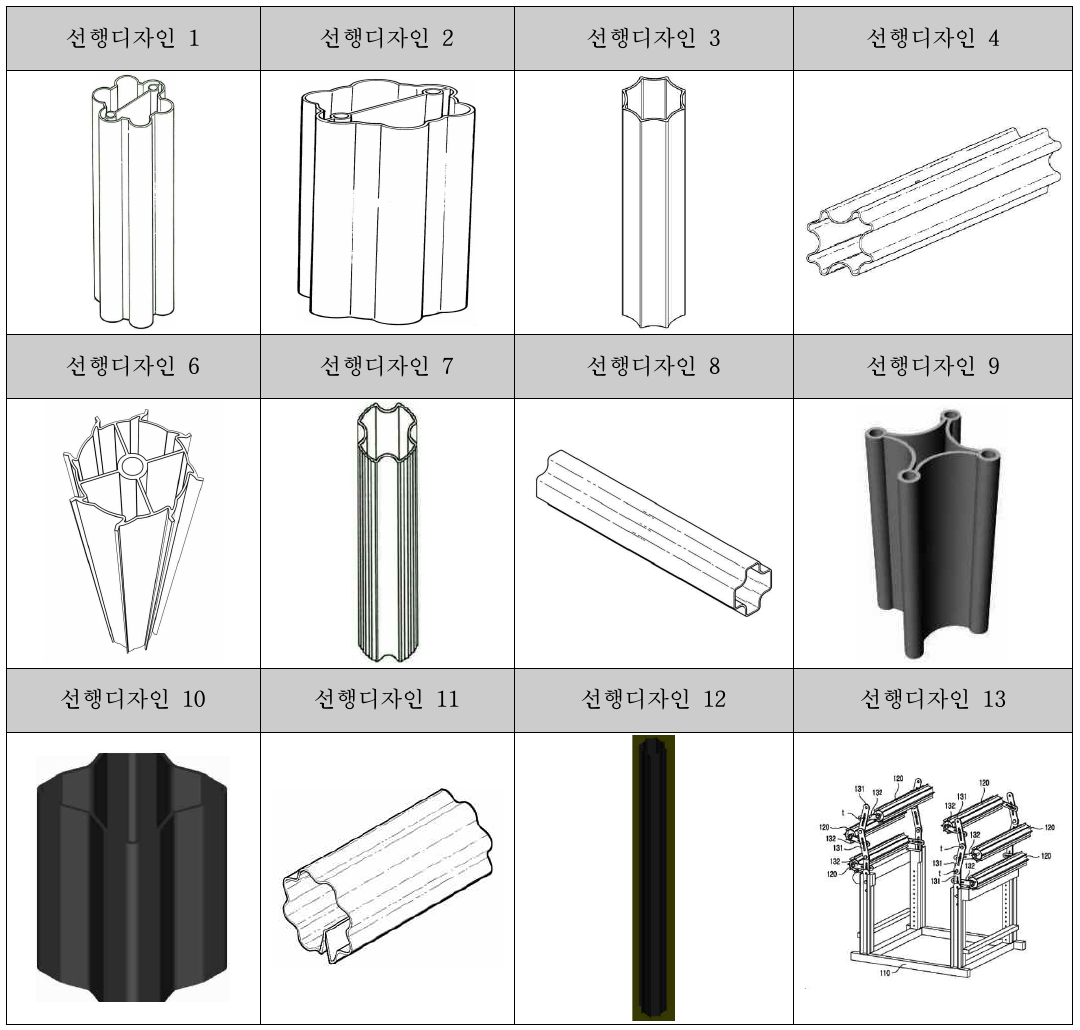
The Court identified elongated polygonal bodies, projections, recesses, approximately triangular protrusions and horizontal front-view lines in earlier designs. A prior railing post, for example, already combined pointed projections with inwardly recessed surfaces.
Such common features remain part of the overall comparison, but their weight in defining the registered design’s scope is reduced. Adjusting projection height, including the asserted relationship to the basic circular radius, did not in this case establish an unprecedented, pioneering design.
The end face and internal structure changed the impression
The four fixing bars attracted attention through thick straight lines and surfaces extending inside the hollow pipe. The registered design lacked that structure. Its six projections and stepped transitions produced a gentler impression, while the eight more closely spaced projections and deep curves in the compared design produced a repeated in-and-out rhythm.
The Court also contrasted the registered design’s alternating narrow and wide horizontal line spacing with the simpler front-view impression of the compared design. The finding of dissimilarity followed from these features together, not from the number of projections alone.
Visibility during sale and installation
The proprietor argued that railing posts conceal the end face during use. The Court nevertheless considered appearance in trade as well as in use. The end face was visible when the product was sold and when it was connected to the posts during installation.
A feature cannot therefore be dismissed as an important visual part merely because it becomes partly concealed after assembly. Product photographs before installation, views from several directions and installation-stage evidence can be important in explaining what attracts attention.
A functional feature is not automatically visually immaterial
The proprietor also characterised the internal bars as functional fixing elements. The Court distinguished a shape associated with a function from a shape that must necessarily take that form to perform it. The four bars and connected internal surfaces were not shown to be indispensable in that precise configuration, so their visual effect remained relevant.
The Court concluded that the compared design lay outside the registered design’s scope and cancelled the contrary trial decision. It did not invalidate the registration itself. Arguments about invalidity and a design readily implementable from prior material were unnecessary to the result and were not determined.
Preparing the comparison
A sound analysis combines the entire appearance, the significance of known features and the specific visual effect of differences. It should also test claims of functional necessity against possible alternative shapes. Neither changing a projection count nor adding an internal feature invariably avoids a design right; the result here depended on the end face, interior, front-view lines and earlier designs considered together.
Original figure labels and forms are preserved; the surrounding text explains their meaning.