
A registered design does not necessarily provide an enforceable right against a similar product. An earlier publication may remove the novelty on which the asserted protection depends.
In its judgment of 23 June 2022 in case 2021Na1824, the Korean Patent Court considered an LED bulb design and a Hong Kong lighting-fair publication. The dispute shows why the publication date, the dominant visual features and the procedural status of invalidity proceedings must be examined separately.
The design and the claims
The claimant owned Korean design registration No. 30-0901396 for an LED bulb, filed on 20 May 2016 and registered on 30 March 2017. Company B sold the daylight-colour Edison LED Lamp, company D sold the T-LED 4W, and a third company resold the bulbs supplied by those companies.
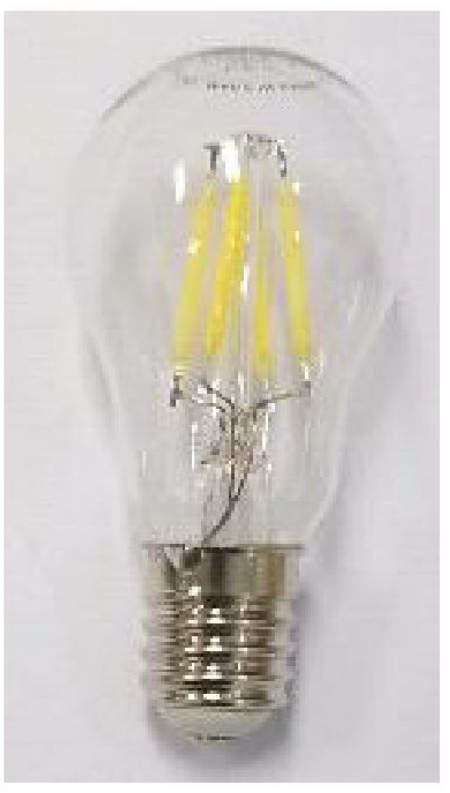
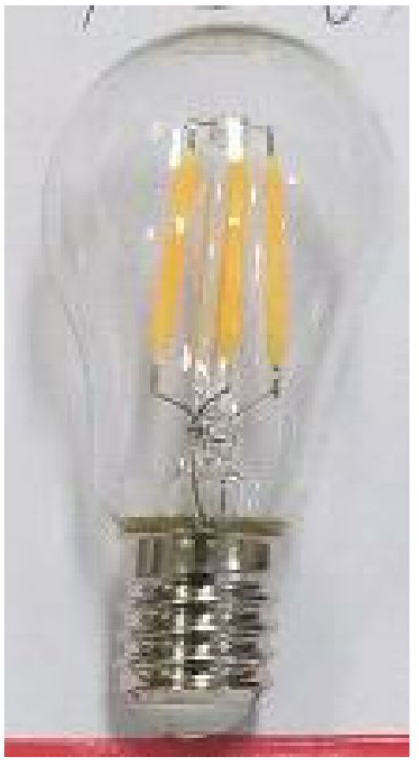
The claimant sought injunctions against the relevant production and commercial activities, destruction of finished products, and KRW 50 million in damages from each of B and D. The Seoul Central District Court dismissed all claims on 27 August 2021 in case 2019Gahap509576, prompting the appeal.
What had become final in the invalidity proceedings?
In separate proceedings, the Intellectual Property Trial and Appeal Board initially dismissed the invalidity petition on 10 September 2020 in case 2019Dang4182. The petitioners challenged that decision before the Patent Court.
On 25 November 2021, in case 2020Heo6620, the Patent Court held that the registered design was similar to a design disclosed before the filing date and fell within Article 33(1)(3) of the Korean Design Protection Act. It set aside the Board's decision without needing to determine the remaining prior-design or easy-creation arguments.
The Supreme Court dismissed the further appeal without a full merits hearing on 31 March 2022 in case 2021Hu11476, making that judicial decision final. At the time of the infringement appeal, however, the remitted invalidity case, 2022Dang(Cancellation Judgment)35, was still pending before the Board. A final judgment setting aside a Board decision should not be described as an already-final new invalidity decision.
The October 2014 publication
The earlier design appeared in the October 2014 issue of “lighting”, distributed at the Hong Kong International Lighting Fair held from 27 to 30 October 2014. For disclosure, the relevant question was whether the material had been made available to the public, not whether every member of the public had actually seen it.
The claimant argued that the issue could not be found on the publisher's website, that it was an internal trade-fair document, and that it might have been fabricated after the event. The court examined the dates printed on the cover and product page, the fair dates and the layout shared with other issues.
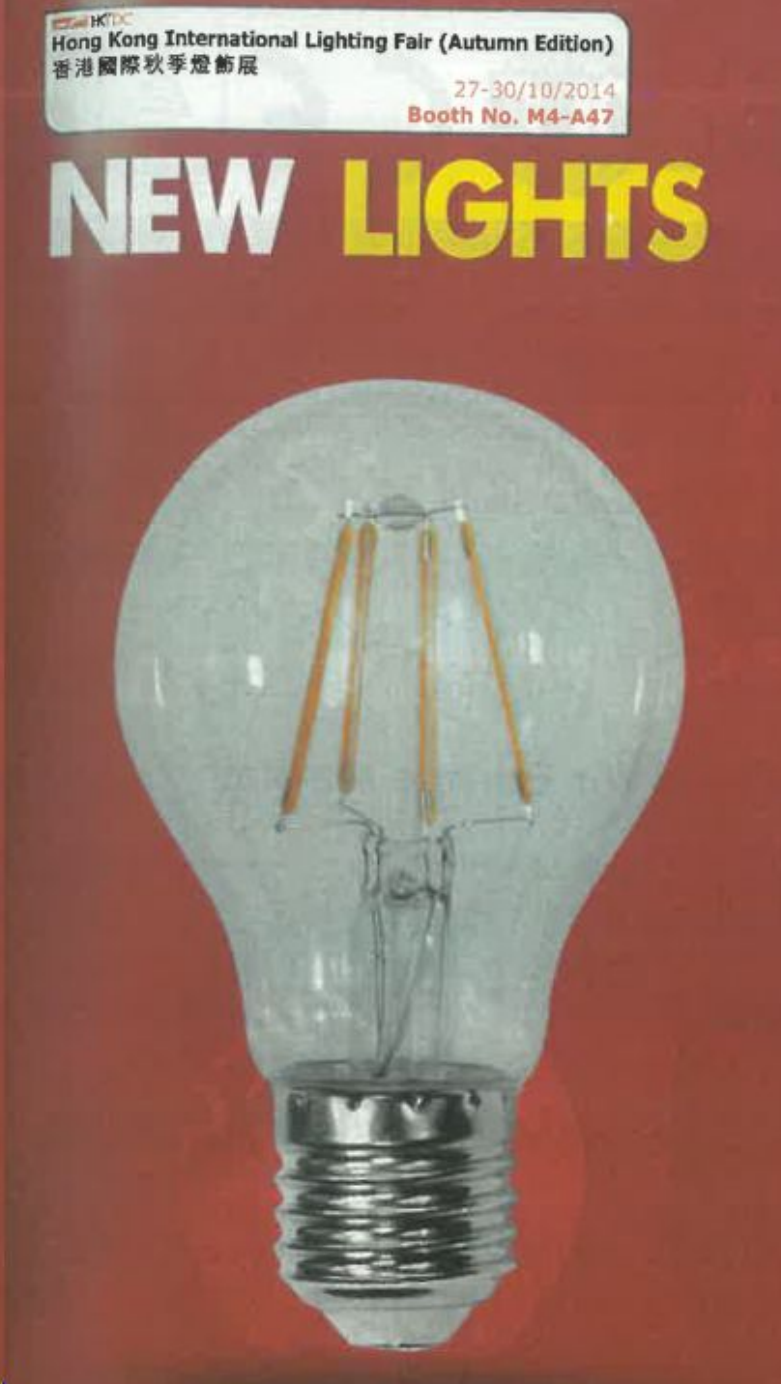
The absence of an issue from a website more than seven years later did not establish fabrication. The original had also been produced at the first-instance hearing and inspected by the claimant's representative. With no persuasive indication of subsequent alteration, the court accepted that the publication predated the May 2016 filing.
Comparing the overall visual impression
Design similarity is assessed through the overall aesthetic impression, with particular attention to the features most likely to attract the viewer during ordinary use. A prior image need not show every detail perfectly if its essential design can still be understood from the material and ordinary experience.
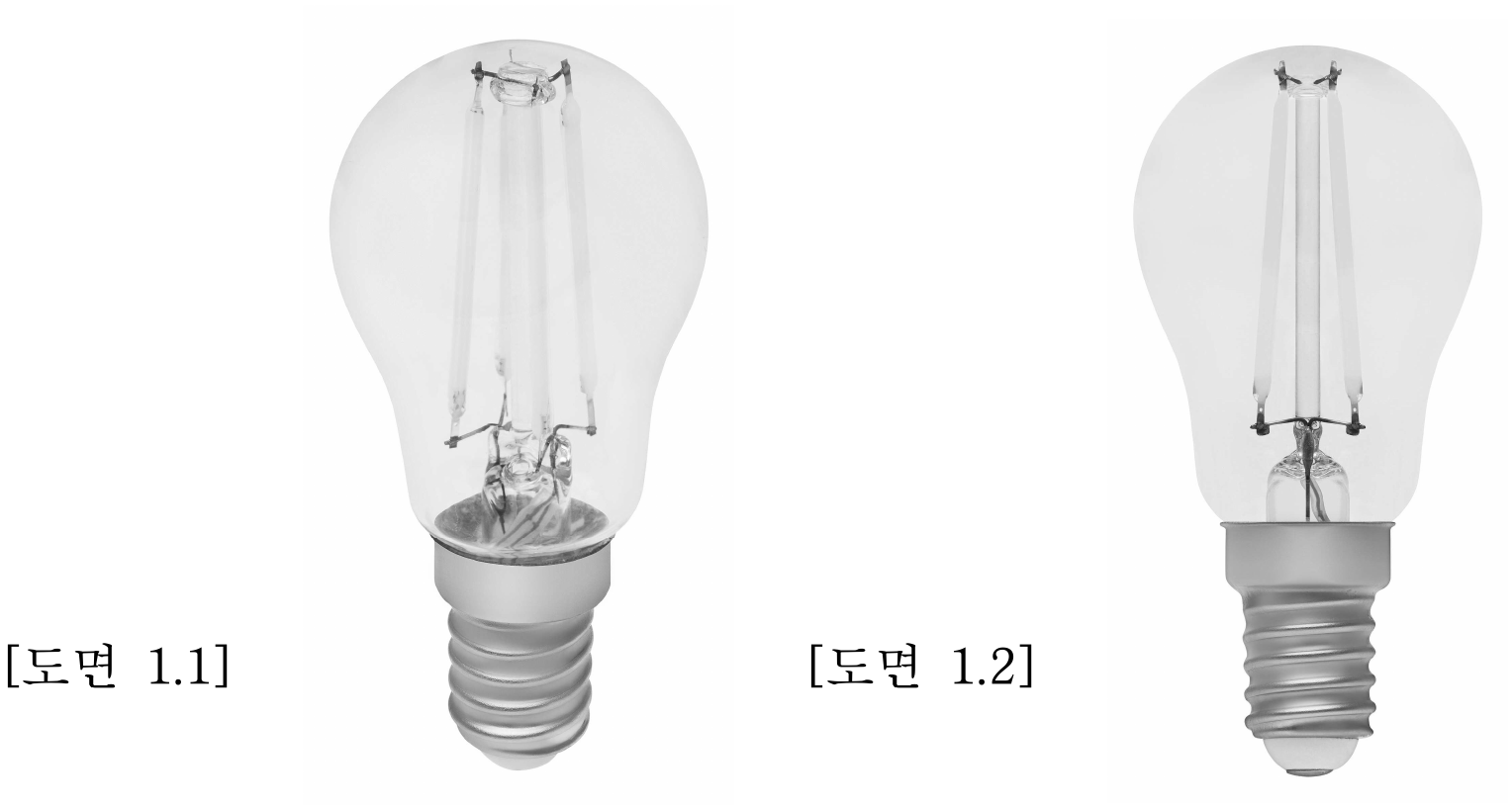
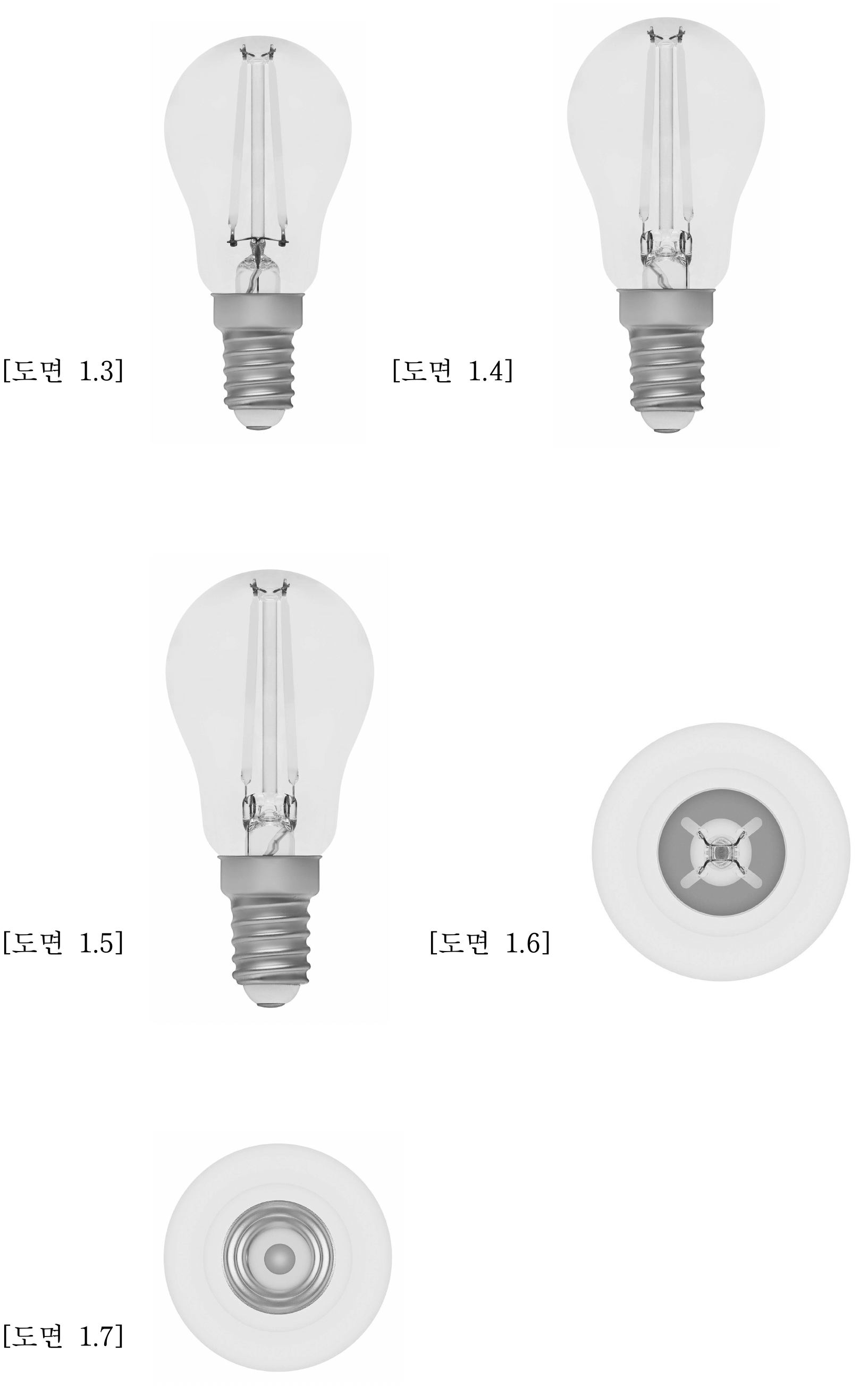
Both bulbs had a transparent envelope, LED members, a central column and a base. Four slender cylindrical LED members were arranged around the column in a square-pyramid configuration, narrow at the top and wider at the bottom. This conspicuous arrangement gave both bulbs an incandescent-filament appearance and dominated their overall visual impression.
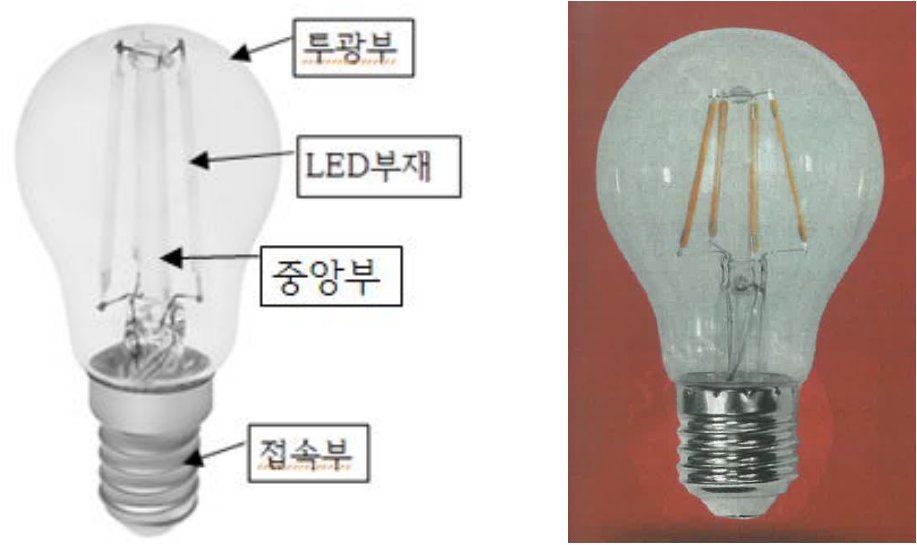
Why the small differences did not change the result
The claimant relied on the cross-shaped upper junction, the recessed connecting wire and details of the lower connection and neck. The court found that the prior image also disclosed the relevant projecting junction and the narrowing-and-widening neck configuration.
Any remaining differences were too slight for ordinary consumers readily to notice and did not displace the common impression created by the four-member pyramidal arrangement. Both designs concerned LED bulbs with the same purpose and function, so the comparison also involved the same kind of article.
No enforceable scope despite the pending remittal
The court concluded that the earlier disclosed design deprived the registration of novelty. Under the Korean case law applied in this judgment, such a design could not be accorded a scope of protection even before a new invalidity decision had been issued. Making or selling a product with even the same design therefore did not establish infringement of that unenforceable scope.
The Patent Court accordingly upheld the dismissal of the injunction, destruction and damages claims and dismissed all appeals. The decision turned on the registered design's lack of novelty, rather than on a finding that the accused bulbs were sufficiently different.
Practical implications for design disputes
Evidence of a prior publication should preserve the cover, issue date, publisher or organiser, and the relevant product pages together. An isolated product image may leave the crucial disclosure date and public availability difficult to establish.
The visual comparison should explain the features that dominate the product's overall appearance and then assess whether the alleged differences alter that impression. In this case, the four LED members and their pyramidal arrangement mattered more than minor variations at the connections.
The original figure labels and forms are preserved; the text explains the source material.