
A product name may identify commercial origin independently of the main brand displayed beside it. In its judgment of 8 October 2026 in case 2026Na10039, Korea’s Patent Court considered two signs used on Aekyung Industrial’s “2080 Gingivalis MADECADIN” toothpaste. The court distinguished the losses over the entire infringement period from those attributable to the later period of intentional infringement.
Two registrations that expressly covered toothpaste
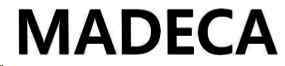
The claimant, Dongkook Pharmaceutical, used its MADECA marks for cosmetics, including Madeca Cream. The court based its decision on the claimant’s third and fourth registrations: the Korean word mark shown below, registration No. 1301570, and MADECA, registration No. 1301571. Both covered toothpaste among their designated goods. The registered goods mattered independently of the product line for which the brand was best known.

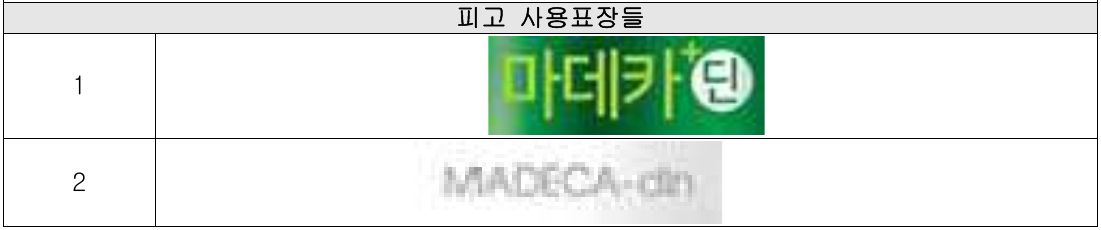
Aekyung used the two disputed signs on toothpaste packaging. The claimant also relied, in the alternative, on its first and second registrations and on unfair competition. The court did not determine those alternative grounds separately because they would not support damages exceeding the amount already awarded under the third and fourth registrations.
Why MADECA was read as a separate indication of origin
The court examined the signs as they actually appeared. In the Korean version, the MADECA element was emphasised in larger yellow lettering on a green background, while the final syllable, “din,” appeared in a white circle beside a plus sign. In the English version, the large capital letters MADECA were separated from the smaller “din” by a plus sign. The layout enabled consumers to perceive MADECA independently.

Market evidence reinforced that assessment. More than 33 million units of Madeca Cream had been sold by April 2022. Aekyung’s own product page used the MADECA name separately from 2080, while customer reviews and posts by product testers also identified the toothpaste by MADECA.
The court accepted that 2080 was itself a dominant element identifying origin. That did not prevent MADECA from performing the same function alongside it. The suggestion that MADECA originated from ingredient names, and evidence of use by other cosmetics businesses, were insufficient to establish that the industry generally used it as an abbreviation for the ingredient.
Differences in colour and typeface were minor. The Korean and Roman-letter elements were both pronounced “Madeca,” and the goods were identical to the toothpaste covered by the registrations. The court found a likelihood of confusion as to commercial origin and held that the use infringed the claimant’s rights.
Loss did not depend solely on reduced cosmetics sales
Dongkook used the marks on cosmetics and sold toothpaste under other brands. Considering the parties’ activities and Dongkook’s toothpaste business, the court treated them as operating in the same line of business. It did not assume that toothpaste sales directly reduced cosmetics revenue. Rather, the infringing use could affect the claimant’s existing toothpaste business or its expansion.
The court also considered the lost opportunity to earn licence fees and possible damage to the marks’ distinctiveness. The infringing sales ran from September 2020 until shipments ended in October 2023. Aekyung was at least negligent: as a toothpaste supplier, it had a duty to take care that its products did not infringe another party’s trade marks.
Continued sales after the demand to stop
On 22 August 2022, Dongkook sent a demand to stop sales and dispose of the products using Korea’s content-certified postal service. In its reply of 7 September, Aekyung acknowledged learning of the claimant’s registrations from the notice but maintained that it was entitled to use the signs under its own third and fourth registrations.
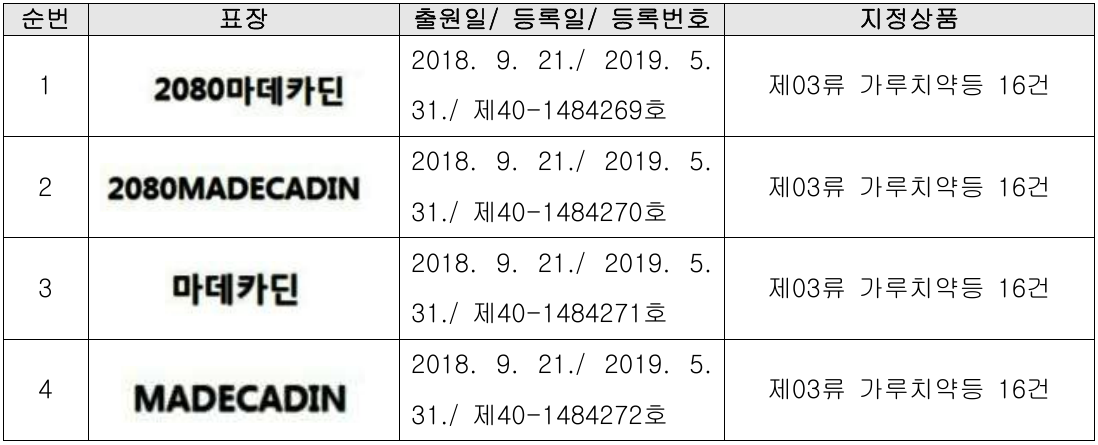
The court distinguished those registrations from the altered signs actually used. The colours and separating devices made the packaging signs insufficiently equivalent to the registered versions for that defence to succeed. It also considered the separate, final decisions cancelling all four of Aekyung’s registrations for altered use that caused confusion with the claimant’s marks.
On 8 September 2022, Aekyung decided internally to change the product name and discontinue the existing product, while first using up its stock of packaging. In November it said that replacement packaging and containers were being prepared. Sales bearing the disputed signs nevertheless continued until October 2023.
Taken together, the correspondence, internal decision and continued sales supported a finding of conditional intent from September 2022 to October 2023: Aekyung recognised the possibility of infringement and accepted that risk. The court did not equate this with a finding that infringement had been pursued maliciously or with certainty that loss would result.
Assessing loss against approximately KRW 860 million in sales
The claimant sought to calculate the defendant’s profit by applying a margin derived from manufacturing statistics and company disclosures to sales revenue. The court could not identify the actual incremental costs of this toothpaste sufficiently to calculate infringement profits. Nor was there adequate evidence of comparable licences from which to determine a reasonable royalty.
Under Article 110(6) of the Korean Trademark Act, the court could assess a reasonable amount where loss was established but proving its precise amount was extremely difficult. It assessed the underlying loss at KRW 70 million, taking account of approximately three years of sales, revenue of roughly KRW 860 million, royalty and profitability evidence, and the contribution made by Aekyung’s own 2080 brand.
Doubling only the loss for the intentional period
The former version of the statute applicable to this dispute permitted an award of up to three times the established loss for intentional infringement. This was the historical rule applied to the conduct in this case. Using the intentional period’s share of total revenue as a guide, the court assessed the loss for September 2022 to October 2023 at KRW 13 million out of the KRW 70 million total.
It doubled that portion to KRW 26 million, considering harm to distinctiveness from online exposure, the duration of the conduct, the defendant’s awareness and its efforts to mitigate the harm. Adding KRW 57 million for the earlier period through August 2022 produced a principal award of KRW 83 million. The court did not double the entire KRW 70 million.
The Seoul Central District Court had awarded KRW 175 million on 13 January 2026 in case 2022Gahap559519. Both parties challenged only the damages ruling. The Patent Court reduced the principal to KRW 83 million plus interest for delay, reversed the award to the extent it exceeded that amount, and dismissed the claimant’s cross-appeal and the remainder of the defendant’s appeal.
Packaging and sales records need to be reviewed together
A clearance review should compare the filed or registered mark with the packaging actually used. Letter size, colour and separating devices can cause one component to function as an independent product identifier even where a prominent main brand is also displayed.
Following a notice, the chronology should cover more than the response letter and the decision to redesign. Packaging stock, shipment dates and changes to online product pages may establish how long the challenged use continued and help determine the period relevant to intent and enhanced damages.
The original figure labels and forms are preserved; the text explains the source material.