

The application and the procedural issue
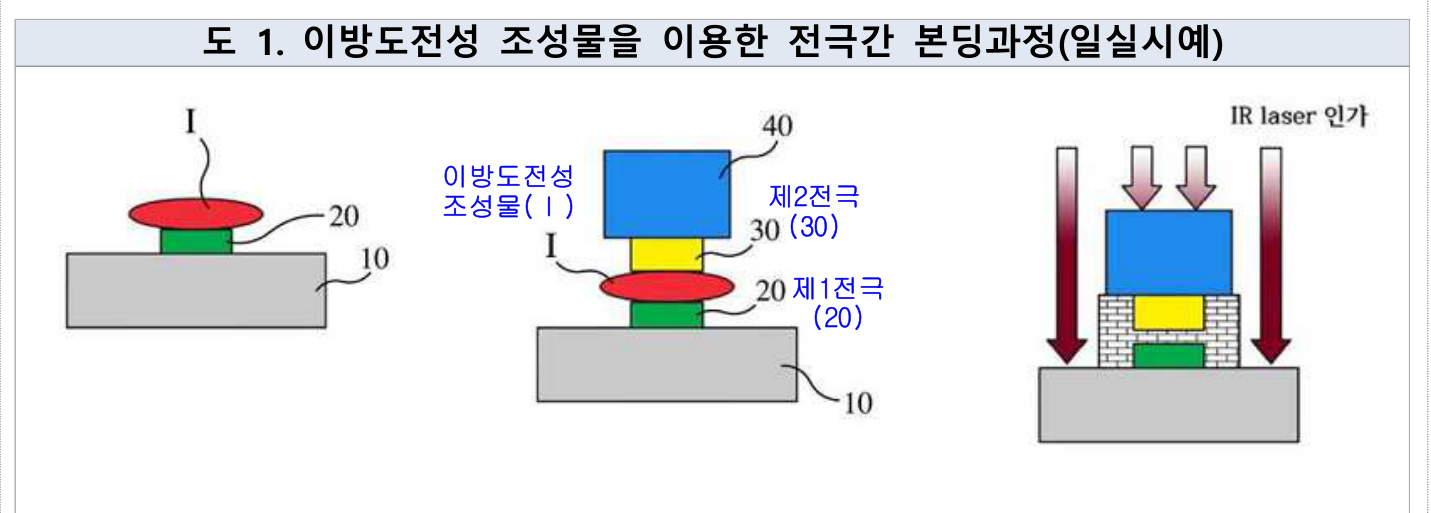
Korea’s Patent Court dismissed the applicant’s challenge on July 8, 2026 in case 2025Heo10348. Application 10-2023-0047136, filed on April 10, 2023, concerned an anisotropic conductive connection method: a composition containing a metal precursor and curable resin is applied to an electrode, pressed against another electrode and cured using heat or light. Anisotropic conductivity means that electrical conduction depends on direction; a precursor is a starting material converted into metal during processing.
Following a refusal in June 2024, the applicant requested re-examination with amended claims. On August 26, 2024, the examiner dismissed the amendment and refused the application again. The IPTAB rejected the appeal on March 13, 2025. The subsequent court proceedings addressed both the admissibility of the amendment and inventive step.
A reference from claim 2 to claim 1 removed a limitation
Original claim 1 defined the basic connection method. Claim 2 added phase separation between the metal sintered body and the cured material. Claim 3 depended on claim 2 and specified a coating method, such as screen printing or inkjet printing. It therefore incorporated the limitations of both claims 1 and 2 without repeating their wording.
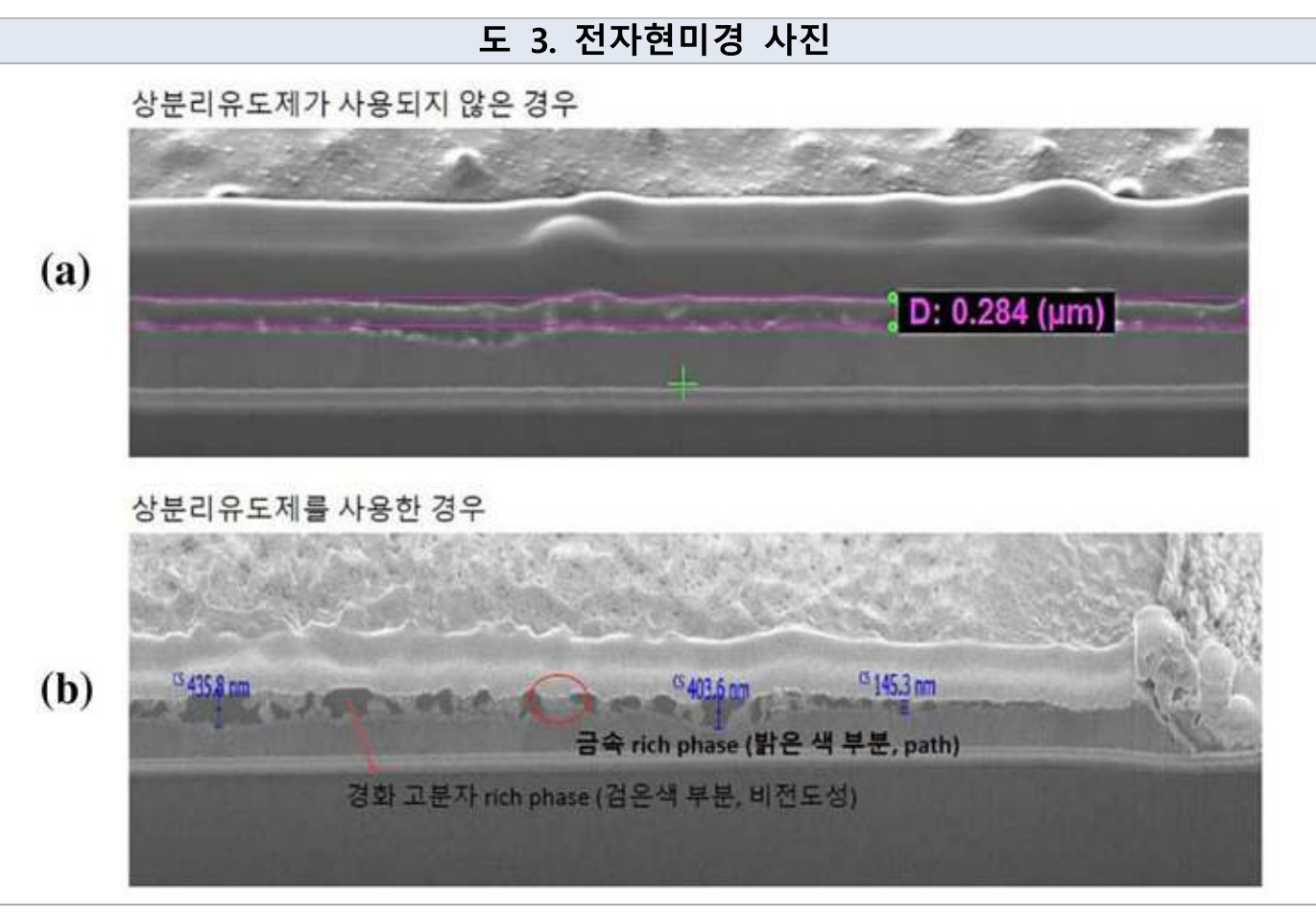
Amended claim 3 referred directly to claim 1. The phase-separation limitation inherited from claim 2 consequently disappeared. Other amendments elaborated the curing process in claim 1 and adjusted the coating-method wording, but the court found that these changes did not retain the same limitation. The specification’s electron-microscope images, with and without a phase-separation inducer, explained the technology; they did not by themselves put the missing requirement back into the claim.
Compare the amended dependent claim with its former scope
Article 47(3) of Korea’s Patent Act restricts amendments when re-examination is requested. Remaining within the original disclosure does not, on its own, establish that an amendment qualifies as a reduction of claim scope. A deleted technical limitation may allow a dependent claim to cover methods it previously excluded.
The applicant argued that amended claim 3 was narrower than original claim 1. The court rejected that comparison because claim 1 still existed separately after amendment. Treating both amended claims as restrictions of the original independent claim would effectively permit an additional claim inconsistent with the statutory restrictions. The decision does not prohibit every change of dependency: the problem was the loss of an inherited limitation that the other amendments did not preserve.
Inventive step remained a separate question
After upholding dismissal of the amendment, the court considered original claim 1. Prior art 1 used metal-coated conductive particles in an anisotropic conductive resin composition; the application instead used a metal precursor and a sintered metal body connecting the electrodes. Prior art 2 disclosed a copper precursor that forms copper on firing and connects copper powder into a conductive path. The court treated that process as including reduction and sintering, despite the different terminology.
Both references concerned conductive compositions for electrode connections, and prior art 2 also contemplated anisotropic conductive sheets. Improving conductivity supplied a reason to apply its copper-precursor teaching to prior art 1. The applicant’s assertion that its method formed the path solely from the precursor failed because claim 1 did not exclude other conductive particles, and the specification included embodiments adding such particles. The court found claim 1 lacked inventive step.
Drafting and dispute preparation
Before changing a claim reference, write out every inherited limitation and identify what will be retained, deleted or expressed differently. Check both the correct comparison claim and the procedural stage. A dependent claim being narrower than a broad independent claim does not establish that its own scope has been reduced.
The technical distinction relied on in argument must also be required by the claim. An effect described for a particular embodiment cannot automatically distinguish the entire claimed scope. The court dismissed the action because the amendment was inadmissible and original claim 1 was unpatentable; one deficient claim could justify refusal of the application as a whole. It did not separately hold that every remaining claim lacked inventive step.
The original figure labels and forms are preserved; the text explains the source material.