

A dispute about the scope of protection
Korea’s Patent Court decided 2023Heo14486 on January 16, 2025. Registered design 30-1015208, filed November 19, 2018 and registered July 10, 2019, concerned a light fitted to a ceiling track. The applicant sought a negative confirmation that its identified comparison design fell outside the registered design’s scope, rather than invalidation or damages.
The first petition had been dismissed as duplicating another proceeding. The court reversed because the designs identified for comparison were different. On remand, the IPTAB’s November 28, 2023 decision in 2023Dang(cancellation judgment)42 rejected the petition on the merits, finding the design within scope. The present judgment reviewed that second decision and the particular design identified in it.
A shared elongated body was not decisive
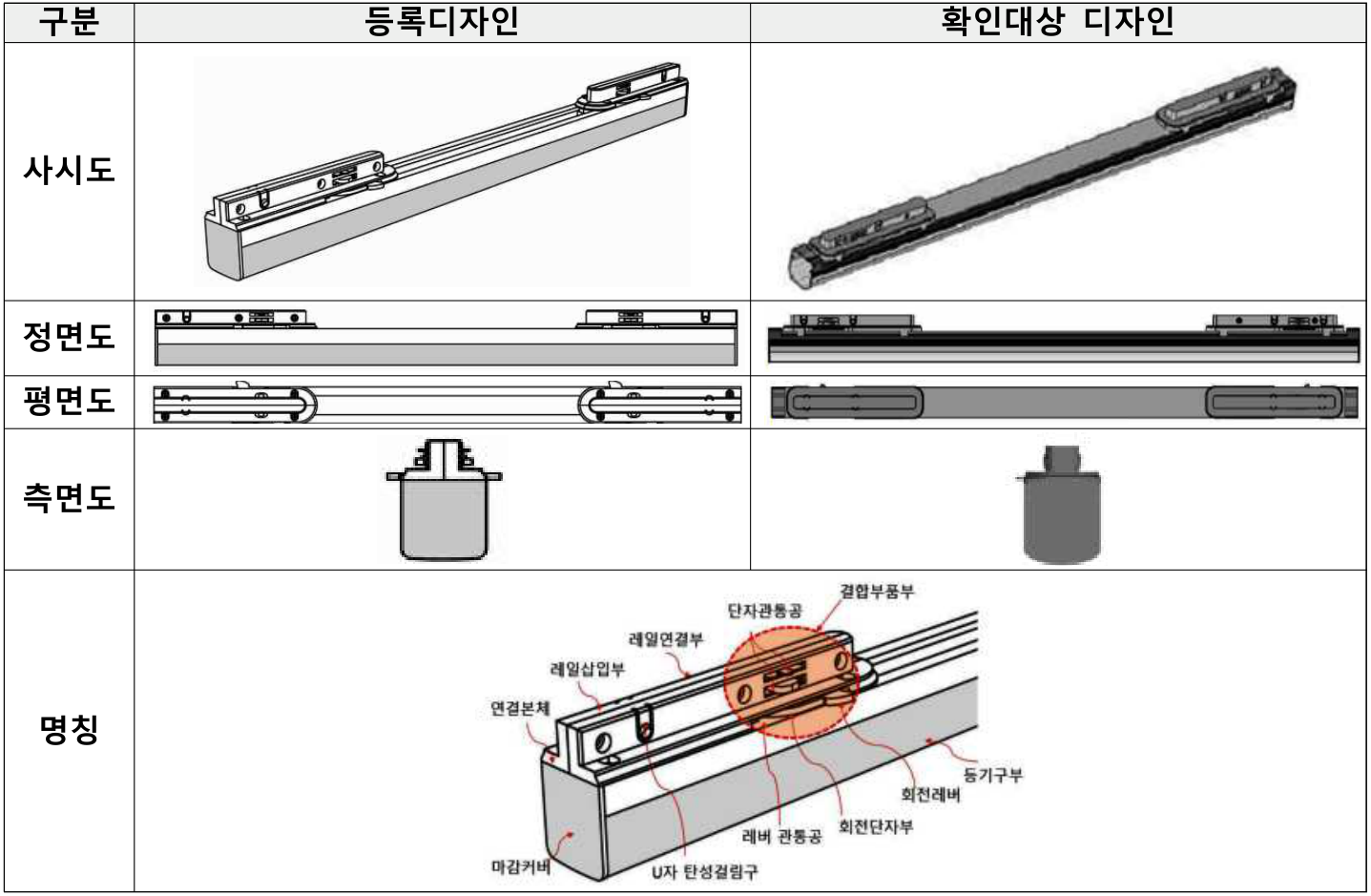
Both designs had a long rectangular light body, a track connector above each end and an open space between them. Similar proportions gave some common impression of slimness and balance. The court acknowledged those similarities instead of treating the products as wholly different.
It then identified the features most likely to attract attention in light of the product’s nature, purpose and use. The position and shape of the track connections, the arrangement of insertion-related components and the guide groove for adjusting connector position carried particular visual weight. Similarity was assessed through the overall aesthetic impression, not a count of matching parts.
The ends, internal arrangement and grooves changed the impression
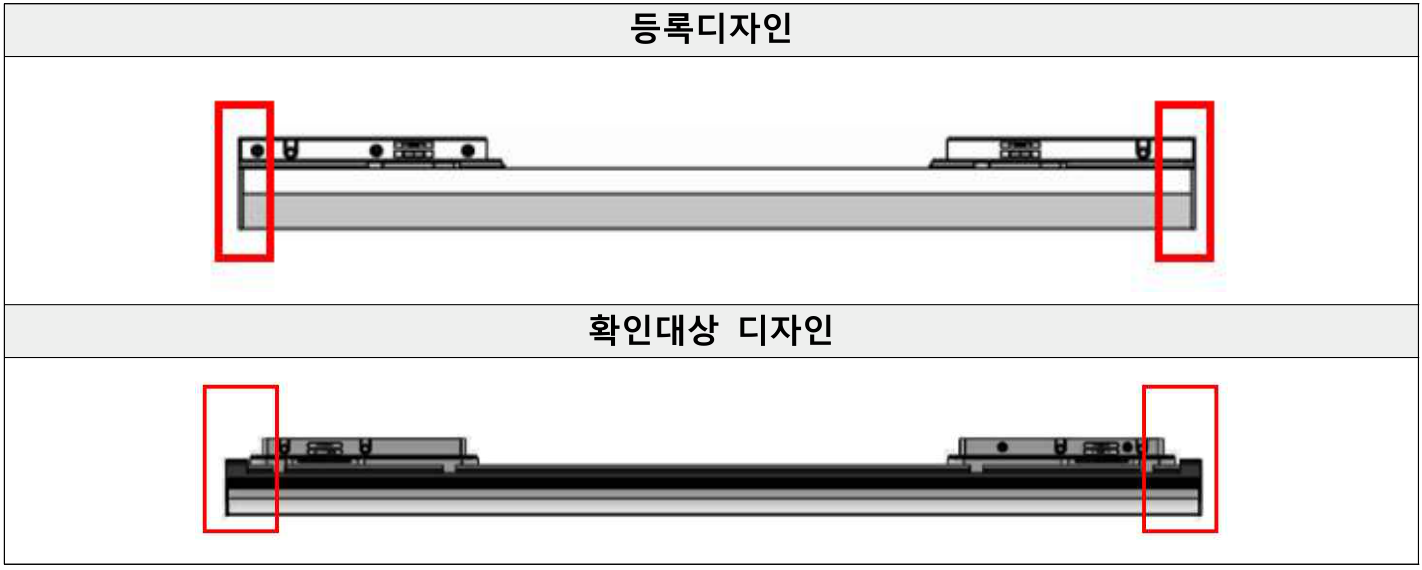
In front view, the registered design’s ends formed clean, straight lines without steps. The comparison design placed the connectors inward from the ends, producing a stepped and more complex profile. Within the registered connector, coupling parts were toward the centre and spring catches outside, with three screw connections on the left. The comparison placed coupling parts outward, a catch on each side of them, and two screw connections.
The registered design had a long recessed guide groove along the centre of the upper surface. The comparison design instead had a thin groove at the upper edge of the front face, leaving the top flat. It would be inaccurate to describe the comparison as having no groove anywhere.
The registered connecting body had four screw connections and a rotating lever on each side, with square outer corners contrasting with curved inner corners. The comparison had no screw connections on that body, one lever on one side and similarly rounded corners throughout. These differences produced contrasting impressions of balance, depth and simplicity, outweighing the shared elongated form.

Appearance when buying also counts
The proprietor argued that the connectors, connecting body and groove were concealed by the track after installation and therefore could not be dominant features. The court considered appearance in trade as well as during use. Buyers would assess the connection parts when deciding whether to buy a track light; the light-emitting body was not the only relevant feature.
Conversely, not every shared detail carried equal weight. The side profile attracted less attention, while the rotating terminal occupied little of the whole and required close inspection. Those similarities did not materially determine the overall impression. The decision does not establish that every concealed component must always receive substantial weight.
Outside scope, without deciding the prior-art defence
The court held that the comparison design was not similar overall and fell outside the registered design’s scope. It cancelled the contrary IPTAB decision. Having reached that conclusion, it did not need to decide the applicant’s alternative argument that the design could be freely worked from known designs. That defence should not be reported as an additional ground upheld by the court.
For assembled products, comparison materials should show the condition in which goods are sold as well as their installed state. Front, top and oblique views can reveal offsets, component layouts and grooves that an installation photograph misses. Explain how those differences affect the overall visual impression instead of merely listing their number.
The original figure labels and forms are preserved; the text explains the source material.