
1. The design and the outcome
The dispute concerned Korean registered design No. 940180 for a roadside canopy used by pedestrians, including at crossings. The petitioners sought a negative confirmation that their specified smart-canopy design fell outside its scope. On October 28, 2024, the Intellectual Property Trial and Appeal Board rejected the petition in case 2024Dang842.
On May 22, 2025, the Patent Court set that decision aside in 2024Heo15578. It found that the specified comparison design produced a different overall aesthetic impression and lay outside the registration’s scope. This was a scope determination, not invalidation of the registered design.
2. Common structure is only the starting point
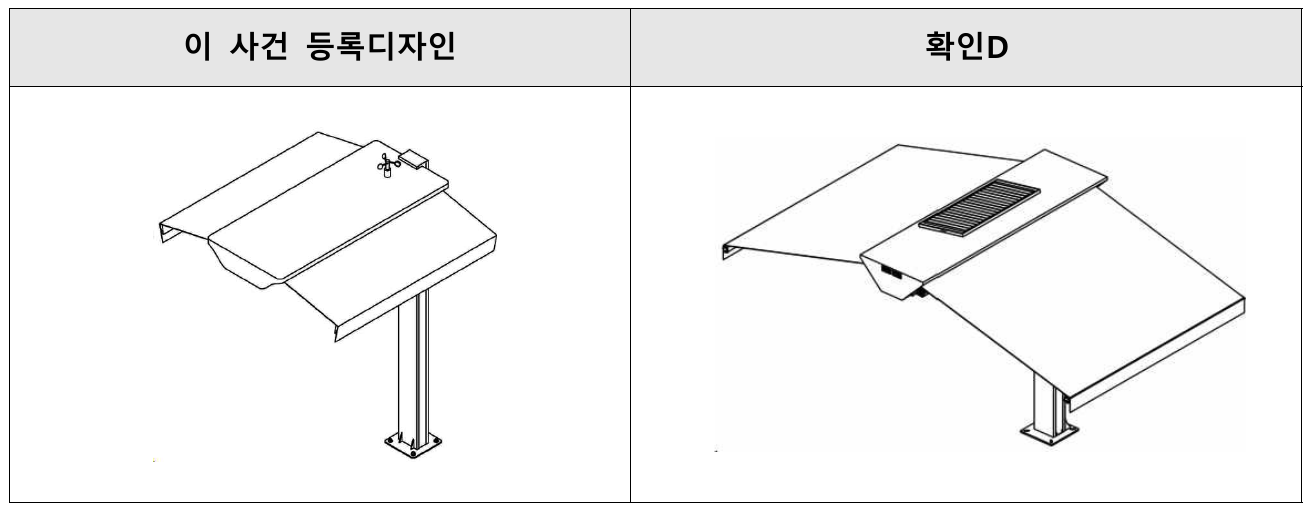
Both designs had a rectangular post, a central cantilever attached at one end, sloping awnings on both sides, edge guides and two-stage folding arms. However, prior designs already disclosed the basic arrangement and several details. Those known features deserved reduced weight.
The court still compared each design as a whole. It did not simply erase known elements from the comparison. Nor is a functional feature automatically unimportant: where alternative shapes can perform the function, its visual form may remain significant.
3. Proportion and connections changed the impression
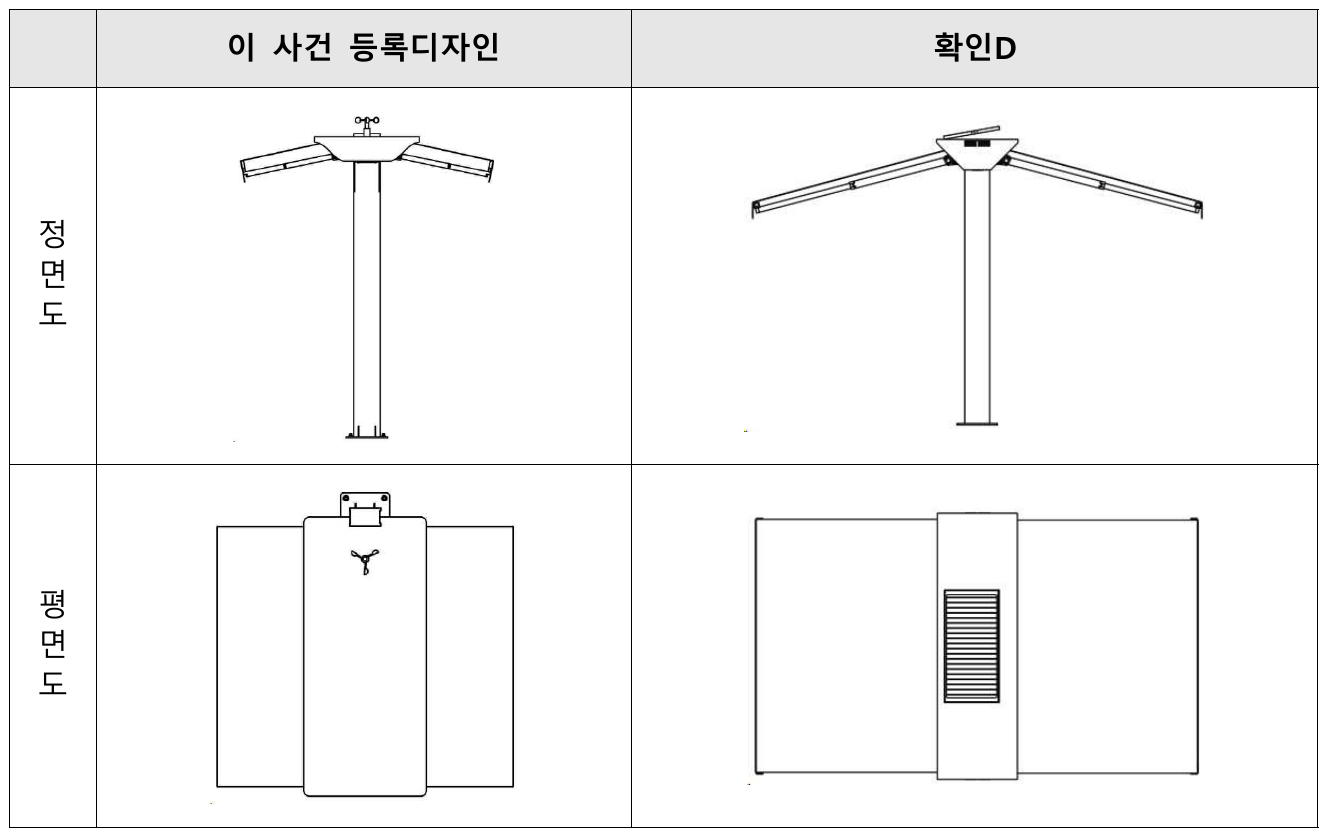
The registered design had a broad central plate, with awnings approximately as wide as the central support. The comparison design used a much narrower, elongated support and awnings nearly three times its width. The former appeared soft, stable and centred on the support; the latter appeared slender and dominated by its awnings.
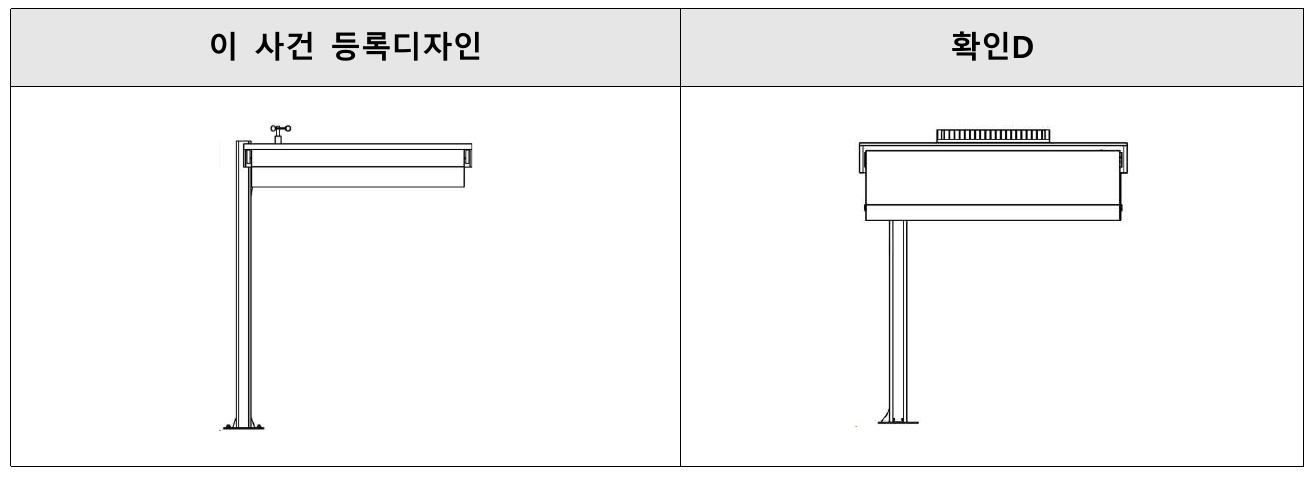
From the front, gently curved sides resembling a shallow, broad dish contrasted with steep straight sides resembling a bowl. The comparison design’s rectangular heat-dissipating element, solar-panel structure and angular forms contributed a more complex, rigid impression. Arm attachment positions, the underside and the post-to-support connection reinforced the difference across the front, top and side views.
4. A folding canopy must still be assessed when open
The possibility of folding did not cancel the visual differences in the fully extended state. That state showed the overall form and relative proportions which materially influenced the observer’s aesthetic impression.
Accordingly, the assessment could not stop at the fact that both products folded or shared a general operating structure. The court considered how their actual proportions and component arrangement appeared together.
5. The defined comparison design controls this proceeding
A negative scope-of-rights proceeding compares the design specified in the petition with the design represented in the registration drawings. The proprietor also submitted photographs said to depict the products actually made.
Even if those products were closer to the registration than the specified comparison design, their status would require a separate scope proceeding or infringement action. Photographs could not replace the subject matter defined for this case; the judgment is not blanket clearance for every marketed canopy.
6. Prepare a comparison across the relevant views
A useful assessment identifies the registered drawings, the precise design under review and prior designs before comparing proportions, connections and visual balance across perspective, front, top and side views.
Changing a width ratio or adding a solar panel does not itself guarantee that a design falls outside protection. In this Korean case, the combined differences altered the overall impression; the court’s reasoning must be applied to the actual design being assessed.
The original figure labels and forms are preserved; the text explains the source material.