

A decision overturning design invalidation
On 16 July 2026, the Korean Patent Court revoked the IPTAB decision in case 2025Dang301, which had invalidated design registration No. 1046545 for a seedling marker. The court proceeding was case 2026Heo10018. The design was filed on 30 July 2019 and registered on 14 February 2020.
The marker identifies the location and type of planted seedlings. The dispute concerned whether an ordinarily skilled designer could readily create its registered appearance from earlier designs. It was a validity dispute, rather than a finding that a competing product infringed.
Define the protected part before making comparisons
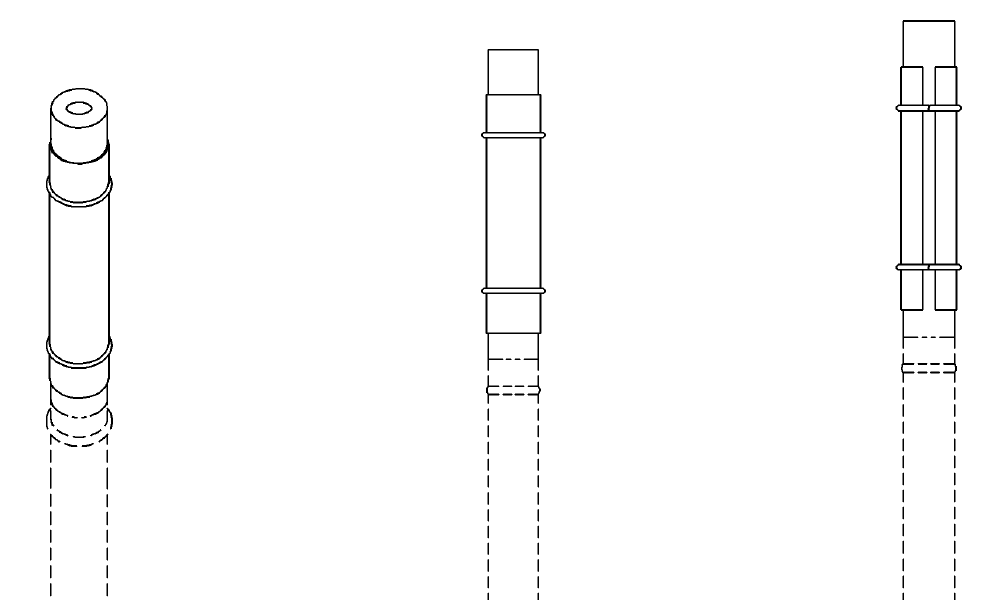
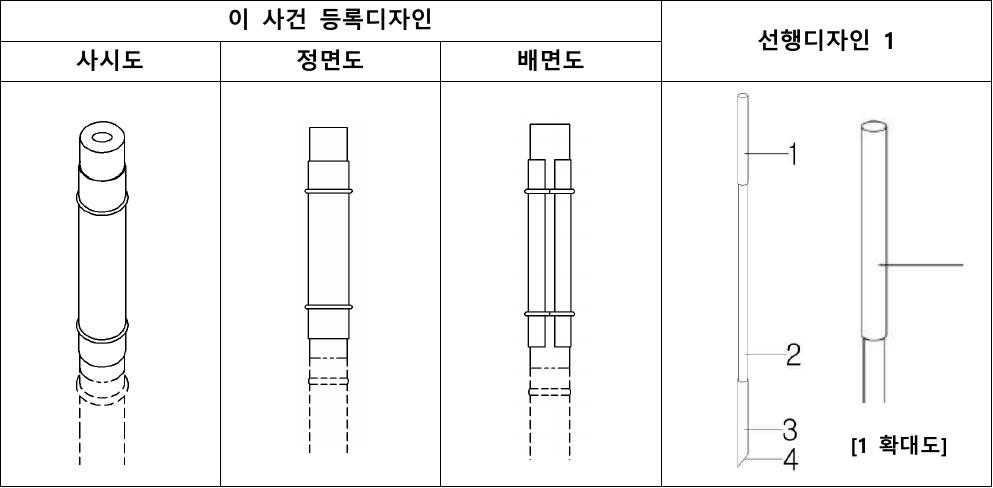
Only the upper portion shown in solid lines was the subject of this partial-design registration. Broken-line portions were outside the part claimed. Accordingly, the court compared the corresponding upper portion of prior design 1, without relying on its buried lower end or wedge.
Prior design 1 used paint, coloured tape or ribbon around a long shaft. Both designs shared this basic structure. The issue was whether the particular appearance of the registered upper portion followed readily from that starting point.
The rear view could not be disregarded
Article 33(2) of the Korean Design Protection Act addresses designs that an ordinarily skilled designer could easily create from previously known designs or familiar forms. Identifying differences is only part of the inquiry: the evidence must also explain why those differences would be easy to produce.
The challenger sought to concentrate on the front and left-side views. The court disagreed. The rear of a marker installed in a planting site is visible in ordinary use and can affect its aesthetic impression. Features depicted in the registered drawings could not simply be removed from the easy-creation assessment.
An exposed strip and two bands changed the impression
At the rear, a vertical strip of bamboo remained visible between the ends of the fabric wrapping. The contrast divided the surface vertically and emphasised the marker’s long axis. Prior design 1 had no corresponding exposed strip.
Knotless loop-shaped bands at the upper and lower edges of the wrapping also created proportion and visual divisions. Prior design 1 instead presented an uninterrupted surface. The court therefore rejected the characterisation of these differences as merely functional modifications lacking aesthetic value.
Why the proposed combinations were unpersuasive
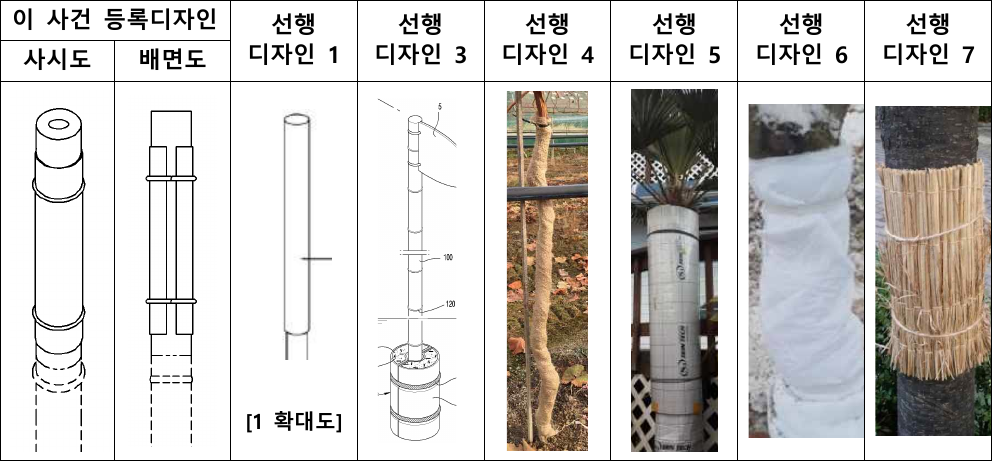
Prior design 3 concerned a marine aquaculture buoy with a projecting flag, an upper ring and a lower wire. Its outward-projecting structure differed from a marker whose wrapping formed a unified appearance with the shaft. The court found insufficient visual connection or design motivation to extract its ring and add it to prior design 1, which could even use paint alone.
Prior designs 4–7 showed tree insulation or insect-trapping wraps tied with cords or bands; designs 4 and 5 included knots. Those materials did not establish that the particular knotless upper and lower bands, together with the exposed rear strip, were commonplace or readily created in this design field.
The court did not decide every alleged difference
The challenger also relied on the owner’s 156 seedling-marker design applications. The number of filings did not itself establish a low level of creativity. With a relatively simple article, an apparently small modification can materially alter aesthetic value.
The exposed strip and loop-shaped bands were sufficient to defeat the asserted easy-creation ground on the evidence presented. The court therefore did not go on to decide the other differences concerning the space above the wrapping and concentric circles in the top view. It did not independently endorse all four differences.
Preparing a persuasive partial-design comparison
Start with the solid and broken lines to identify the registered subject matter. Then explain how front, rear and side features divide the surfaces, establish proportions and affect the overall impression. A familiar basic structure does not dispose of the analysis.
The party seeking invalidation bears the burden of proving the asserted ground. Finding rings or ties on other objects is not enough by itself: the evidence should explain why their combination would naturally yield the particular exposed strip and band arrangement at issue. These are practical lessons from this Korean judgment.
The original figure labels and forms are preserved; the text explains the facts and the court’s reasoning.