

The towable-watercraft dispute
On 16 July 2026, the Korean Patent Court decided case 2026Heo10074 concerning three-dimensional trade mark No. 1634887. The registration combined the shape of a recreational inflatable watercraft with lettering and colours, and covered goods including towable inflatable tubes.
The claimant sold a competing tube that could rise into the air when pulled by a motorboat. The trade mark owner obtained a favourable IPTAB decision on 20 February 2023 in positive scope-confirmation case 2022Dang3032. The seller then sought revocation of that decision.
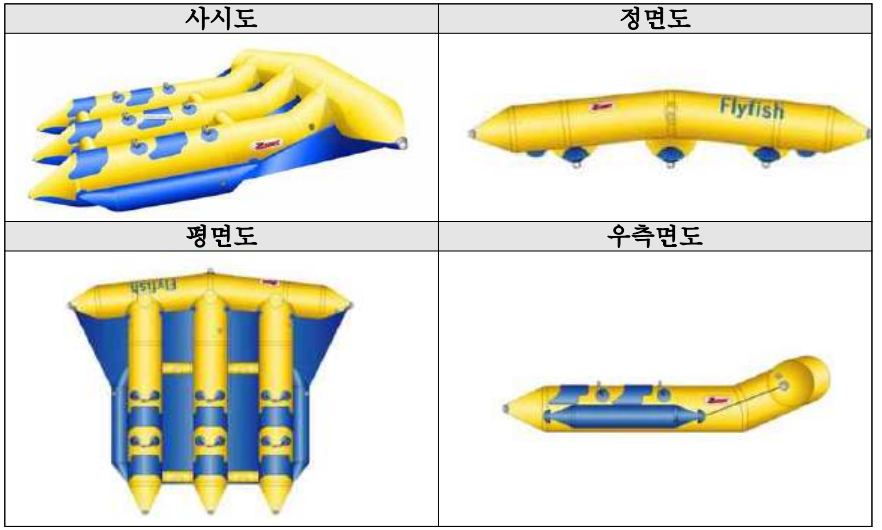
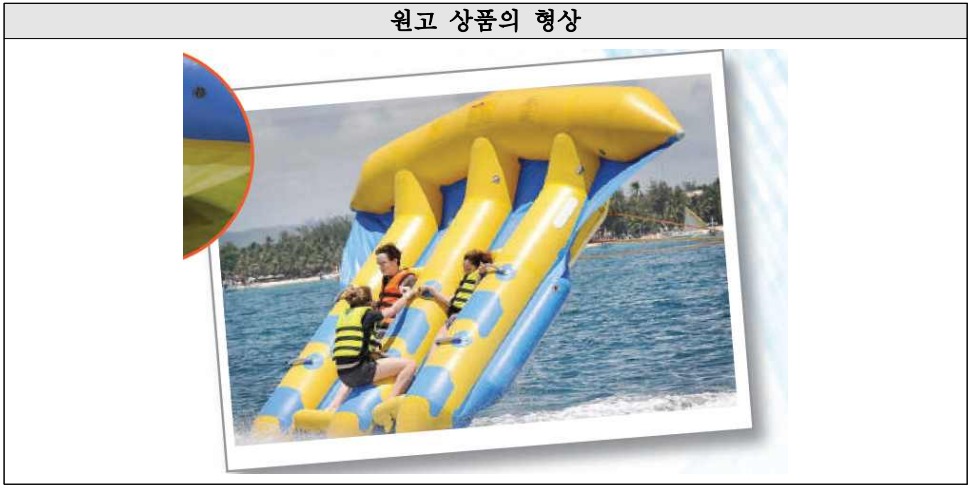
Distinguishing the original judgment from the remand
The Patent Court initially revoked the decision on 24 August 2023 in case 2023Heo10910, treating the seller’s shape as decorative rather than as trade mark use. On 26 February 2026, the Supreme Court reversed and remanded in case 2023Hu11012, finding use as a trade mark.
On remand, the Patent Court dismissed the seller’s revocation claim. The IPTAB’s conclusion that the examined sign fell within the registered mark’s scope therefore remained in place. The judgment discussed here is that post-remand scope decision, not an award of damages.
Appearance can also identify commercial origin
Design and trade mark functions can coexist. The question is whether a shape actually serves to distinguish one undertaking’s goods, considering its relationship with the product, the manner of display, recognition and the circumstances of use.
The owner had sold goods of this shape since around 2003, with television and press coverage supporting recognition. The court also considered the competing seller’s use of the shape as the visible exterior of its product and the parties’ competitive relationship. It found an intention to benefit from the registered mark’s customer appeal, rather than relying on product photography alone.
Useful is not necessarily indispensable
Article 90(1)(5) of the Korean Trademark Act limits the effect of trade mark rights over features indispensable to securing a product’s function. The rationale is to avoid using renewable trade mark rights to perpetuate a monopoly over technical functionality protected for a limited term by patent or utility-model law.
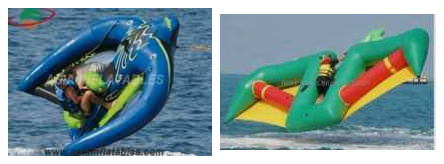
The assessment considers available alternative shapes, their production costs and any technical advantage beyond the product’s inherent function. Here, the essential function was to rise into the air under strong motorboat traction. Other watercraft performed that function using different forms.
Why the expired utility model did not decide the issue
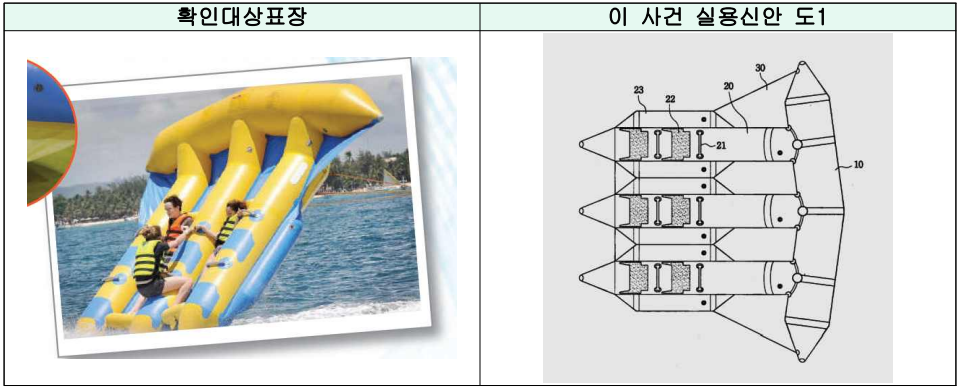
The expired utility model addressed vibration and unstable travel through a front tube, three rider tubes, connecting wings, footrests and auxiliary tubes. The seller’s product included those components and resembled the overall drawing. But a drawing may illustrate one way of implementing a technical idea rather than making every depicted detail unavoidable.
The utility model did not prescribe all the precise angles, projection and taper positions, handle counts, or footrest and auxiliary-tube shapes. The court considered that changes to those details and to colour arrangements could largely preserve performance without apparent manufacturing difficulty. Lettering and the colour combination were not indispensable either; the seller’s evidence did not establish the statutory limitation.
Different lettering did not outweigh the overall impression
The competing signs retained substantially the same adjustable details: the front tube’s projection and angles, taper positions, footrests, rider-tube ends, and the number and placement of seats and handles, with two per tube. Their yellow-and-blue or light-blue colour combinations were also similar.
The seller used “Aqua Festa” rather than the registered mark’s “FLY FISH” lettering. Given the words’ size and position, the court did not consider them sufficiently noticeable to create an independent source indication or overcome the dominant similarity of shape and colour. The goods were identical, and the overall impression gave rise to a likelihood of confusion.
Evidence and product changes should address both questions
Separate the technical idea from the precise appearance. A feature’s usefulness, or its presence in an expired utility-model drawing, does not by itself show that the same details and colours must be used. A functionality argument should examine realistic alternatives, equivalent performance, cost and manufacturing constraints.
A product redesign also requires an assessment of the appearance consumers remember; adding a small different name may be insufficient. Conversely, a rights holder can organise sales history, advertising, media coverage and evidence of how the shape is used to explain its source-identifying role. These are practical implications of this Korean judgment, not an automatic rule for every functional shape.
The original figure labels and forms are preserved; the text explains the facts and the court’s reasoning.