
The dispute over a pressure roller
On 10 September 2026, Korea’s Supreme Court dismissed the appeals in case 2024Hu11606, leaving intact the Patent Court’s judgment of 21 November 2024 in case 2023Heo12268. The design concerned a pressure roller used in a device for applying protective film to mobile phones. A manufacturer had filed alone following development involving an employee of the commissioning electronics company.
The electronics company’s employee supplied jig and roller drawings on 9 March 2018, and the company became involved in further improvements on 6 April. The dispute required the courts to examine who had contributed to the particular visual form, rather than simply identifying the party that ordered or manufactured the product.
What makes someone a joint creator?
An abstract suggestion, managerial supervision, funding or commissioning work does not by itself establish joint creation. The relevant contribution must be substantive and creative: conceiving or adding concrete features, producing drawings or models, or making specific proposals that lead to revisions of the form.
The assessment also considers the collaborative relationship between the contributors. In this case, the courts recognised joint creation by the electronics company’s employee and the manufacturer’s employee. The conclusion followed from their respective contributions to the design, not merely from the existence of a commercial development contract.
Three visual features and the evidence behind them
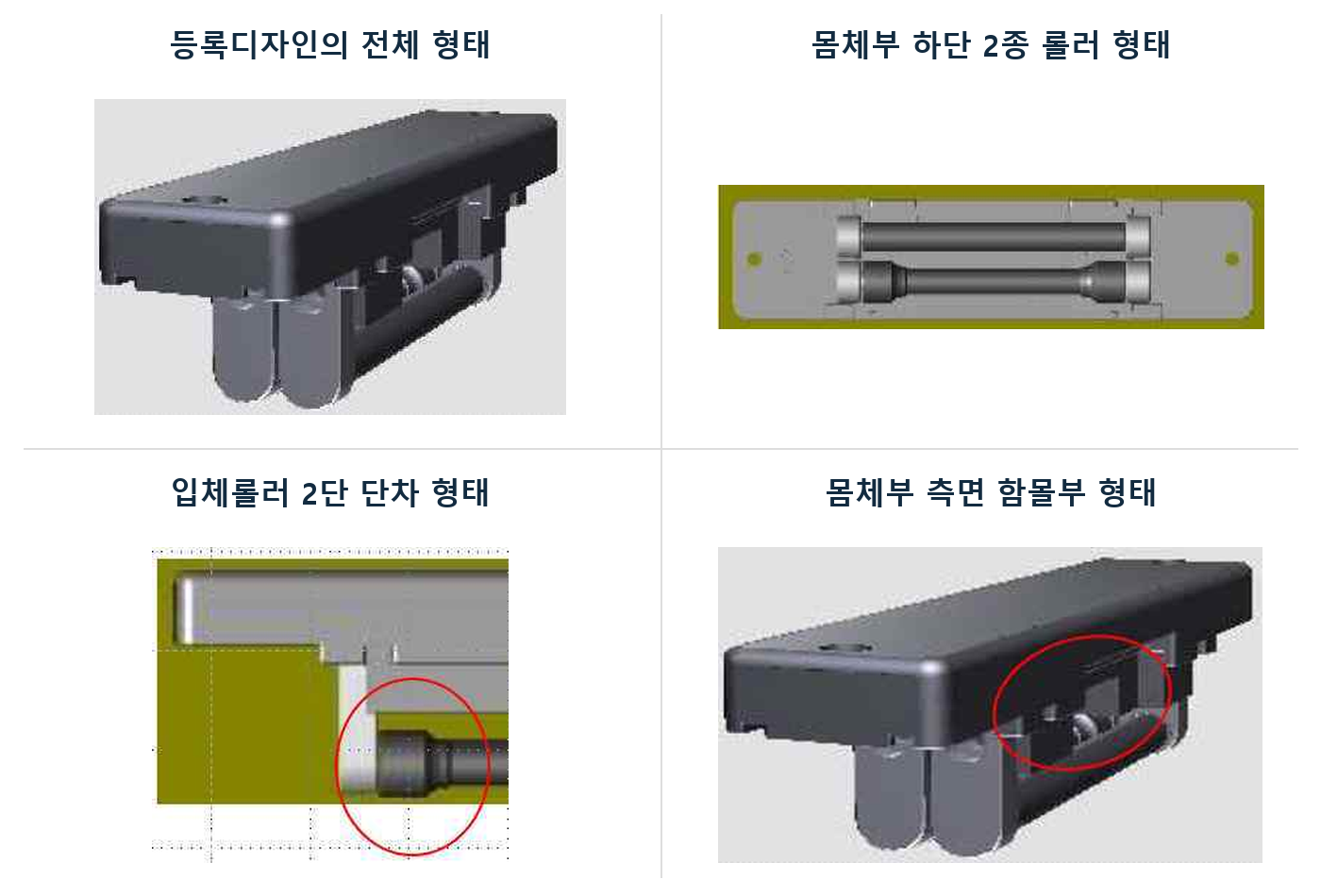
The courts focused on the combination of a cylindrical flat roller with a dumbbell-shaped roller body below it, a two-step change in diameter, and a recess in the side of the body. The employee’s drawings, prototype testing and repeated requests for concrete modifications showed involvement in creating these features.
This evidence went beyond an instruction to make a better product. Drawings and revisions linked the individual’s contribution to the resulting appearance. Development records therefore matter not only as a project history but also as evidence of how the design took shape.
Joint entitlement must be resolved before filing
Under the former Korean Design Protection Act applicable to the case, before the amendment of 20 June 2023, Articles 3 and 39 governed entitlement and joint applications; Article 121(1)(2) provided the relevant invalidation ground. The manufacturer filed alone without acquiring the other share of the right to apply or obtaining the requisite consent. The Supreme Court upheld the conclusion that the registration was vulnerable to invalidation.
Authorship and ownership must be distinguished. Neither paying for development nor physically manufacturing the product automatically resolves entitlement. Before filing, identify the creators, document employment-related succession and assignments, and settle whether a joint application is required. Preserve dated drawings, correspondence, prototypes and the reasons for revisions. Outsourced development is not automatically joint creation, but leaving genuine shared entitlement unresolved creates a serious filing risk.
The original figure labels and forms are preserved; the text explains the facts and the court’s reasoning.