
The claim and the result
On 24 June 2026, Korea’s Supreme Court dismissed the appeal in case 2024Da228104, upholding the non-infringement outcome in the Patent Court’s judgment of 1 February 2024, 2021Na2087. The patentee sought an injunction, destruction and damages in relation to a wireless lighting-control system used for concert lightsticks.
The relevant claim was corrected claim 1. The correction proceedings, 2019So50, became final on 22 September 2020. The dispute concerned whether the defendant’s service contained the claimed preset groups, not simply whether it could produce a similar concert lighting display.
Reading “group” in the context of the patent
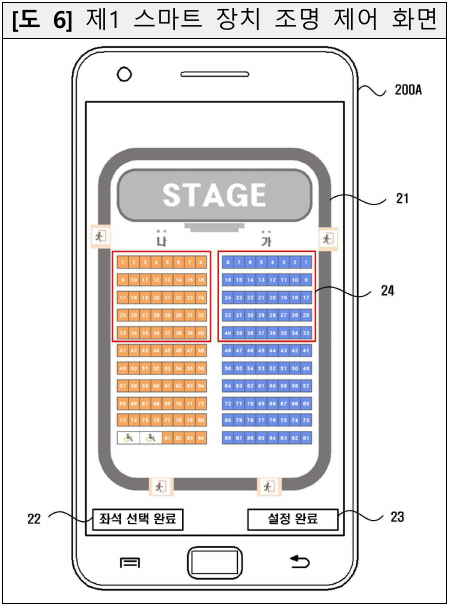
Claim language is interpreted objectively in light of the description and drawings; it cannot be expanded or restricted freely. The patent illustrated groups formed on a seating layout and assigned lighting patterns. The patentee’s prosecution and correction submissions distinguished that arrangement from devices merely producing the same result or from changing subsets during a performance.
The courts understood the group membership as set before the concert and remaining fixed during it. That did not require the colour, brightness or other lighting pattern assigned to each group to remain unchanged throughout the show. The distinction was between stable membership and variable effects.
Coordinates identified positions, not necessarily fixed groups
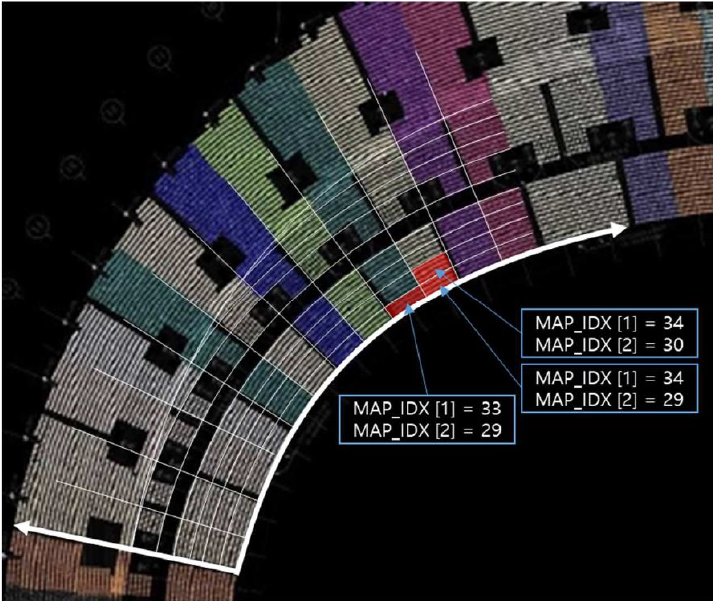
The defendant’s service used multiple virtual two-dimensional coordinate planes and mathematical functions to generate lighting effects. A coordinate identified a device’s position. Sharing a coordinate component, or displaying the same colour at a particular moment, did not by itself establish the fixed group required by this claim.
The courts considered communications, seat data, source code and the actual implementation, rather than accepting a label supplied by either party. Switching coordinate planes could change which devices responded together. That feature was consistent with the kind of changing subsets the patentee had distinguished during correction.
What the judgment does—and does not—decide
The Supreme Court found no outcome-affecting error in the construction of the claim or its application to the identified service. Although part of the lower court’s explanation concerning identification of the accused implementation was inappropriate, the record supported the result. The appeal was dismissed; infringement-based relief was not granted.
The decision does not mean that concert lightsticks cannot be patented or that coordinates always avoid infringement. Analysis must address the particular claim and implementation. Preserve seat maps, communication specifications and control logic, and review the complete prosecution and correction history. Visually similar results can arise from technically different arrangements; a comparison of those arrangements, limitation by limitation, is essential.
The original figure labels and forms are preserved; the text explains the facts and the court’s reasoning.