
A multilayer-coating application
The Korean Patent Court’s decision of 12 February 2026 concerned application 10-2018-7013759 for a multilayer coating with visual effects. Claim 1, as amended on 3 July 2023, required a high-definition gel-coat layer, a visual-effect layer containing effect pigments and a colour layer containing plain pigments. The first layer included unsaturated polyester and a thixotropic agent, with specified clarity conditions on a byko chart: at least 94 on the white part and/or below 26 on the black part. The case was a challenge to the Board’s refusal decision 2024원91 of 30 December 2024, not an infringement action.
The cited document did not change; the reasoning did
Both examination and appeal relied on Japanese publication H08-239614. During examination, the visual-effect layer was mapped to an intermediate layer and the colour layer to a back layer. On appeal, the Board mapped them instead to an ink-composition layer and the intermediate layer. The high-definition layer remained mapped to the gel-coat layer. ‘Back layer’ here does not mean a white layer. These changes altered the technical comparison and the response the applicant would reasonably prepare.
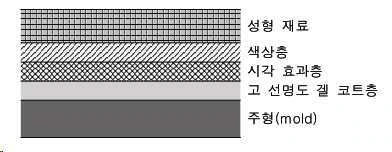
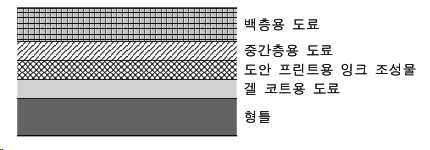
A meaningful opportunity to answer the objection
A new ground for maintaining refusal must normally be notified so that the applicant can respond. A fresh notice is not required for every reformulation where the essential reasoning and practical opportunity to respond remain the same. Here, however, the mapping affected both the differences to be argued and possible amendments. The applicant could have addressed the absence of effect pigments from the ink-composition layer or considered a supported limitation concerning pigment particle size. The court did not say such an amendment would necessarily secure a patent. It held that a potentially sound substantive refusal could not cure breach of the mandatory procedural safeguard.
The additional inventive-step analysis
The court also examined the earlier refusal reasoning. The claimed colour layer was part of the coating, whereas the cited back layer was the coated article or substrate. Its example included 40% artificial-marble components and 3% filler, with viscosity of 300 P and application at 10 kg/m². Shared ingredients did not make it a coating layer, and the cited purpose did not supply a sufficient reason to transform it into one without hindsight. Conversely, the applicant’s thickness argument was not accepted where claim 1 contained no such limitation.
Outcome and prosecution practice
The court set aside the Board’s decision; it did not order grant of every claim. Applicants should compare feature mappings across office actions, refusals and appeal decisions, explain what different argument or permissible amendment a changed objection would have prompted, and distinguish disclosure in an example from limitations actually present in the claim. The procedural holding and the additional assessment of claim 1 against the cited document should remain separate.
The comparison figures retain the forms and labels shown in the Korean source.