
2007 Heo 4922 Trademark refusal
[Principles of Judgment]
A composite service mark may be pronounced or perceived through a distinctive component unless its elements are inseparably combined. A weakly distinctive component generally does not serve as the dominant element on its own.
| Earlier registered Service Mark | Applied-for service mark | |
| Mark | 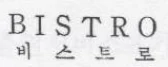 |  |
| Designated Designated services | Real-estate services, shopping-center management, sauna services, tourist information, nightclubs, meeting and banquet facilities, wedding services, hotels and restaurants, under the classification preceding the amendment by Ordinance No. 83 of 23 February 1998. | Self-service restaurants, restaurant chains, Western-style restaurants, restaurants, cafeterias, cafés, snack bars and other food-service establishments. |
[Appearance, pronunciation and concept]
1. Appearance
The applied-for service mark combines “bistro” and “d˚” with a space between them. The earlier service mark combines “BISTRO” with its Korean transliteration in a vertical arrangement. Their appearances differ.
2. Pronunciation and concept
The components “bistro” and “d˚” are not so inseparably combined that observing them separately would be commercially unnatural. The mark can be pronounced and perceived by “bistro” alone, or as “bistro d˚” as a whole. The “d˚” element is a simple, common combination of a lowercase letter and a degree symbol. If the applied-for mark is abbreviated to “bistro”, the two service marks have the same pronunciation and concept.
[Similarity of the designated services]
The applied-for mark's restaurant services are identical or similar to the earlier mark's hotel and restaurant services.
[Decisions]
Despite their different appearances, the marks share the same pronunciation and concept when referred to as “bistro”. Their services are identical or similar, and the court found the service marks similar.
This article reflects the information available when it was published. Contact us to discuss your circumstances.