
2009 Heo 8195 Trademark registration invalidation
[Principles of Judgment]
Similarity depends on whether the marks, assessed objectively and as a whole through appearance, pronunciation and concept, are likely to confuse consumers as to source. A shared element alone does not establish similarity if it is unlikely to be perceived separately or the overall impressions clearly avoid confusion.
| Earlier registered Trademark 1 | The Earlier registered Trademark 2 | Earlier-used mark | Registered trademark | |
| Mark | 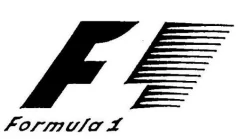 | 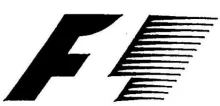 | 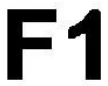 |  |
1. Comparison with earlier registered marks 1 and 2
[Similarity of the marks]
1. Appearance
The registered mark joins a slightly right-slanting “F”, “1” and “X”. Earlier mark 1 places a bold slanted “F” beside two comb-like devices, with the negative space suggesting “1”, and adds “Formula 1” below. Earlier mark 2 omits the lower wording. The composition, arrangement and stylization give the marks different appearances.
2. Concept
The registered mark is a coined mark without a definite concept for consumers. Its concept cannot therefore be compared with those of the earlier marks.
3. Pronunciation
The registered mark is pronounced “F-one-X”. Earlier mark 1 may be called “F-one” or “Formula One”, and earlier mark 2 “F-one”. Despite the shared sounds, the additional syllable distinguishes the registered mark sufficiently to avoid confusion.
2. Comparison with the earlier-used mark
The registered mark consists of “F1X”, while the earlier-used mark consists of a bold “F1”. They differ in letter count and appearance, have no comparable concepts, and are pronounced differently as “F-one-X” and “F-one”.
[Decisions]
The registered mark is dissimilar to both the earlier registered marks and the earlier-used mark. Their different appearances and pronunciations avoid confusion, and no conceptual comparison is possible.
This article reflects the information available when it was published. Contact us to discuss your circumstances.