

An employer may acquire an invention long before the first patent is granted or a licence produces revenue. In Korean Patent Court case 2024Na10478, those dates had different consequences for employee invention compensation. The judgment distinguished the existence of a statutory claim from the time when a particular component became payable.
The claim and the company rules
The claimant worked in the employer’s wireless standards research organisation between 2003 and 2011 and co-invented inventions whose rights were assigned to the company. The company later transferred some patents and made licensing declarations to standards organisations. After leaving employment, the inventor sued on 18 July 2019, seeking compensation for registration, third-party use, assignments, cross-licensing and litigation use.
The primary claim relied on the 2001 compensation guidelines and a separate project award scheme; the alternative claim relied on the legislation applicable when the rights were transferred. The guidelines specified the statutory compensation obligation rather than creating an additional contractual entitlement. Project awards also required selection and committee approval, which had not established an independent payment obligation here.
Assignment and first grant are different triggers
A statutory compensation claim arose for each invention when the employer succeeded to the right to obtain a patent. If an employment rule deferred payment of a particular component until a specified event, that component could be claimed when the event occurred. Article 15 of the 2001 guidelines made registration compensation payable on the first patent grant in any one country.
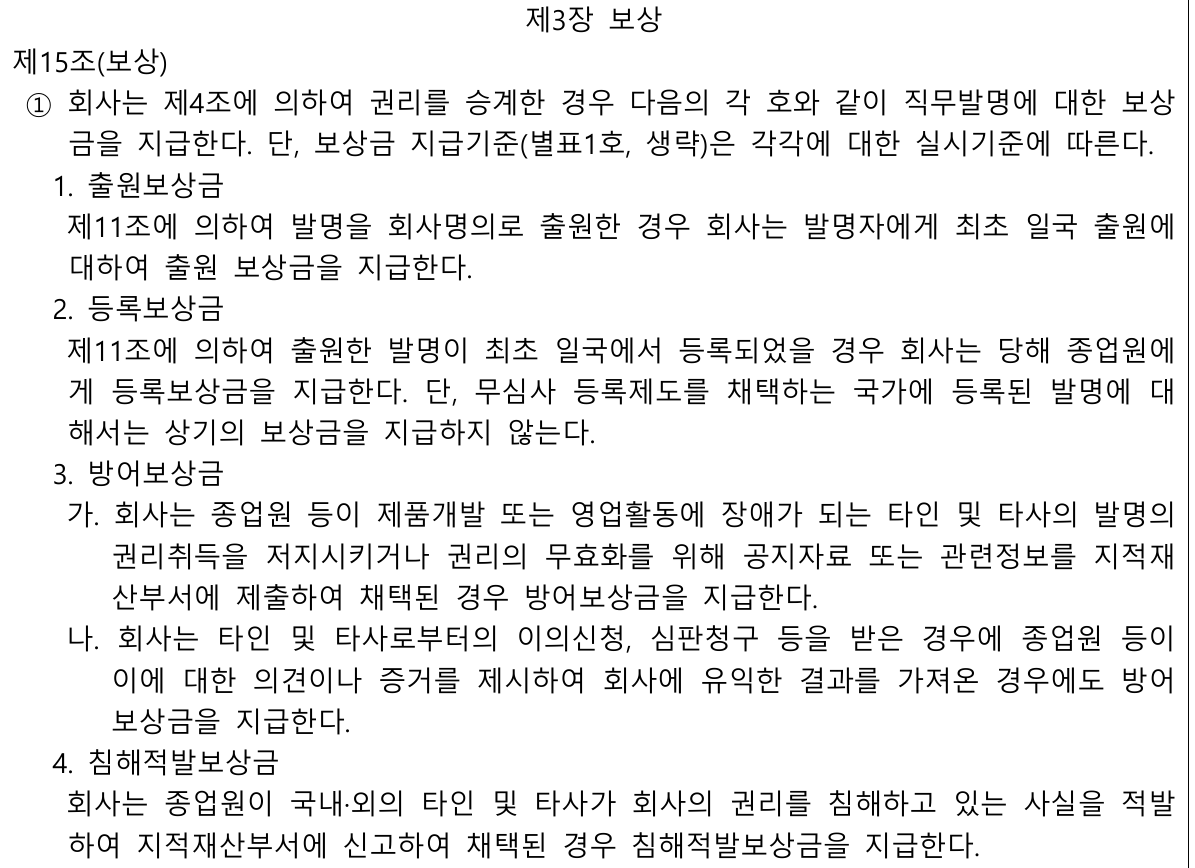
Management approval was an internal payment process, not an additional condition: the invention had already been graded before filing and the amount followed from that grade. Retirement did not replace the first-grant trigger. A provision allowing unpaid amounts to be held for three years did not mean that the limitation period ran from retirement.
Claims that expired and claims that lacked proof
No separate payment date was prescribed for third-party use, assignment, cross-licensing or litigation use. Those claims were exercisable by the relevant company filing dates, between 25 January 2006 and 5 August 2008. More than ten years had passed before the 2019 action. Later exploitation did not create a fresh compensation claim each time.
Three patents first granted on 23 December 2008 or 20 May 2009 were also outside the ten-year period. The remaining first grants, between 12 February 2010 and 12 August 2014, were timely. The relevant litigation date was the 2019 filing, not an amended pleading submitted in 2025.
Infringement-detection compensation required discovery of specific third-party infringement, a report to the IP department and acceptance of that report. The employer did not prove that these conditions had been met more than ten years earlier, so its limitation defence failed on this component. The inventor nevertheless failed to prove the conditions themselves. A FRAND licensing declaration alone did not establish infringement, reporting or acceptance.
How the remaining award was calculated
The court applied the historical Patent Act and Invention Promotion Act provisions relevant to each transfer. It considered the company’s technical and economic grading criteria, implementation prospects and design-around possibilities, disclosure through training and internal systems, written objections procedure and actual payments. Of 22 timely patents, two concerned the same invention, leaving 21 inventions. A grade-A base of KRW 500,000, multiplied by each co-inventor share, produced KRW 1,910,000.
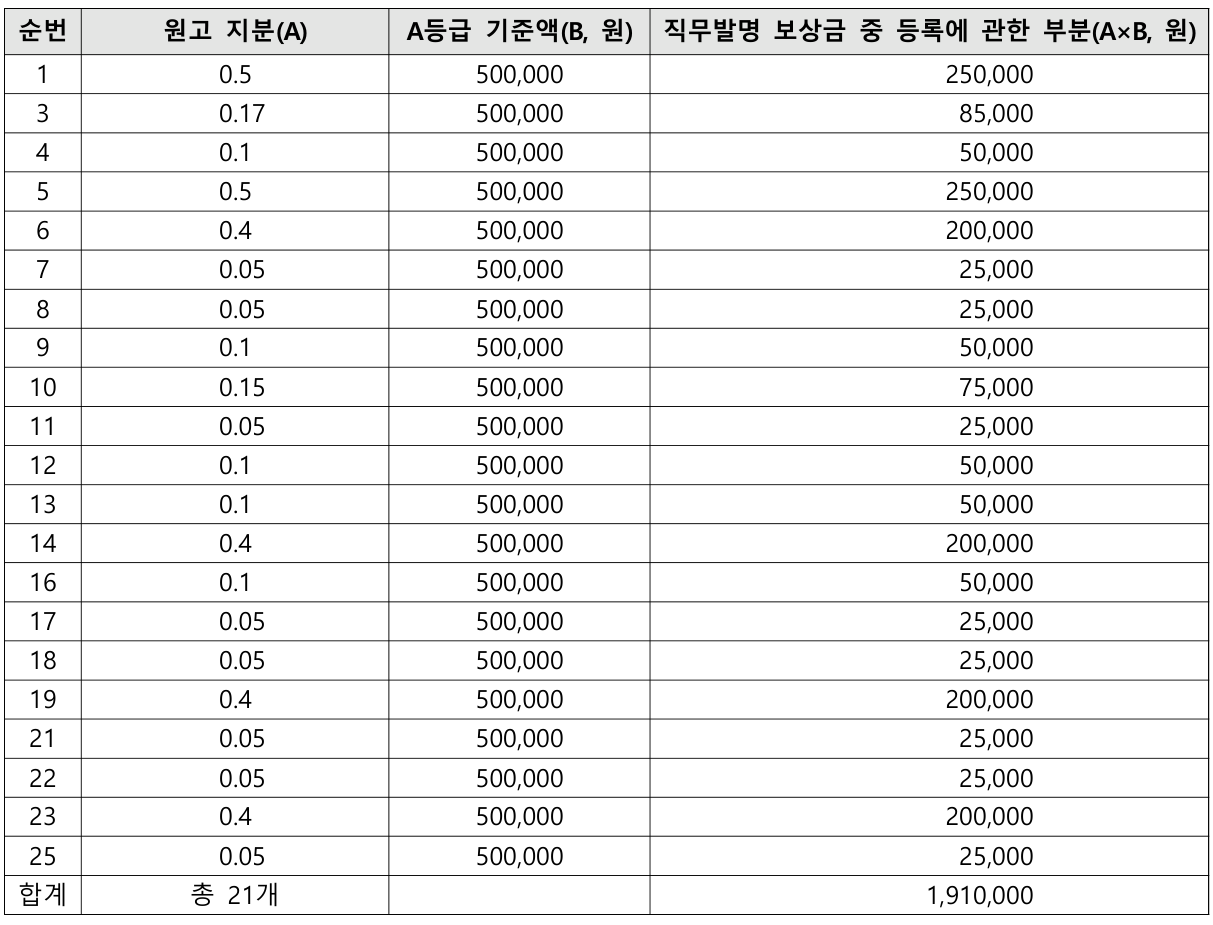
The company had paid KRW 994,000. Payments were first allocated to accrued delay interest and only then to principal. For example, a KRW 225,000 payment against a KRW 250,000 award covered KRW 6,438 in interest and KRW 218,562 in principal, leaving KRW 31,438. The aggregate unpaid principal was KRW 931,374, with further delay interest. The court amended the first-instance disposition, rejected the separate contractual claim and allowed the statutory claim only to that extent.
Records that make the time line reliable
Keep the transfer date, each country’s first-grant information, the applicable version of the compensation rules, grading and co-inventor shares, and actual payment dates and amounts together. Separate entitlement conditions from calculation and internal approval procedures.
Where detection of infringement is relied upon, preserve the identified acts, the reporting date and the department’s acceptance. Different compensation components can have different payment triggers even though they concern the same invention.
The original figure labels and forms are preserved; the text explains the source material.