

A different outline does not necessarily make a design registrable. The question may be whether an ordinary designer could readily produce the differences from publicly known forms.
On 17 June 2026, the Korean Patent Court cancelled a decision dismissing an invalidation request concerning a metal livestock headlock fastener. Case 2026Heo10065 turned on easy creation, rather than a separate ruling on similarity.
The registered fastener and the proceedings
The fastener opens and closes the neck frame used when feeding livestock. The application was filed on 25 April 2020 and design No. 1069427 was registered on 31 July 2020. On 29 January 2026, the Intellectual Property Trial and Appeal Board rejected the invalidation request, considering the overall appearance different from prior design 1.
A separate ground from similarity
Article 33(2) of the Korean Design Protection Act addresses a design readily created by a person with ordinary knowledge in the field from publicly known forms. A conclusion on overall similarity to a single earlier design does not dispose of that separate question. The court considered prior designs 1, 3 and 4, the product’s use and the ordinary ways of modifying it.
Six differences from the starting design
Both designs had an elongated rectangular plate whose upper end curled into a hollow cylinder. The differences concerned the front-view and bottom-view proportions, a rectangular opening in the lower part, the curled end’s proximity to the plate, rounded lower corners and omission of two rectangular grooves on the cylinder.
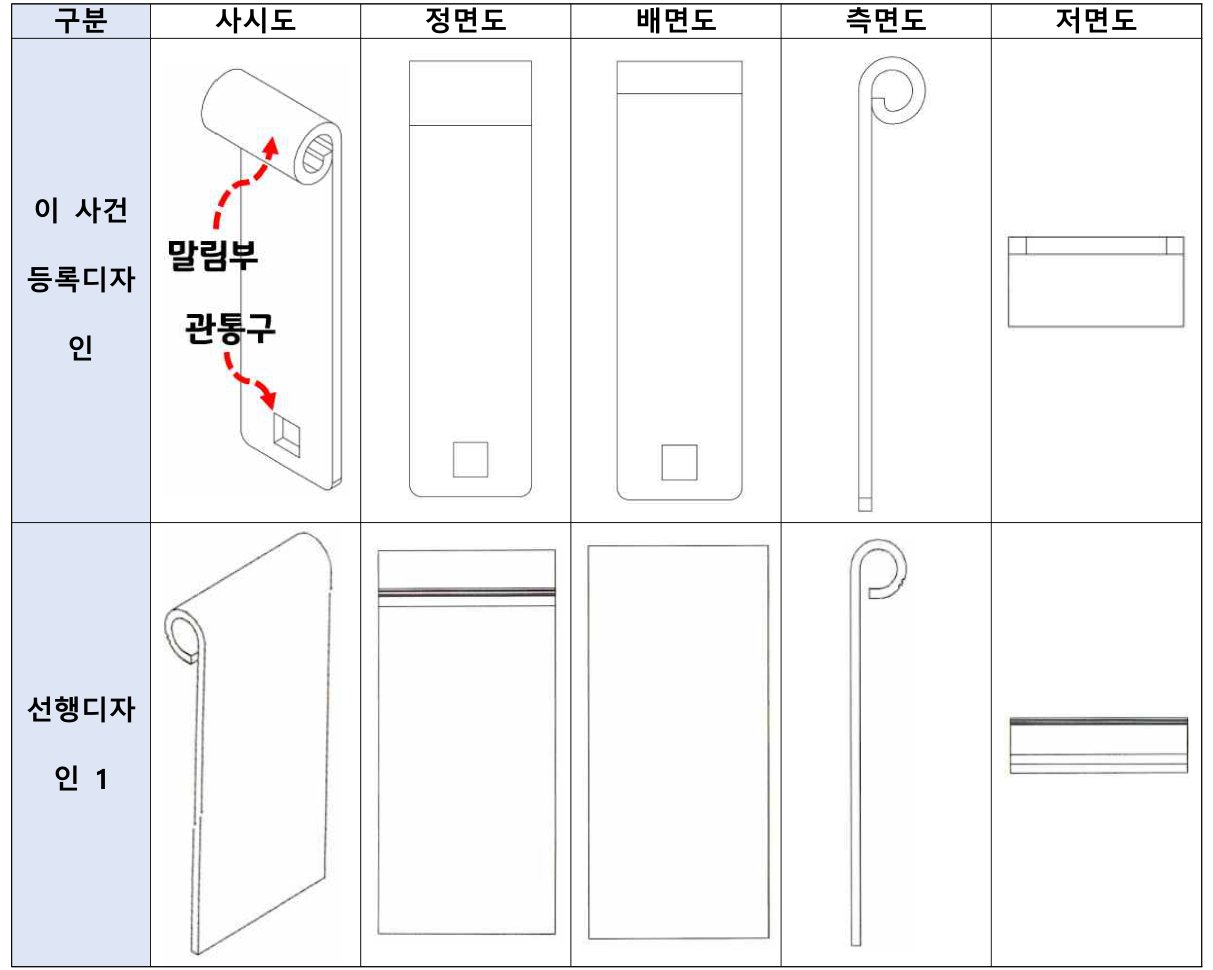
Changes in width and height could be made to meet practical or commercial requirements. On the evidence here, these adjustments did not require special creative effort or introduce a distinct aesthetic value.
An opening already suggested by related fasteners
Prior design 3 showed a neck-frame locking plate with a circular hole and a projection. Prior design 4 disclosed a key-shaped locking member with several rectangular slots and a latch for angular adjustment. Circular and rectangular openings were familiar forms in this field.
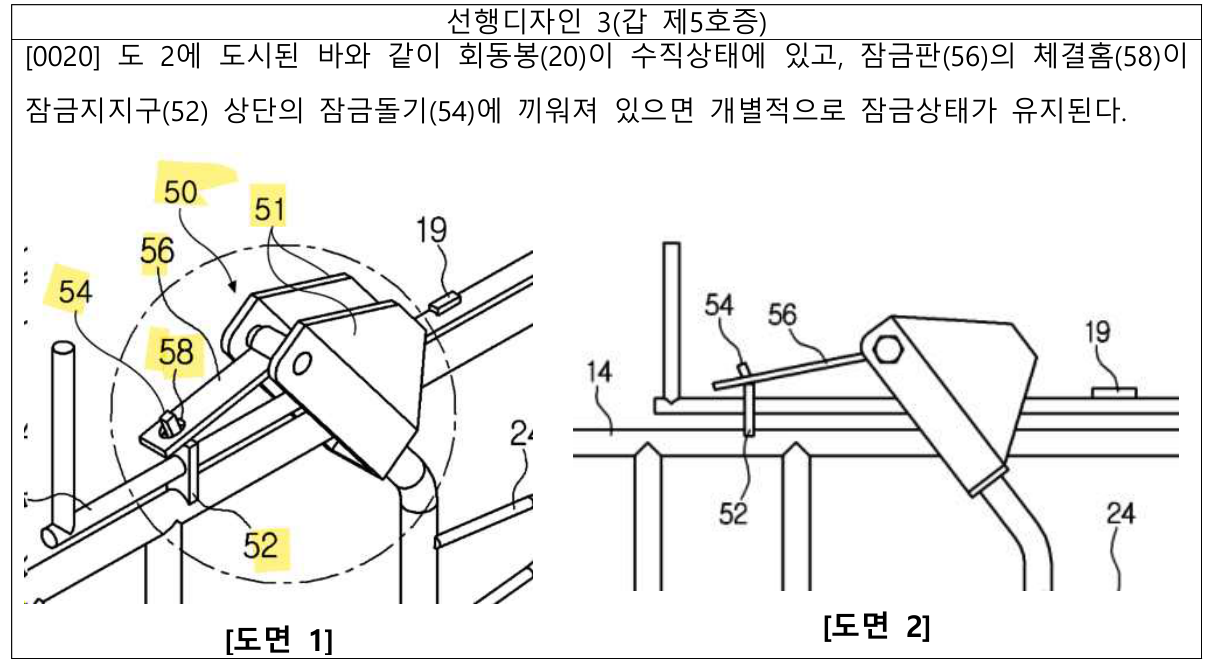
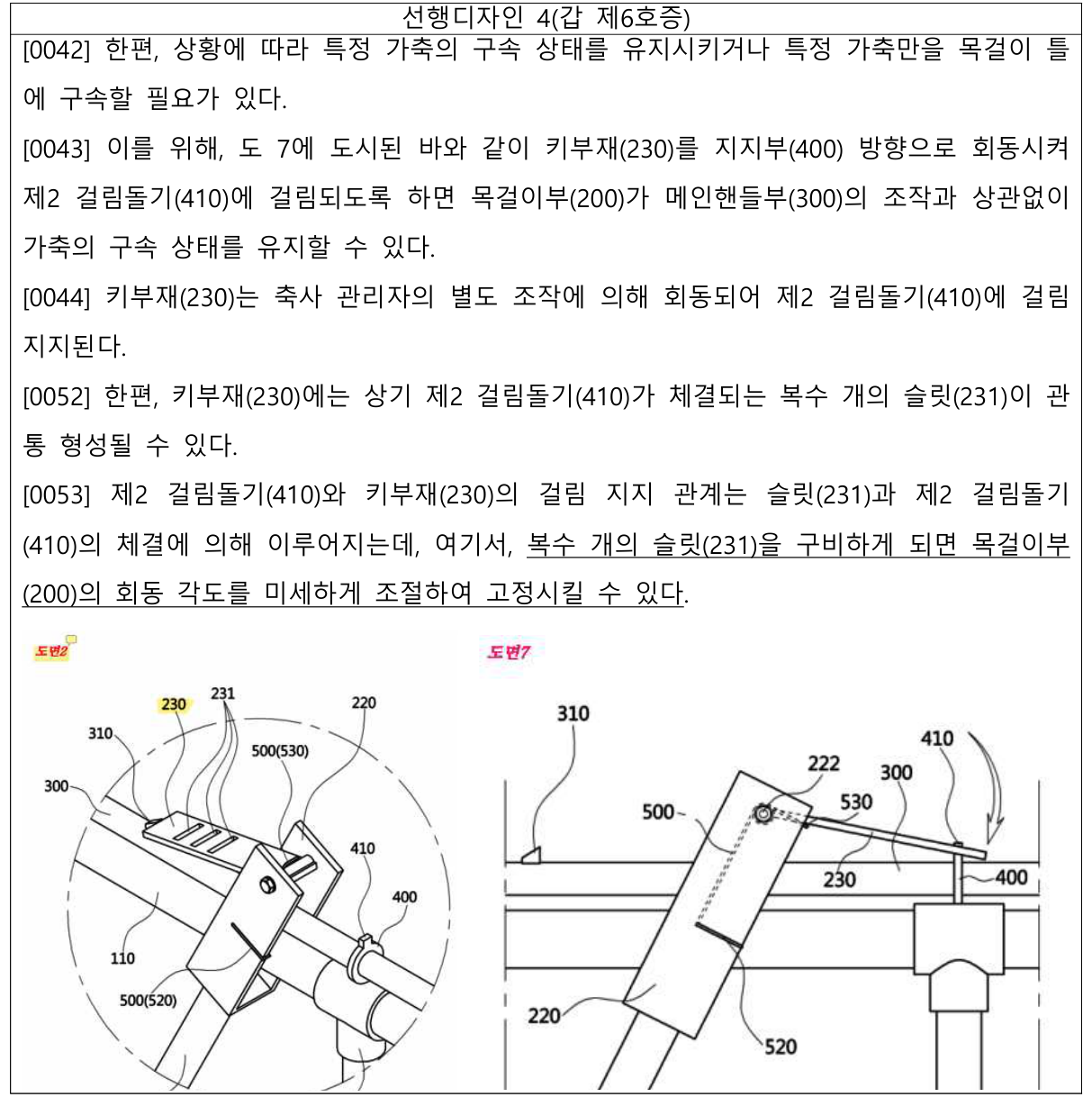
Using one rectangular opening instead of several slots was an ordinary adaptation to the required adjustment function. The court connected the earlier forms through their objects, functions and the design practices of the field; it did not simply assemble unrelated shapes.
Curling, rounding and omitting grooves
Bringing the curled end closer to the plate required only a routine change in bending. The main visual impression still came from the cylindrical curl. Rounding rectangular corners was likewise a common treatment.
Removing the two outer grooves also amounted to omission of an existing feature. Neither the removal nor the resulting appearance demonstrated a creative difficulty sufficient to overcome Article 33(2).
What the judgment decided
The court held that the design was readily created and cancelled the Board’s decision. It did not need to decide the separate ground under Article 33(1)(3), concerning similarity to earlier designs. The procedural result was cancellation of the decision dismissing invalidation.
Prior design 4 came from a utility-model publication dated 24 April 2020, one day before the design application. Patent and utility-model drawings can therefore be important evidence of earlier product appearance.
Preparing a design dispute
Assess the overall impression and the reasons why each difference would, or would not, be an ordinary modification. Product function and common shapes matter, but the combination must still be explained in the context of the relevant field.
Search technical publications as well as design registers, and preserve the publication dates and usable drawings. This case shows why differences from one reference and resistance to an easy-creation challenge require separate analysis.
The original figure labels and forms are preserved; the text explains the source material.