

The Korean Patent Court’s decision of 27 October 2026 concerned patent No. 2345755 for a roadside stormwater treatment device using vegetation. The issue was how the parts worked together, rather than whether pipes and planting beds were individually familiar.
Only corrected claims 11–13 were at issue
The challenger sought to set aside the part of the Board’s 23 May 2025 decision that had rejected invalidation of claims 11–13. A correction decision became final after it was issued on 28 May 2026, so the court assessed the corrected claims.
Claim 11 limits the erosion-prevention and support material in claim 9 to crushed stone; claims 12 and 13 add an overflow pipe and its backflow-prevention feature. The court examined their common claim 9 foundation without treating claim 9 itself as an independently challenged part of the Board decision.
A connection designed for two-way sharing
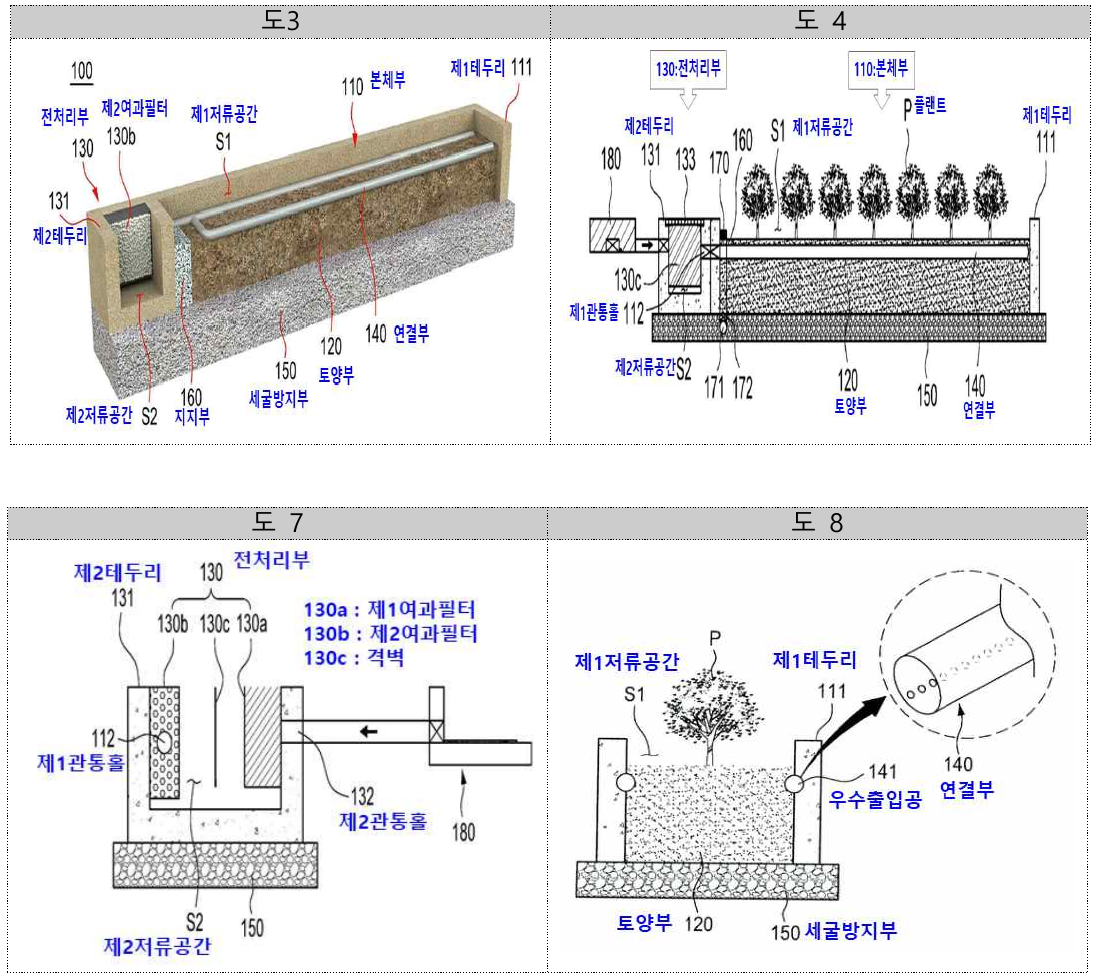
A first storage space lies above the soil, below the upper rim of the planted body. A separate pretreatment chamber provides a second storage space. Each receives rainfall; water can pass from pretreatment to the soil or return towards pretreatment when pressure in the first space is higher.
The connection is partly embedded in the inner wall and partly in soil. It branches along both sides of the rim, with openings at its ends and oblique holes along its underside. This arrangement preserves planting space, supports exchange between the reservoirs and reduces blockage by soil.
Prior art 1 served a different flow pattern
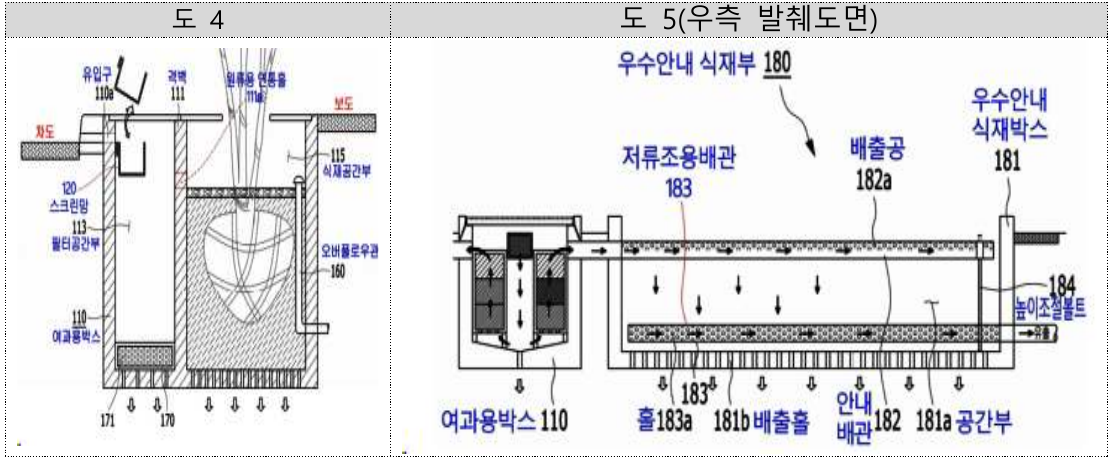
The earlier tree-filter box also contained plants, soil, filtration and pipes. Its teaching supplied filtered water to the planted area and removed it quickly through a bottom outlet and separate drainage piping; the soil was selected to permit rapid infiltration.
Its pipe openings faced upwards and retained some water while discharging it. The corrected invention instead coordinated end openings and downward oblique perforations to exchange stored water and limit clogging. Naming both parts a pipe did not establish the same technical teaching.
Physical possibility was not a design instruction
The challenger argued that water could reverse through the earlier guide pipe and that ordinary stormwater practice already supplied water from pretreatment to vegetation. The court found no disclosure or suggestion in prior art 1 to send water from the planted space back to the filter box.
A pressure-driven possibility of reverse flow is different from designing the claimed structure for sharing water. Reconstructing the earlier system with knowledge of the corrected invention amounted to hindsight.
The proposed combinations left the essential differences
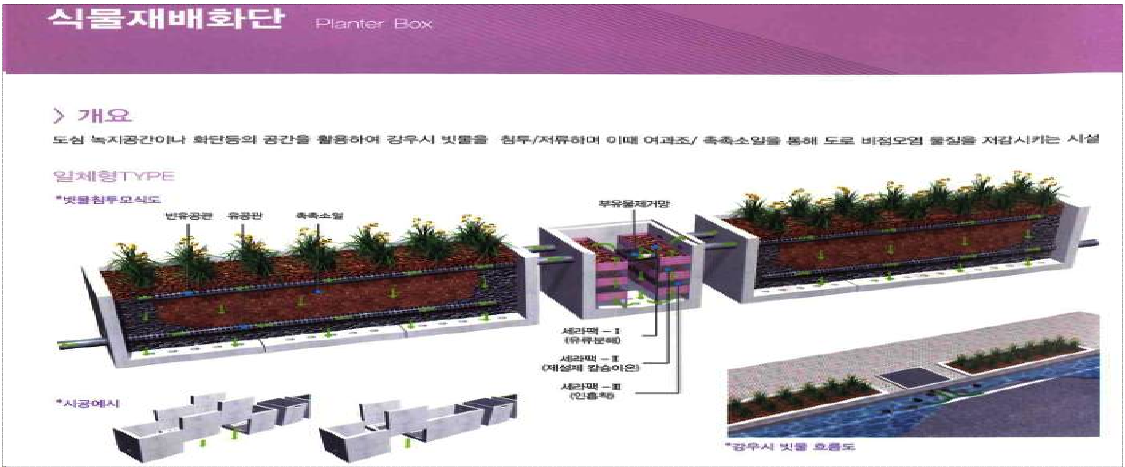
Prior art 5 placed two perforated pipes in a planter to supply, retain and drain filtered water. Adding them would not readily yield the partly embedded, branching connection with the claimed terminal openings and hole direction.
Prior art 6 ran pipes in grooves with branches to vertical pots: its installation and watering purpose differed from preserving planting space through partial embedment. Tilting a branch to feed a pot did not teach oblique anti-clogging perforations.
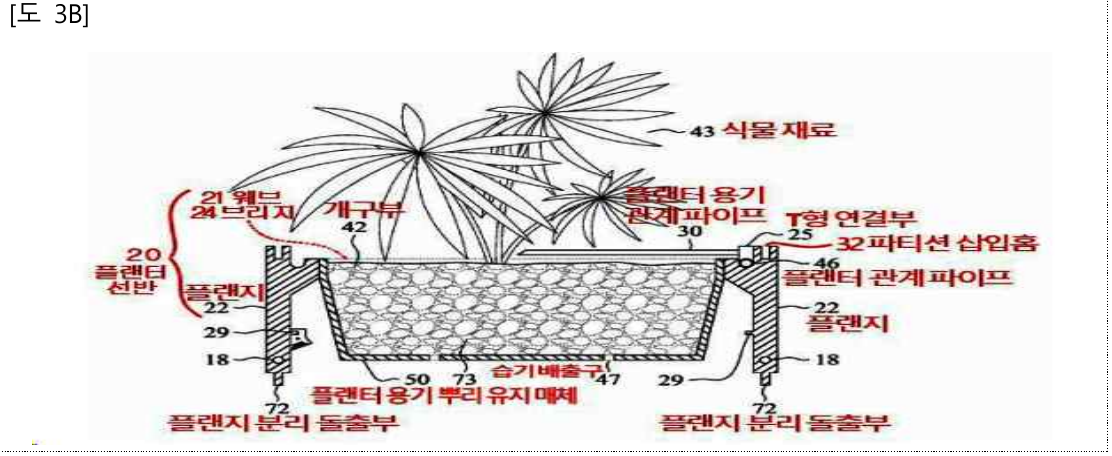
In prior art 7 a tyre held soil and formed a planter wall with concrete; it was not a water-sharing conduit. Recasting a soil-filling opening as a water port did not resolve that difference. A shared IPC classification likewise did not establish a reason to combine the particular structures.
A limited holding with a practical lesson
The court considered some differences readily achievable, including placing the upper edge level with the pavement and using known gravel or crushed-stone erosion protection and pipe supports. Those findings did not overcome the central difference in the connection and water-sharing operation.
Inventive step of corrected claim 9, and therefore of the dependent claims 11–13, was not defeated by the cited references. The challenge to the Board decision was dismissed. In practice, map each claimed position and opening to its function; a combination argument needs a reason to adopt the arrangement, while a defence should tie the asserted benefit to the actual claim features.
The original figure labels and forms are preserved; the text explains the source material.