

In decision 2026Heo10093 of 29 October 2026, Korea’s Patent Court upheld the refusal of a pharmaceutical patent term extension despite extensive clinical trials and a new therapeutic indication. The issue was not simply whether ropeginterferon alfa-2b differed as a whole from an earlier ingredient, but whether the chemical structure of the pharmacologically active moiety satisfied the applicable novelty requirement.
The application for a 405-day extension
The dispute concerned Korean patent No. 10-1782084, entitled “Therapeutic uses of protein–polymer conjugates.” Claim 8 covered a composition containing a specified conjugate for preventing or treating one or more of idiopathic myelofibrosis, polycythaemia vera and essential thrombocythaemia. Claim 10 limited the indication to polycythaemia vera, a disorder involving excessive production of red blood cells.
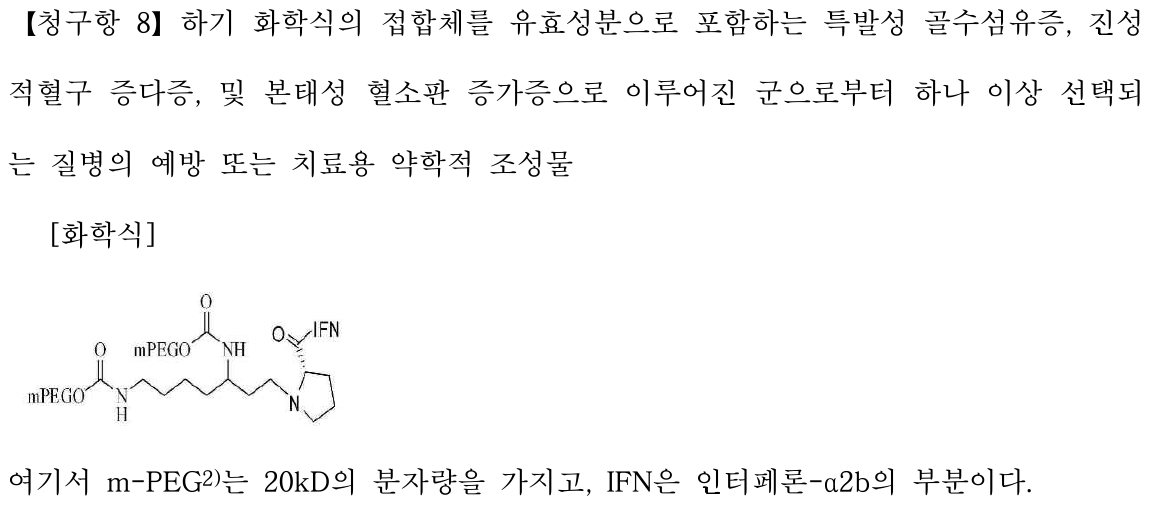
The patentee obtained import marketing approval for Besremi on 13 October 2021 and sought a 405-day extension in respect of claims 8 and 10, asserting that this period had been required to secure the approval necessary to practise those inventions. The examiner refused the application, and the Intellectual Property Trial and Appeal Board dismissed the appeal on 19 January 2026.
The court dismissed the patentee’s action to annul that decision, leaving the refusal in place. The proceedings concerned extension of those two claims on the basis of this approval; they neither invalidated the patent nor rejected Besremi’s therapeutic efficacy.
The whole active ingredient and its active moiety
It was undisputed that the active ingredient of Besremi was ropeginterferon alfa-2b as a whole. Its structure combines interferon alfa-2b with the amino acid proline and the polymer PEG. Such linked structures are described as conjugates.
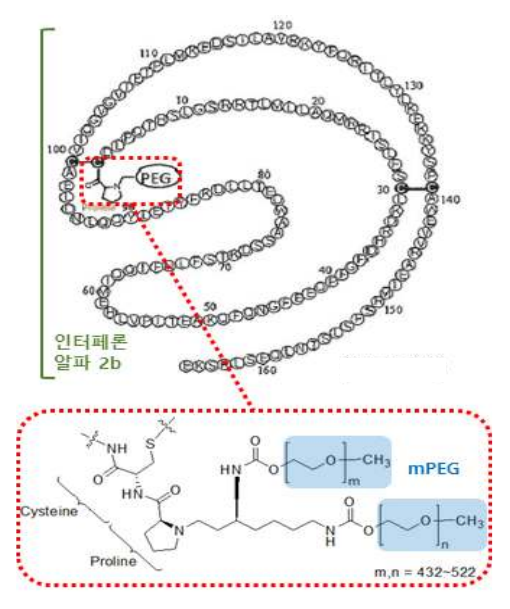
For extension eligibility, however, the court separately identified the part of that ingredient whose own pharmacological action produces the approved therapeutic effect. It identified interferon alfa-2b as that active moiety. The fact that an attached component influences the degree of an effect did not make the entire conjugate a new active moiety.
The functions of PEG and proline
PEG is polyethylene glycol, and attaching it to a protein is known as PEGylation. The court regarded PEG as improving properties such as stability and residence time in the body, rather than possessing therapeutic activity of its own.
Proline affected the attachment site. In earlier PEGylated interferons, variations in the number and position of PEG attachments could produce mixtures of structures with uneven biological activity. The patentee argued that directing PEGylation to the introduced proline produced a single, consistent structure and reduced that heterogeneity.
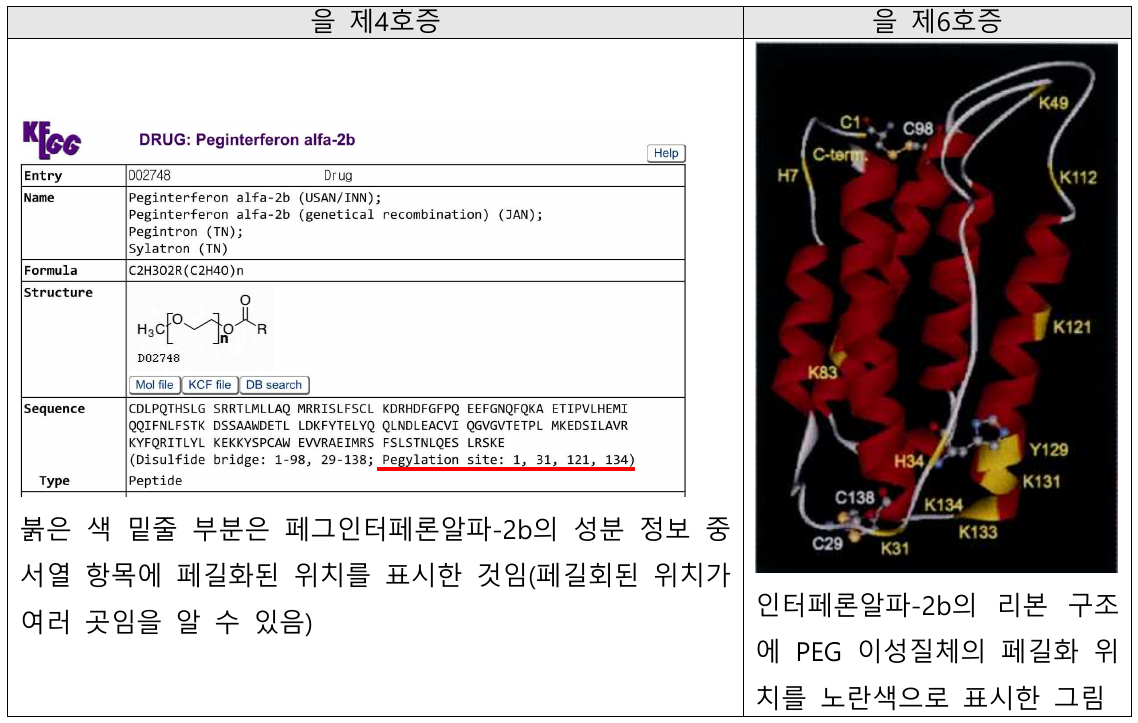
The court considered these improvements but found that interferon alfa-2b remained the part underlying pharmacological activity. Improved stability or more uniform activity was distinct from a new chemical structure of the active moiety required for the extension at issue.
A new indication is not necessarily a new substance
The patentee stressed that earlier approved products had not been authorised to treat polycythaemia vera. Their approved indications instead included conditions such as chronic hepatitis C. An indication is the disease or condition for which use of a medicine has been authorised.
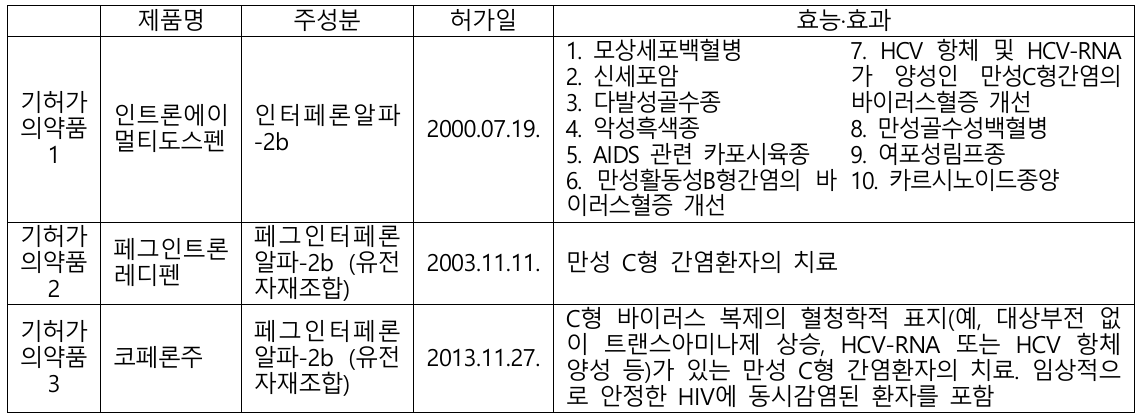
The court did not consider the active moiety to change with the scope of the marketing approval. It also considered evidence and research concerning off-label use of interferon medicines for polycythaemia vera. Because the chemical structure of ropeginterferon alfa-2b’s active moiety was the same as that of the earlier medicines, the new-substance requirement of the extension regime was not met.
Clinical development cannot replace a separate statutory requirement
The patentee submitted that extensive research and lengthy clinical trials had been needed to establish the product’s new properties and therapeutic effects, requiring evidence approaching that expected for a new drug. The court nevertheless explained that marketing approval and patent term extension are systems with different purposes and requirements.
A lengthy approval process could not, by itself, bring a medicine within the extension regime when its unchanged active moiety meant that it was not a qualifying new substance. The burden of clinical trials therefore did not cure the missing eligibility requirement in this case.
Assess extension eligibility alongside the approval strategy
From a patent practice perspective, regulatory and extension strategies should be considered together while keeping their respective tests distinct. The supporting evidence should explain the structure of the whole active ingredient, the moiety responsible for the therapeutic effect, the functions of added components and the relationship to earlier approved medicines.
The decision should not be read as denying the value of drug improvements. The significance of a new use, formulation or structural modification is separate from the extension requirements considered here. The decisive analysis must go beyond the fact that trials occurred and address the specific newness of the active moiety.
The original figure labels and forms are preserved; the text explains the source material.