

On 16 September 2026, the Korean Patent Court dismissed a challenge to the invalidation of a fishing-platform design. The decision turns on three different objects of comparison: the proprietor’s pre-filing product, a competitor’s earlier product and the front panel actually registered as a partial design.
The sequence of disclosures and filing
The claimant filed a design for a fishing-platform panel on 2 September 2021 and obtained registration No. 1143746 on 20 December 2021. The platform is a folding support used at a fishing site.
On 30 March 2021, the claimant entered into a supply agreement under which a manufacturer would produce the claimant’s fishing platform. Around that time, the claimant also advertised it on a Naver café and Band. These appearances constituted the claimant’s own pre-filing disclosure.
A different company’s “smart self-supporting platform” appeared in a YouTube video on 16 August 2021. At filing, the claimant requested relief from loss of novelty for the earlier self-disclosed design and submitted the supply agreement. In the subsequent invalidation proceedings, the claimant argued that the relief also covered the competitor’s intervening disclosure.
What the partial registration protected
The registration concerned the front panel, rather than the appearance of the entire platform. The description excludes the yellow portions of the drawings and identifies the grey portion shown in the perspective and front views as the part for which protection was sought.
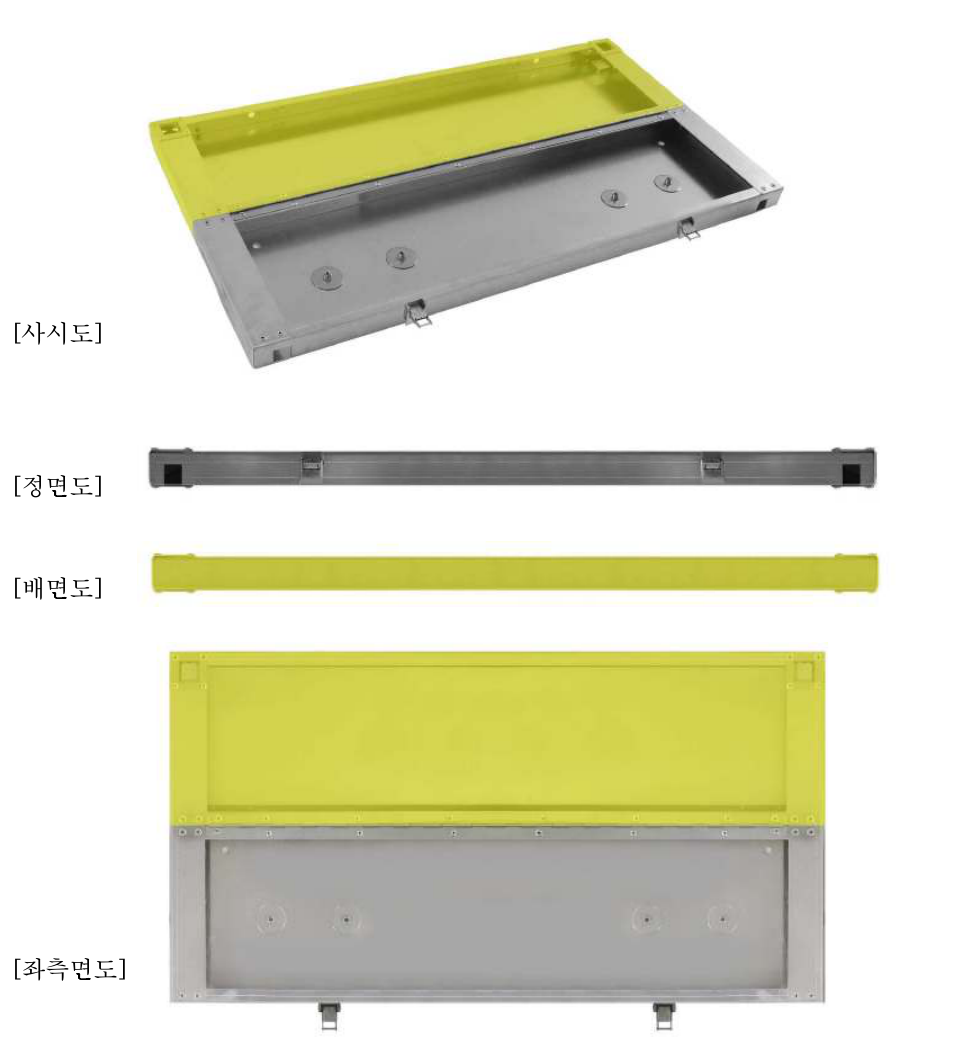
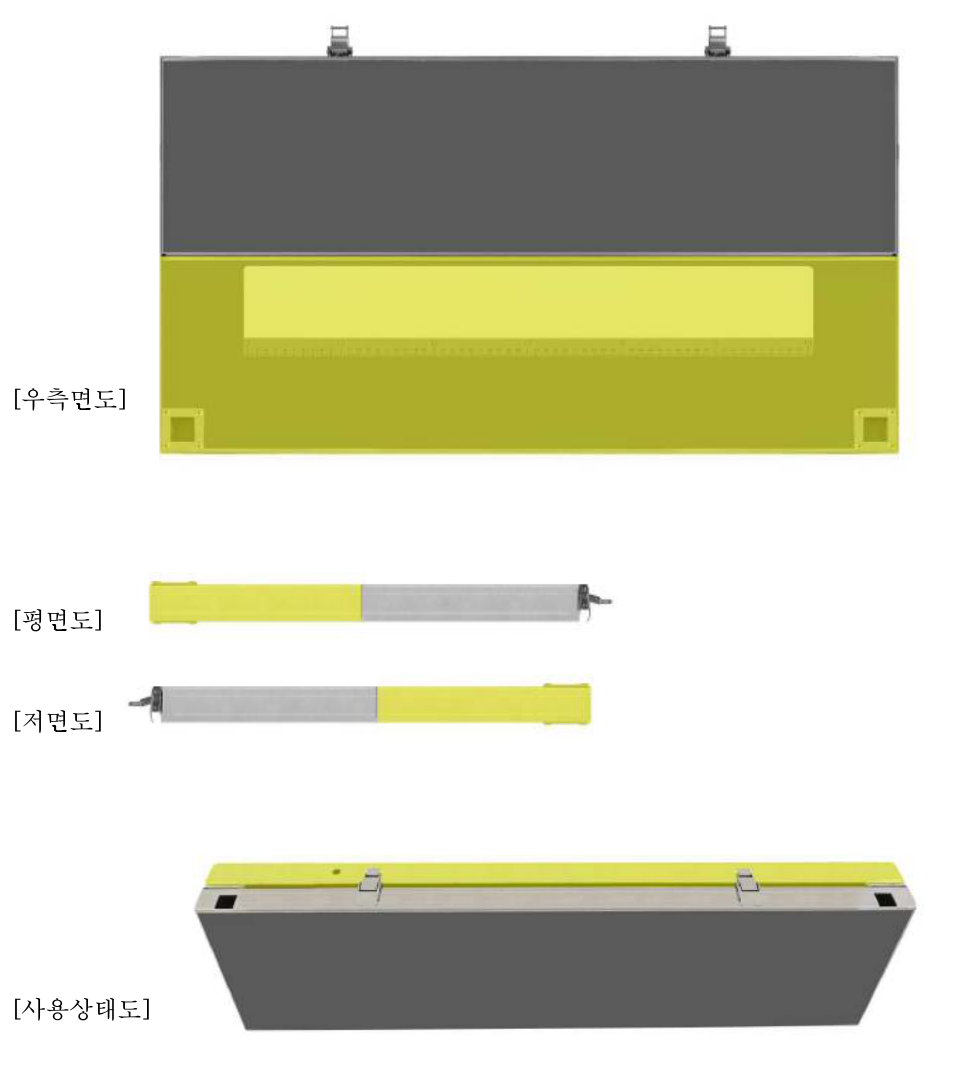
A partial design identifies a particular portion of a product for protection. For the ultimate similarity assessment, the court therefore compared the registered front panel with the front panel of the earlier third-party product.
That limited comparison should not be confused with the separate question whether the competitor’s disclosure was attributable to a design for which the claimant was entitled to seek registration.
The exception does not move the filing date back
Article 36 of the former Korean Design Protection Act, applicable to this case, provided a twelve-month exception following disclosure of a design belonging to a person entitled to obtain registration. In principle, that person had to file within the prescribed period.
Relief from the effect of disclosure did not make the application date retroactive to the first public disclosure. An intervening third-party product still required a separate assessment of the design disclosed and the person entitled to register it.
The claimant’s reliance on the exception for its own product did not automatically remove the YouTube product from the prior-design comparison. The claimant argued that the latter was substantially identical to, and copied from, its own earlier design.
Differences between the two disclosed products
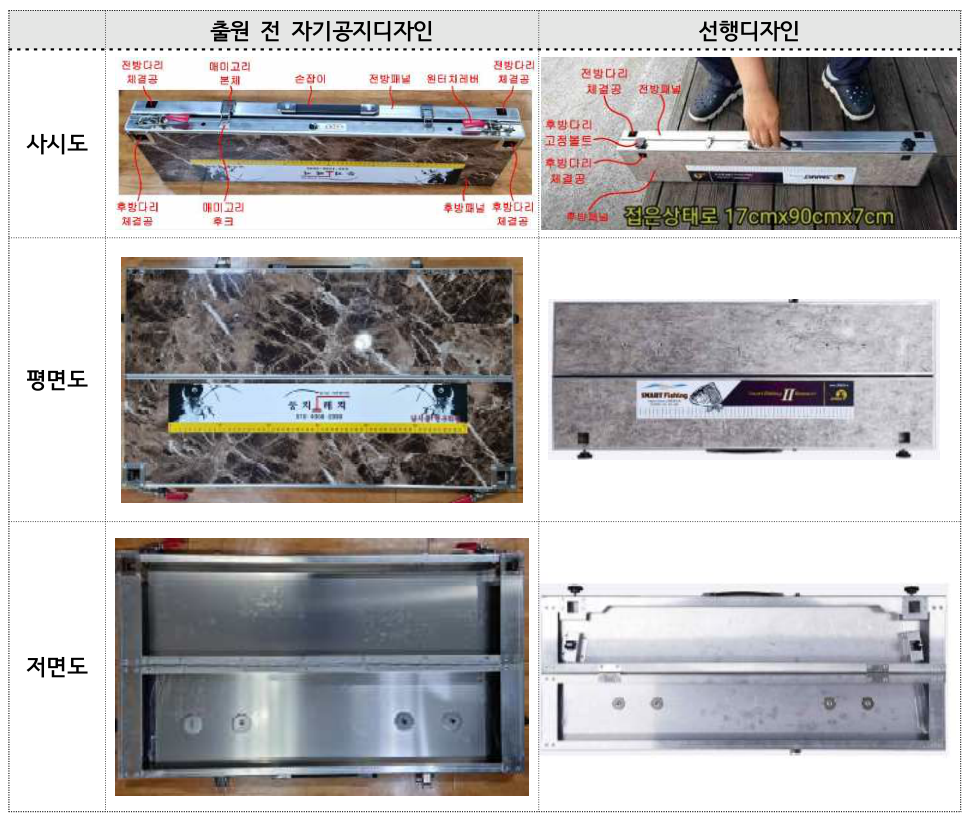
The court recognised shared features: hinged front and rear panels that fold together, front-leg attachment holes and similar arrangements of round rivet nuts. Rivet nuts provide threaded fastening points for the components.
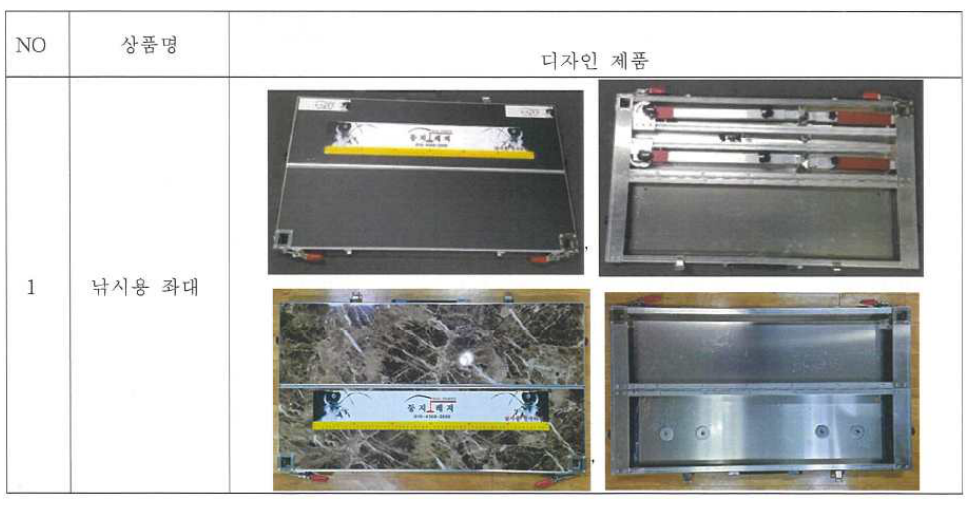
There were also visible differences. The earlier third-party product was wider in proportion and had a quieter marble pattern; the claimant’s product had a dark black-brown marble pattern. The handle was on the claimant’s front panel but on the competitor’s rear panel. Projecting slide-bar adjustment bolts on the claimant’s front panel were absent from the competitor’s product.
Rear-leg levers and bolts, the position and edging of the leg holes, and fixing brackets underneath the rear panel also differed. The overall aesthetic impressions were not identical. Even a comparison confined to the front panels left differences in proportion, pattern, handle position and adjustment bolts; calling parts easily replaceable did not eliminate those differences.
Access and copying were not sufficiently established
The competitor appeared to have launched and disclosed a separate product. The court did not treat that act as equivalent to disclosure of the claimant’s own platform merely because the claimant had advertised first.
The Naver café had about 800 members and the Band post had 164 views. The evidence did not sufficiently show that the competitor had actually accessed the claimant’s product before implementing its design, or that it had copied it. These figures are contextual evidence, not a general numerical threshold for publicity or copying.
Taken together with the differences between the products and their separate launches, the evidence did not establish the claimant’s entitlement to register the third-party design. The exception therefore did not extend to it. Insufficient proof of copying is not an affirmative finding that no copying occurred.
The registered front panel was similar to the prior panel
The comparison now changed. The earlier analysis concerned identity between two disclosed products; the final analysis concerned similarity between the grey front panel in the registration and the competitor’s front panel. Treating the claimant’s advertised product and registered drawings as interchangeable would obscure this distinction.
The court found the articles identical or similar in purpose and function, and the front panels similar in overall shape, front-leg attachment-hole locations, and the number and position of round rivet nuts. The claimant did not dispute this similarity.
Because the third-party design remained prior art and was similar to the protected panel, the court upheld the invalidation decision of 16 December 2025 in case 2025Dang722 and dismissed the claim seeking its cancellation.
Practical implications for design records
Preserve not only a disclosure date but the precise appearance disclosed on that date. Keep the product in a supply agreement, advertising photographs and the final registered drawings separately identifiable instead of assuming that they depict the same design.
An assertion of derivation should connect the material available to the third party, evidence of access, the identity of the disclosed appearance and the basis for entitlement to registration. This is a practical inference from the court’s reasoning.
For a partial design, identify the protected portion first. Earlier disclosure alone does not bring every later similar product within the exception: the relationship between each disclosure and the asserted right must be established.
The original figure labels and forms are preserved; the text explains the source material.