
The application and the relevant decision
On 4 July 2024, the Korean Patent Court dismissed the appeal in case 2023Heo13001 concerning GreenBoxes alone for Class 21 food-storage and household or kitchen containers. The application was filed on 10 January 2020. After refusal and an unsuccessful IPTAB appeal on 21 June 2023, the successor applicant pursued the court action. This was a registration-refusal case, not an infringement action or cancellation of a registered Debbie Meyer GreenBoxes mark.

Combining ordinary words did not remove their descriptive meaning
The court considered “green” capable of describing colour or environmentally friendly characteristics and “boxes” descriptive of the containers. The combination remained readily understandable in that sense. Actual green products and environmental advertising supported that assessment under Article 33(1)(3) of the Korean Trademark Act.
A coined combination is not automatically distinctive. Offering other colours did not remove the descriptive meaning, because a characteristic need not apply to every product. Registrations of other marks containing ECO or similar wording did not determine the result for this application.
Independent source identification and the public interest
The court also addressed Article 33(1)(7): even a suggestive expression may fail to identify one commercial source where ordinary traders should remain free to use it. The analysis concerned how consumers would perceive this sign for the specified goods, not merely whether its two words appeared joined together.
The evidence had to establish GreenBoxes alone
For acquired distinctiveness under Article 33(2), the relevant point was the IPTAB decision of 21 June 2023. Duration and continuity of use, sales, market share and the scale and content of advertising needed to demonstrate consumer recognition of the actual applied-for sign for the relevant goods.
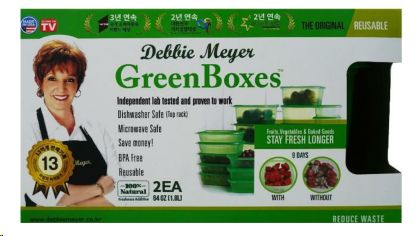
The six-year trading history largely concerned Debbie Meyer GreenBoxes. Websites and packaging featured the name, portrait and composite presentation, alongside expressions such as GreenBags and GreenBoxes. Spatial separation or a TM symbol did not establish that consumers independently understood GreenBoxes as indicating a single source.

Large claimed figures did not close the evidential gap
The applicant asserted approximately KRW 7.2 billion in advertising expenditure in 2022 and KRW 46.6 billion in television-shopping sales from January 2018 to September 2023. These were the applicant’s claims, not figures accepted as proved merely by repetition. A notarised statement did not sufficiently substantiate them; even assuming the amounts, they did not demonstrate recognition of GreenBoxes alone.
The practical lesson is to match evidence to the precise mark, goods and relevant date. Keep records showing the sign as consumers encountered it, rather than relying only on aggregate turnover for a wider brand. IPLEX assists with assessing registrability and evidence in Korean trade mark appeals.
The original figure labels and forms are preserved; the text explains the source material.