
The technical issue
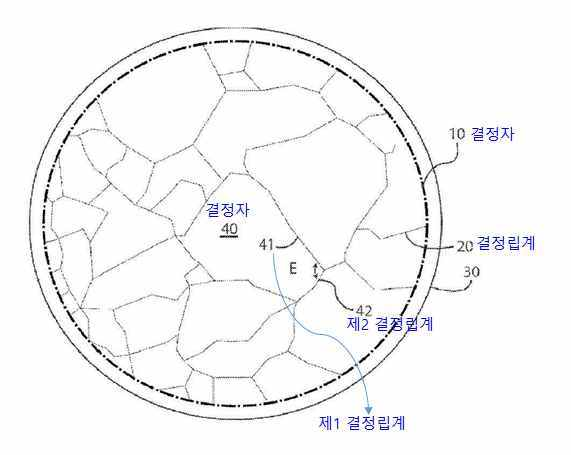
The Korean Patent Court’s judgment 2025Heo10512 of 16 July 2026 concerns patent No. 2068513, “Polycrystalline metal oxide, methods of making it, and products containing it.” The cathode material sought stability while limiting costly cobalt. Claim 1 places higher cobalt concentrations at grain boundaries between lithium-nickel-oxygen crystallites. Following IPTAB’s 31 July 2025 invalidation decision, the owner argued that “grain boundary” should retain its conventional scientific meaning: an approximately 0.5–1 nm boundary between differently oriented crystallites.
Numbers and figures defined a broader region
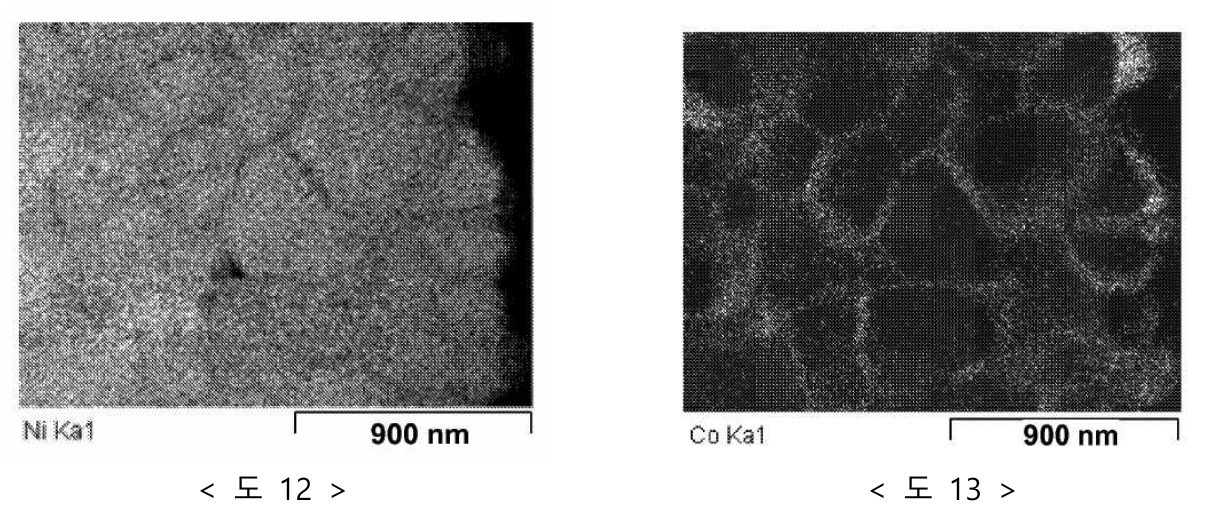
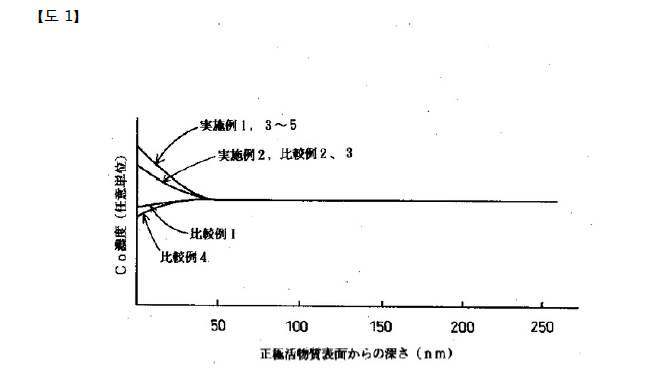
The specification instead described 1–200 nm, with elemental-distribution figures showing 50–150 nm and an average around 100 nm. Considering the technical problem and EDX figures, the court construed the term as a cobalt-rich region 1–200 nm thick. It did not authorize arbitrary expansion or restriction of claims from the description. Japanese publication 2003-59489, published on 28 February 2003, called a roughly 50 nm cobalt-enriched zone a region near the primary-particle surface. Despite different names, that structure corresponded to the construed boundary, and its sintered lithium-nickel-oxygen particles supplied the relevant arrangement.
Different claims failed on different grounds
Claims 1, 3 and 11 lacked both novelty and inventive step over prior invention 5. Claims 2, 4–8 and 10 lacked inventive step; the additional ranges lacked a disclosed technical significance beyond routine selection. Claims 9 and 12, adding a protective coating and a battery using the coated particle, lacked inventive step over inventions 5 and 4 together. Method claim 13 failed for inventive step on invention 5 alone or that combination, depending on the particle. The court upheld invalidation and dismissed the owner’s challenge; it did not find all thirteen claims devoid of novelty.
Sufficiency and clarity remained separate questions
The court rejected insufficiency and clarity attacks: concentration ranges and EDX measurement disclosed how to assess the difference, while the approximately 3 atomic-percent cobalt distribution helped explain “substantially uniform.” Inventions 1 and 2 did not establish the relevant boundary enrichment and differed in ratios or processing. Practitioners should define unusual terms consistently through regions, dimensions and methods, compare structures even where terminology differs, and explain why claimed numerical ranges matter. Clear disclosure alone does not establish novelty or inventive step.
The original figure labels and forms are preserved; the text explains the source material.