

The SNC cancellation dispute
In a commentary by Korean patent attorney Yongdeok Kim, the decision of the Korean Patent Court dated 23 July 2026 (2025Heo10607) illustrates why export declarations and product photographs should be assessed together. The dispute concerned SNC trade mark registration No. 1118080, including the designated goods ‘parts and accessories for automobiles’.
A cancellation petition was filed on 26 February 2024, alleging non-use in Korea for the preceding three consecutive years. On 24 October 2025, the Intellectual Property Trial and Appeal Board granted the petition in case 2024Dang584, finding the evidence insufficient. The proprietor challenged that decision before the Patent Court.

Use by the proprietor’s company
The products were supplied by Skai B, a company managed by the individual proprietor. The challenger argued that the company and its representative had separate legal personalities, so the company’s activities could not count as use by the proprietor or a licensee.
The court held that a non-exclusive licence could arise through agreement without a prescribed form or written contract, including by implication from the parties’ conduct. The proprietor had continuously managed the company as its representative director since 24 September 2011. In those circumstances, the company was at least an implied non-exclusive licensee. That finding does not establish automatic permission for every affiliate or business partner.
Linking the product to its packaging and shipment
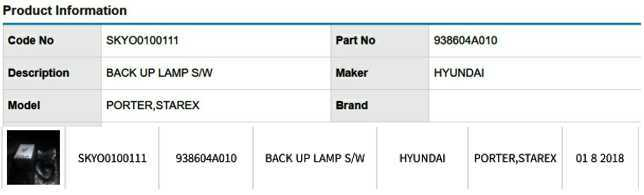
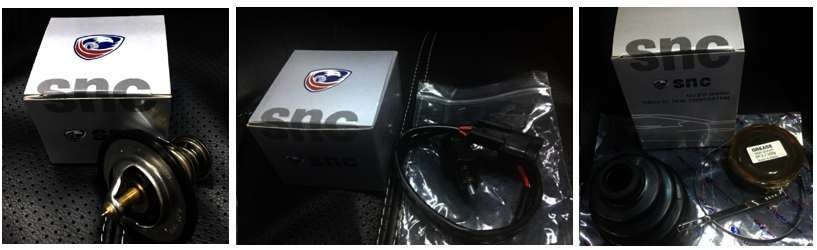
The company’s website showed thermostats, back-up lamp switches and CV joint kits with branded boxes. Product identifiers connected the website photographs to export declarations; for example, the switch part number 938604A010 appeared in both. The court’s specific export-use finding concerned automotive parts such as thermostats and back-up lamp switches, not proof of every product pictured.
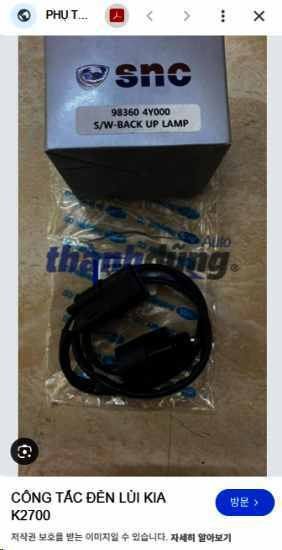
The packaging evidence added a further link. The company received 12,000 boxes on 12 May 2021 and 12,200 on 4 December 2023, with the mark already printed on them. Export declarations documented shipments of relevant automotive parts to Vietnam on 25 March 2022, 18 May 2023 and 18 October 2023. A switch shipped alongside the other products also appeared for sale on a Vietnamese online store. The overseas listing corroborated the chain; it was not sufficient on its own.
Why export qualified as use in Korea
The challenger suggested that the goods might have been exported unbranded and labelled abroad, or exported under a customer’s mark. No supporting evidence was produced. The court also considered the overall form of the boxes and the placement of the mark, and rejected that suggestion.
Taken together, the records established export, for the purpose of transfer, of automotive parts in packaging bearing the mark. The definition of use applicable to this case included export for transfer of goods or packages bearing a trade mark. The foreign location of the purchaser therefore did not, by itself, negate use in Korea.
A limited colour difference and the scope of the finding
The mark actually used had slightly less saturated red areas, while the remaining figurative and word elements were unchanged. The court regarded it as the same mark in commercial perception. This was a finding about a minor colour difference, not permission to alter any wording or device without consequence.
The Patent Court found genuine use in Korea by a non-exclusive licensee within the three years before the petition and set aside decision 2024Dang584. Under the provisions applied, proof of use for one of the designated goods covered by the petition prevented cancellation of the registration as a whole on that petition. This must not be confused with a finding of actual use for every designated item.

Maintain an evidence chain
For a business relying on export use, the practical task is to show who used which mark, on which goods, and when. Keep photographs showing the product and mark together, packaging orders and delivery records identifying the printing and dates, and transaction or customs documents whose part numbers can be matched to those products.
Where a company uses a mark owned by its representative personally, record the licensed mark, goods, period and permitted user in writing. An implied licence may be legally possible, but proving it during a dispute is a separate issue. A coherent set of connected records is usually more useful than a large collection of isolated photographs and declarations.
The original figure labels and forms are preserved; the text explains the facts and the court’s reasoning.