

The cancellation decision was set aside
In case 2025Heo10401, decided on 22 January 2026, the Korean Patent Court set aside a decision cancelling the MATCHANDEUL food mark for non-use. Registration No. 0494844 was applied for on 9 March 2000 and registered on 5 June 2001. The cancellation petition of 18 January 2024 concerned specified Class 29 foods, including salted seafood, preserved vegetables and kimchi; other goods listed in the registration were not automatically part of that request.
Under Article 119(1)(3) of the Korean Trademark Act, the relevant issue was use in Korea during the three continuous years preceding the petition. The Intellectual Property Trial and Appeal Board had ordered cancellation on 15 May 2025 in case 2024Dang182. The court reached a different conclusion on the evidence of authorised use and exports. This was a Korean non-use case, not a ruling on the validity of a foreign registration.

Whose use was the manufacturing company’s use?
The trade mark owner had been the company’s sole internal director and de facto operator since around 2019. These circumstances supported an implied non-exclusive licence. The conclusion depended on the particular relationship and conduct; it does not establish that every related company is automatically licensed.
The company initially made, labelled and exported the foods itself, then used an OEM arrangement under a supply agreement dated 7 December 2023. Specifications, label placement, inspection, quality assurance and restrictions on third-party sales and unauthorised use showed its control over production. Outsourcing physical manufacture therefore did not prevent the customer company from being treated as the user of the mark.
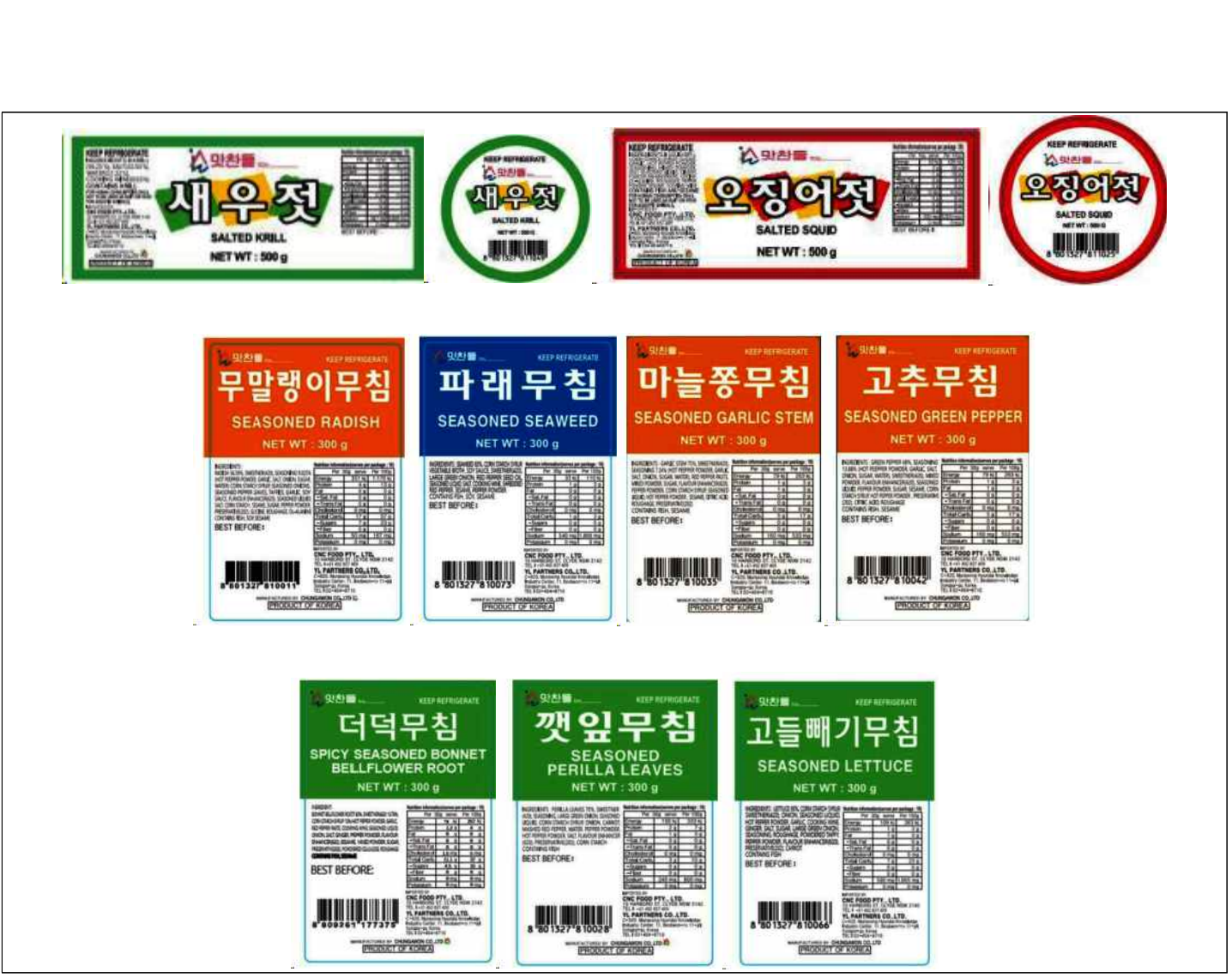
Domestic labelling and exports formed a connected evidential record
The records showed marked foods supplied through an exporter to Australia from at least 17 January 2023 and within the relevant period. The material point was the documented activity in Korea, including applying the mark to goods for export. The judgment should not be reduced to a proposition that sales anywhere abroad necessarily prove use in Korea.
The court also examined whether the signs used retained the registered mark’s commercial identity. Changes in colour, typeface and the position of a subsidiary element did not alter that identity on these facts. This is a more specific enquiry than asking whether two marks are merely similar.

The goods and the scope of the petition mattered
Salted shrimp and squid corresponded to designated goods. Seasoned radish, garlic stems, peppers, deodeok, perilla leaves, godeulppaegi and green laver were also considered in terms of their commercial identity with the listed goods. Product names on invoices therefore needed to be read alongside the actual food and the registration’s specification.
Where several goods are included together in a single non-use cancellation request, proof of qualifying use for one of the requested goods can defeat that request as framed. That procedural consequence does not mean that sales of every listed item have been proved. The court did not need to determine the remaining grounds once the cancellation decision could not stand.
Prepare the evidence before a challenge arises
A written licence should identify the authorised goods, period and sign. For OEM production, link the agreement to orders, approved labels, quality inspections, invoices and export records. A collection of disconnected documents may fail to establish who used which mark, on which goods and when.
Brand redesigns also deserve review against the registered form. IPLEX examines the continuity between the registration, the actual sign and the commercial records when preparing a Korean non-use defence, including cases involving outsourced production and export sales.
The original figure labels and forms are preserved; the text explains the facts and the court’s reasoning.