
A failed invalidation challenge does not make every later challenge procedurally inadmissible. The evidence actually relied on in the later proceedings must be compared with the evidence underlying the final earlier decision.
In its judgment of 28 August 2025 in case 2024Heo14698, the Korean Patent Court considered a security-paper printing apparatus. It distinguished genuinely different evidence from evidence strong enough to invalidate the patent, and set aside a procedural dismissal without declaring the patent invalid.
The patent and the first challenge
Patent No. 10-2318074 concerns a security-paper detection arrangement that can be installed separately in an existing printer. Claim 1 includes a sensor in the paper-feed path, a switch connecting or interrupting an existing printer sensor’s signal, and a controller that operates the switch according to the detected paper type. Printing proceeds for security paper and stops for ordinary paper.
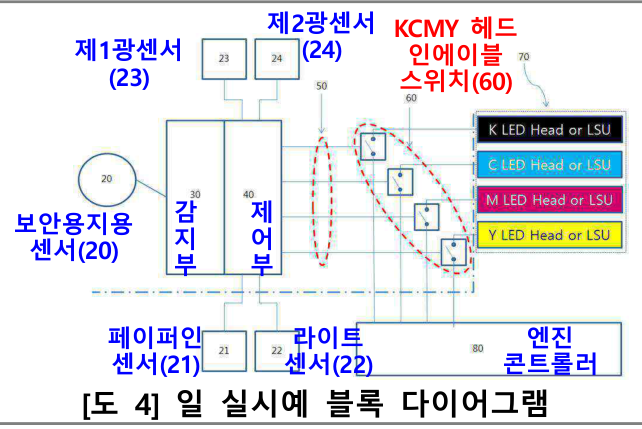
The challenger first petitioned for invalidation in 2022. The Intellectual Property Trial and Appeal Board rejected the petition on the merits. In the subsequent case 2022Heo4956, the Patent Court rejected arguments based on substantial identity with comparison invention 1 and lack of inventive step over the combination of comparison inventions 2 and 3. The challenger withdrew its Supreme Court appeal on 23 October 2023, making that first decision final.
Which evidence remained in the second proceedings?
Two days later, the same challenger filed a second invalidation petition. Although it initially submitted prior-art inventions 1 through 7, it withdrew the other inventive-step arguments at the oral hearing and maintained only the combination of inventions 5 and 7. Inventive step asks whether the relevant skilled person could readily derive the claimed invention from the prior art at the relevant filing date.
Invention 5 concerns an auxiliary switch operated as a copier’s platen cover opens and closes. Invention 7 detects whether paper in a cassette is security paper. The challenger argued that combining those teachings would make the patented arrangement obvious. Neither reference was substantively the same as comparison inventions 1, 2 or 3 used in the first proceedings.
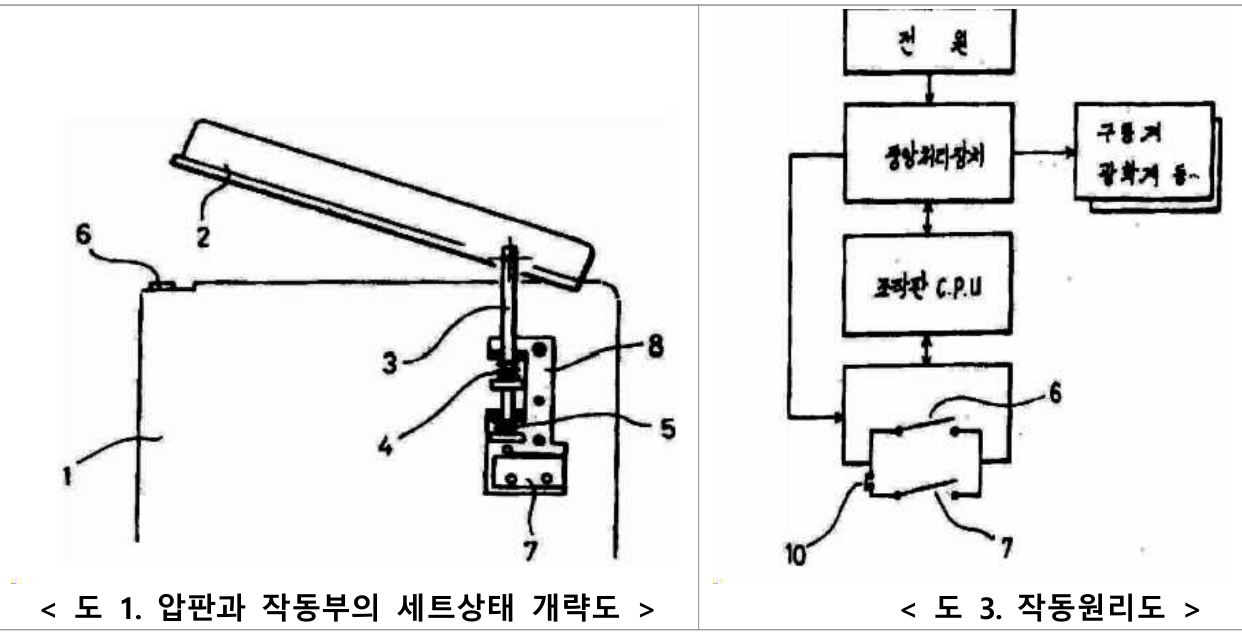
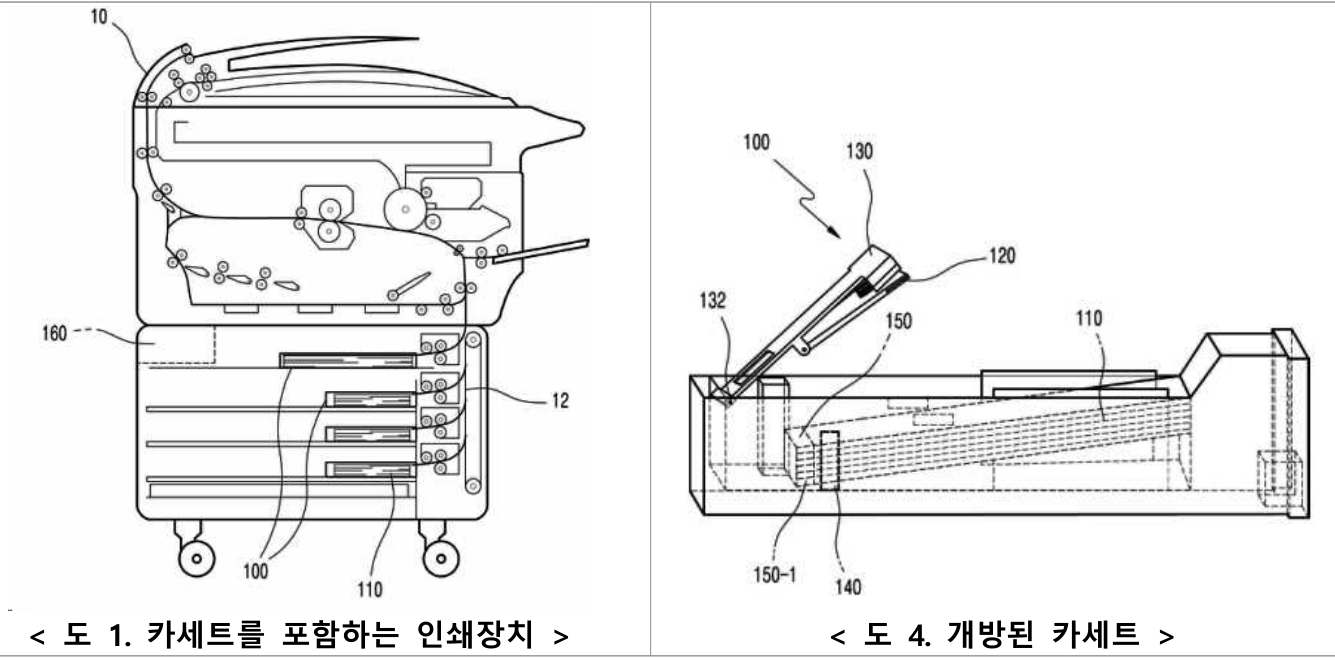
The Board found that the combination did not defeat inventive step. It accepted that the two references had not previously been submitted, but treated them as the same evidence for procedural purposes because they were insufficiently persuasive to overturn the earlier decision. On 23 August 2024, it therefore dismissed the second petition as inadmissible.
Different evidence and persuasive evidence are distinct questions
Article 163 of the Korean Patent Act bars a further trial based on the same facts and the same evidence after the relevant trial decision becomes final. Its purpose includes avoiding inconsistent decisions and abusive repetition. Reusing the earlier evidence while merely adding weak supplementary material can still fall within the category of the same evidence.
The Patent Court distinguished that situation from a petition resting only on new evidence whose substantive content differs from the earlier evidence. In the latter situation, weak probative value does not turn different evidence into identical evidence. Whether the new material establishes invalidity belongs to the merits of the petition.
The court examined the arguments and evidence still maintained when the second Board decision was made. Some publications initially submitted in the second proceedings had appeared in the earlier proceedings, but the corresponding arguments had been withdrawn. The remaining inventions 5 and 7 were not substantively identical to any of the earlier comparison inventions.
Why the court cancelled the decision without invalidating the patent
A procedural dismissal means that the petition fails an admissibility requirement. Rejection on the merits means that an admissible petition has been examined but its substantive case has failed. The Patent Court saw no apparent legal error in the Board’s assessment that inventions 5 and 7 did not negate inventive step. Its error was using that assessment to dismiss the petition procedurally under Article 163.
The court accordingly cancelled the second Board decision. It did not go on to decide the challenger’s court-stage argument based on inventions 8 and 2. The operative result was cancellation of the procedural dismissal, not a declaration that patent No. 10-2318074 was invalid.
Preparing a renewed challenge
Start with the publications and technical teachings actually relied on in the first trial and its cancellation action. For each new reference, identify the relevant claim features, whether it merely repeats an earlier teaching in a different document, and whether it provides an independent evidential basis.
Also track amendments and withdrawals during the second trial. The original bundle is not necessarily the final case: here, only the combination of inventions 5 and 7 remained when the Board ruled.
A renewed invalidation strategy therefore needs two separate explanations: why the new evidence differs in substance from the earlier evidence, and why its technical teaching makes the claimed invention readily derivable. Addressing both gives the tribunal a basis to distinguish admissibility from the strength of the invalidity case.
The original figure labels and forms are preserved; the text explains the source material.