Two learners can miss the same question for different reasons. US11238749B2, filed by Riiid, assigns learning-concept tags to incorrect options, updates concept-level mastery estimates from response records and uses them to recommend further questions. A fictional English exercise illustrates the mechanism, followed by a separate look at Socra AI’s published Santa features.
The same score can hide different learning needs
Imagine two learners answering the same English question incorrectly. One uses a present-tense verb for yesterday; the other uses the past tense but chooses a singular verb for a plural subject. Both receive one incorrect mark, yet may need different practice.
Recording only the question number or chapter can send both learners back to the same material. Information about the selected distractor can instead suggest whether to examine tense or subject–verb agreement.
Riiid’s US11238749B2, granted in the United States on 1 February 2022, describes tagging choices, updating mastery by concept and personalizing questions. Riiid subsequently changed its company name to Socra AI.
Representing concepts and distractors
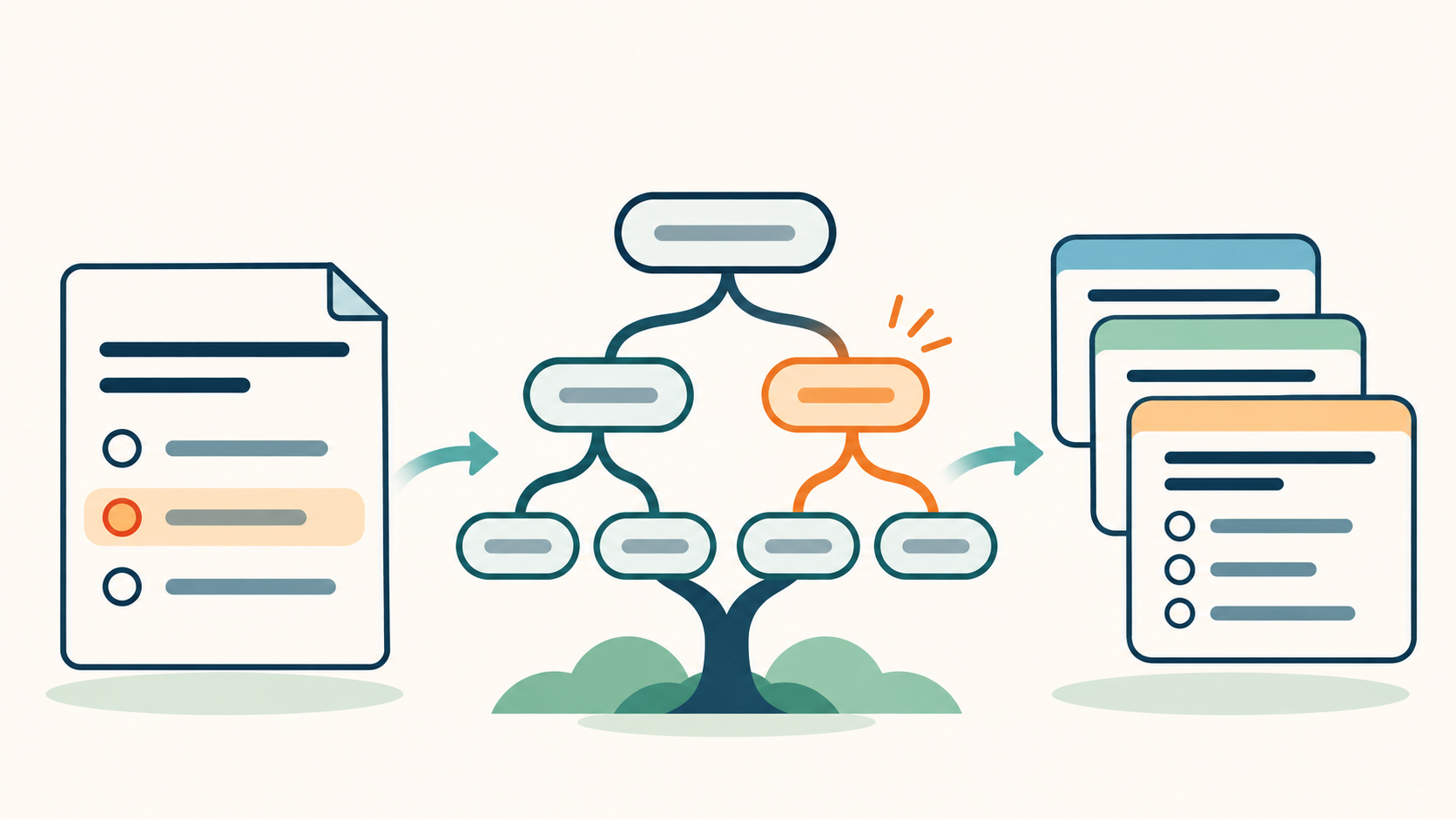
The described process organizes learning elements in a tree: grammar may branch into verbs, then tense and agreement. Tags identify individual elements; analysis groups combine tags into units suitable for evaluating learning.
The question database stores not just questions and answers but tags for individual incorrect options, or distractors. An option can carry several tags, while a core tag represents the principal concept the question is intended to test.
Fine-grained tags help distinguish possible misunderstandings, but sparse response histories may not support reliable estimates for every tag. Grouping tags lets the system analyze evidence across several questions.
Turning responses into a mastery estimate
A learner submits an answer from a terminal. An analysis server compares that response with the question database and maintains a score for each analysis group. The patent calls the score a “conquest rate”; here it is described as an estimated mastery indicator.
The incorrect-response example uses both the core distractor associated with the intended concept and the distractor actually chosen. When a selected option has several tags, its weight is distributed among them and contributions for matching tags are combined. A choice associated with both tense and agreement can therefore contribute to both.
When new evidence is incorporated, the system can reduce the influence of the previous score. Otherwise, an old mistake and a recent response could affect recommendations alike even after learning has occurred. The update can reflect choice structure and the changing response history, beyond a simple correct-answer count.
This remains an estimate from response patterns. A learner may guess or misread a question. Repeated evidence across an analysis group and subsequent updates matter; the score is not direct access to the learner’s understanding.
A fictional English exercise
Consider “The reports ___ ready yesterday.” The correct option is “were.” Choosing “are” preserves plural agreement but conflicts with “yesterday”; “was” has the past tense but not plural agreement. An author could tag the first distractor for tense and the second for subject–verb agreement.
If similar mistakes recur across questions, the first learner might receive exercises linking time expressions to tense, while the second practises verbs with plural subjects. This is an invented example of the relationship between distractor tags and recommendations.
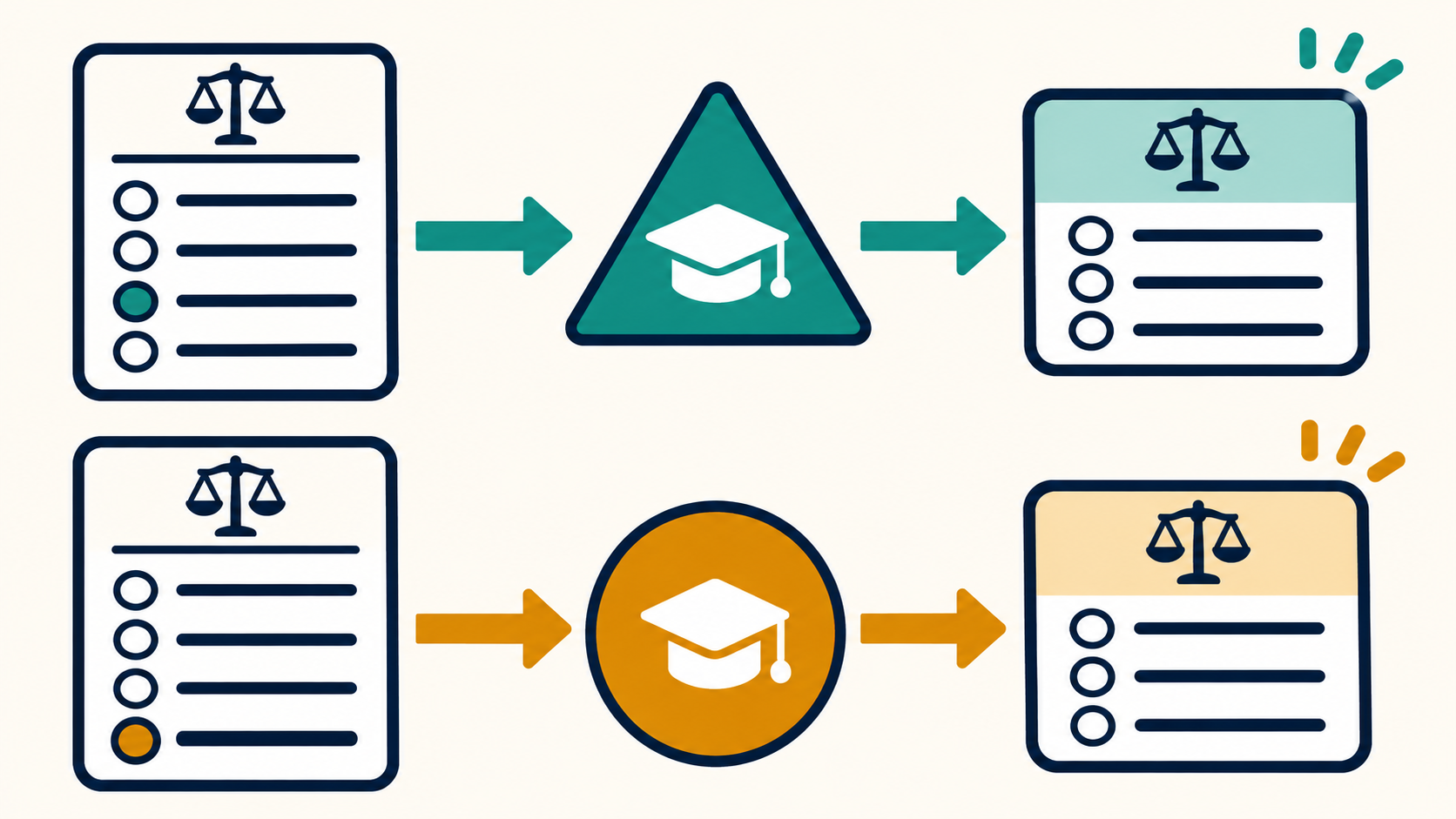
The description includes selecting questions whose core tags belong to weak analysis groups, or candidates with distractor-tag patterns similar to questions previously missed. Responses pass from terminal to server, tag evidence updates the state, candidates are selected from the database and the next question is returned.
Santa’s publicly described functions
Socra AI presents Santa as an AI learning service for TOEIC and TOEFL. Its published materials describe exam-specific score prediction, weakness analysis and learning-strategy recommendations that evolve with further activity. These are the company’s descriptions, not evidence that Santa implements this patent’s particular claims or guarantees any learner’s result.
Making the recommendation explainable
A development team first needs consistent rules for assigning tags. If one reviewer treats an option as a tense mistake and another as a vocabulary mistake, recommendations can change. Documenting criteria and exceptions, then examining agreement between reviewers, helps assess the annotation process.
Compare learners with similar accuracy but different wrong-answer patterns. Retain the original tags, selected options, updated analysis groups, candidates and final recommendation. Include options with multiple tags and users with little history.
For a patent-oriented technical description, specify the inputs and the rules that narrow candidates. Comparisons between answer-count-only, distractor-tag and history-weighted designs under the same conditions can reveal the contribution of each step. IPLEX advises on organizing those processing stages and observations into a technical account.
The original figure labels and forms are preserved; the text explains the source material.
The English exercise is fictional. The patent discussion explains selected technical disclosures; the Santa product description is separate from any assessment of claim implementation.
USPTO document for US11238749B2
Patent text and publication record
Riiid’s announcement of the Socra AI name
Google’s document-understanding patent: reading the layout of headings, text and images together
Nota’s model-compression patent: retraining a smaller layer group with cached inputs and outputs
Explore IPLEX’s AI project experience and consultation materials for organizing personalized-learning and recommendation technologies.
Explore our AI and patent practice