
An invalidity dispute, not an infringement finding
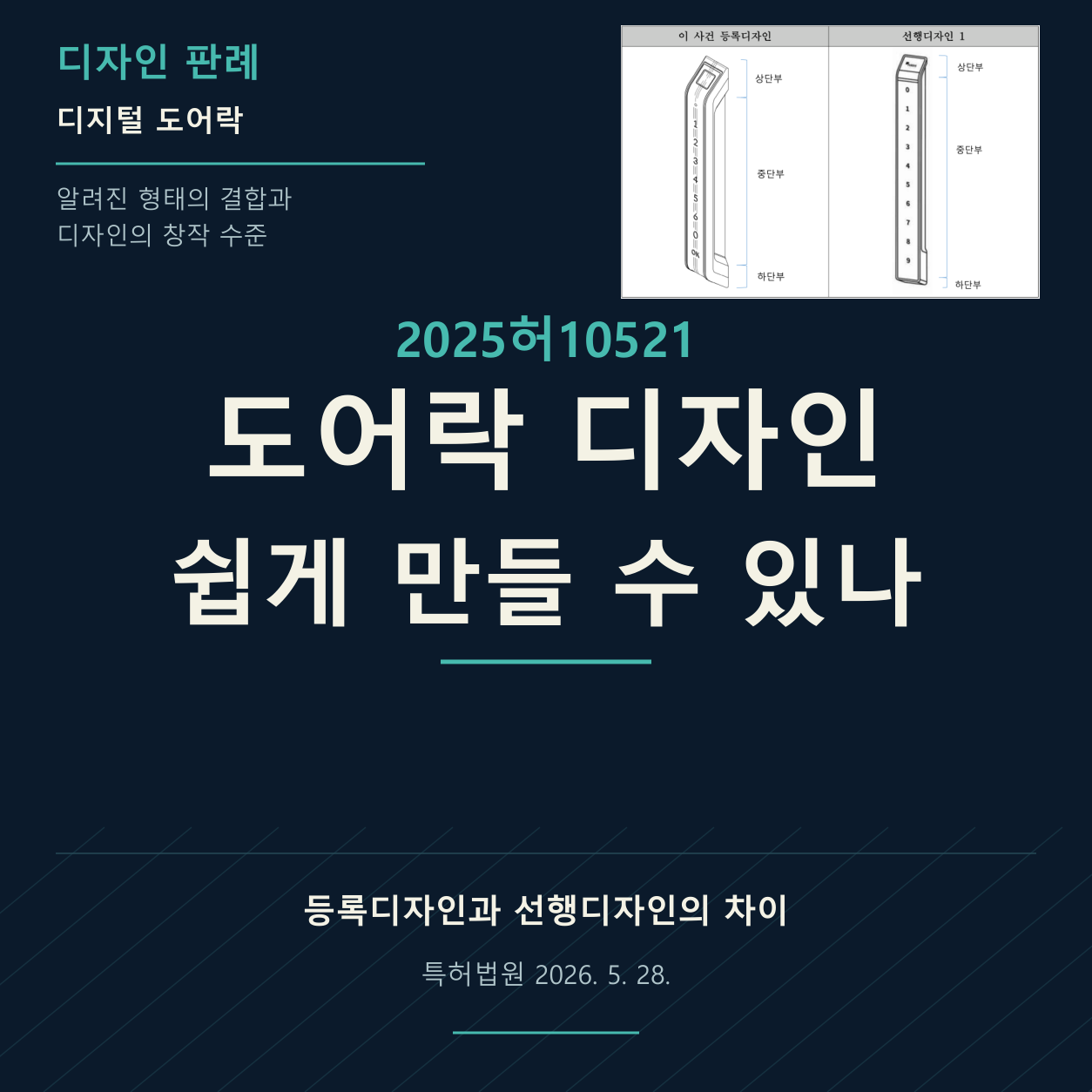
Korea’s Patent Court dismissed the proprietor’s challenge on May 28, 2026 in case 2025Heo10521. Digital door-lock design 1226158 was filed on December 26, 2022 and registered on July 27, 2023. It had an elongated body, a numerical input surface, projecting side borders and grip portions, and a fingerprint reader at the top.
An opponent requested invalidation in September 2024. On July 28, 2025, the IPTAB found that the design could readily be created by combining known designs. The court upheld that conclusion. The issue was whether the registered design satisfied the statutory requirements, not whether sales of another product infringed it.
Visible differences do not settle ease of creation
Article 33(2) of Korea’s Design Protection Act concerns whether a designer of ordinary skill could readily create the design from known material. Relevant considerations include copying known forms, functional changes without a different aesthetic value, and the relationship between products and appearances when combining designs.
The proprietor argued that functional constraints required an elongated body, a grip and a password-entry surface, so those shared features deserved less weight. It relied instead on the coordinated borders, smooth front surface, numerical arrangement and fingerprint reader. The court identified the differences but asked whether achieving them required creative effort beyond ordinary design ability. Non-identity and difficulty of creation are different questions.
Why a furniture handle could inform an electronic key
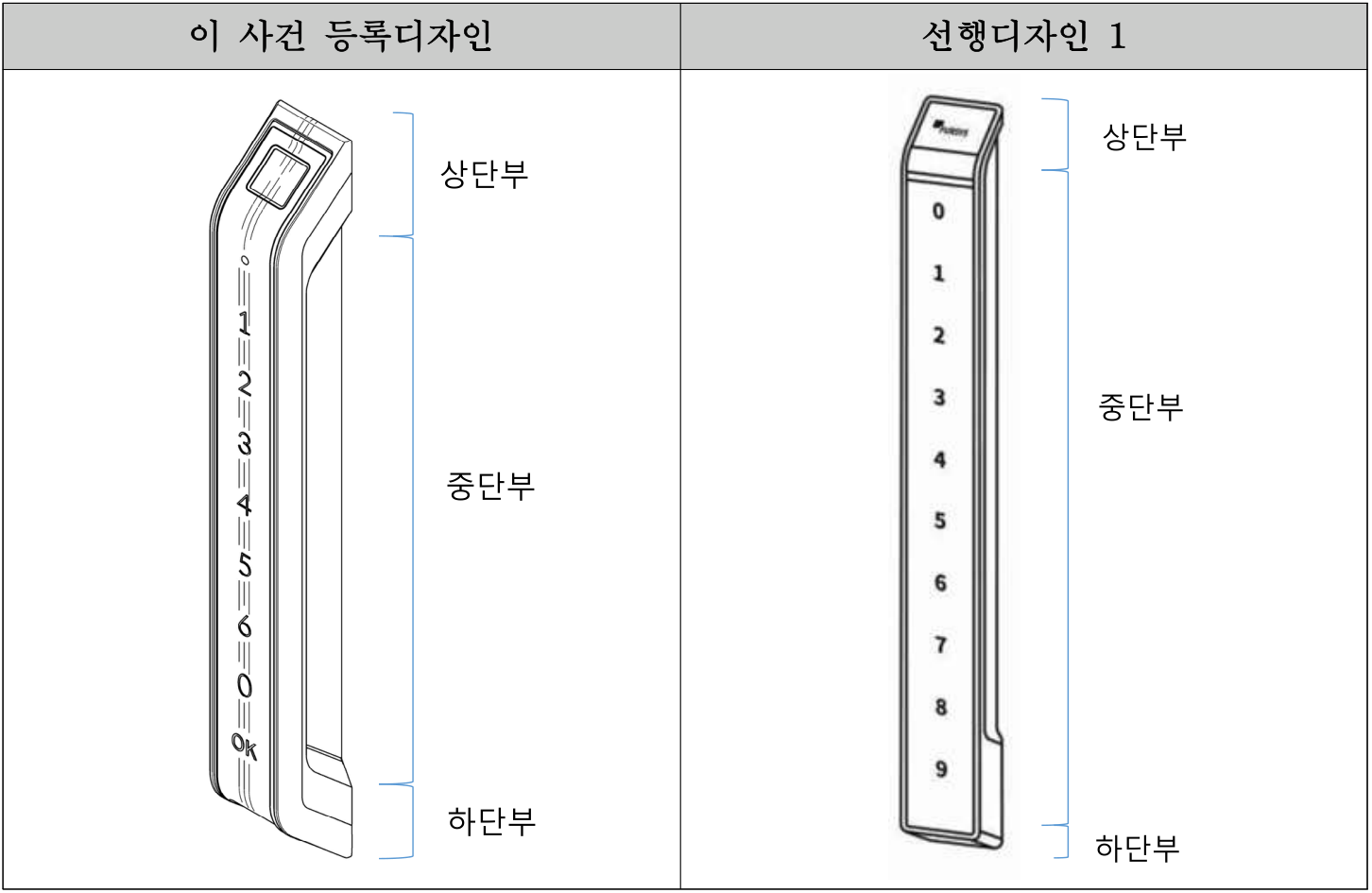
Prior design 1 was a touch-operated electronic key published on a blog in 2020 and included in a distributed user manual in 2022. Like the registered design, it was long and narrow, divided into upper, middle and lower portions, with a vertical row of numerals in the largest middle portion, an emergency power connection below, and projecting side borders around a recessed grip. The registered design divided its borders and used upper/lower symmetry differently.
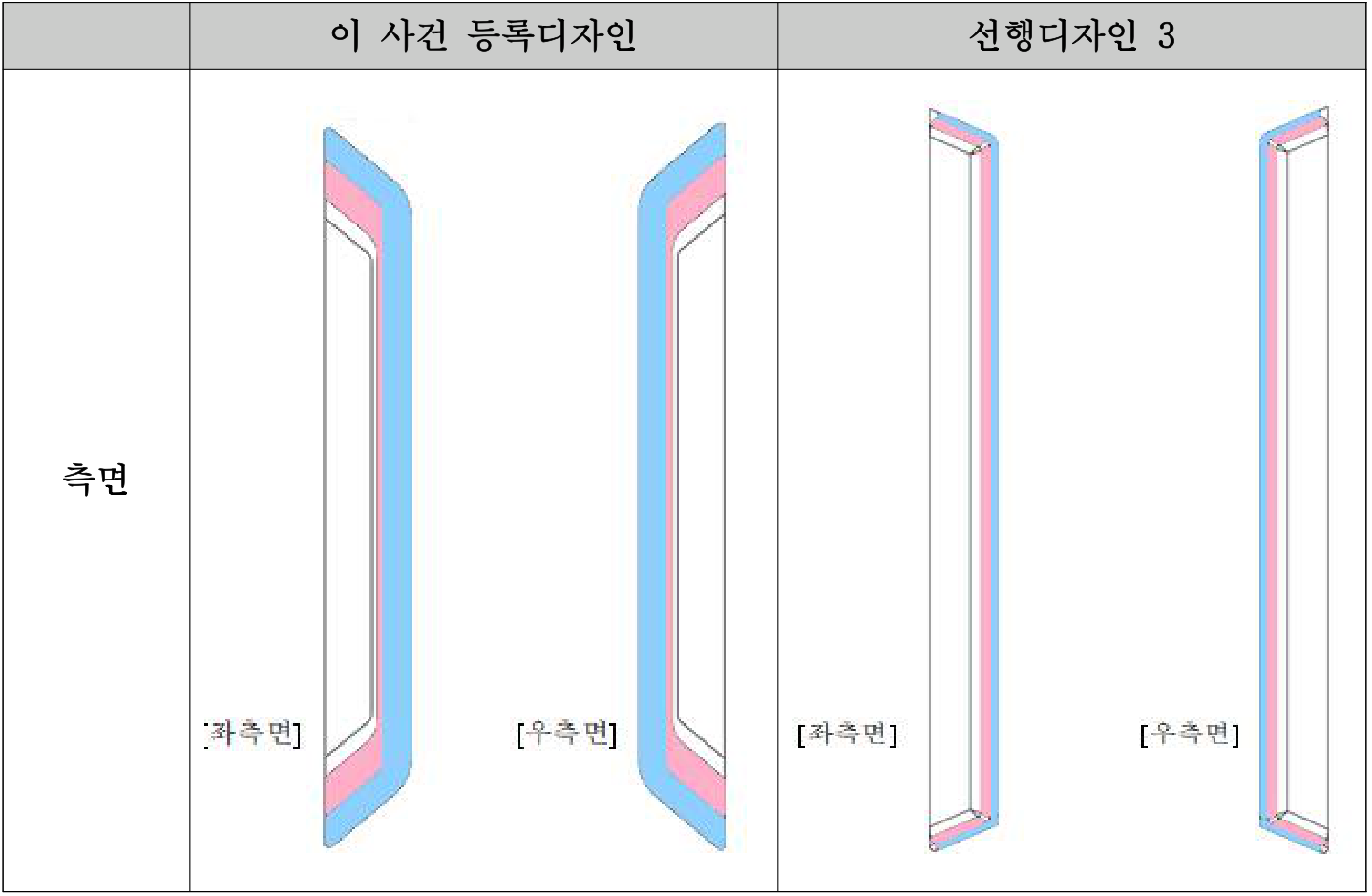
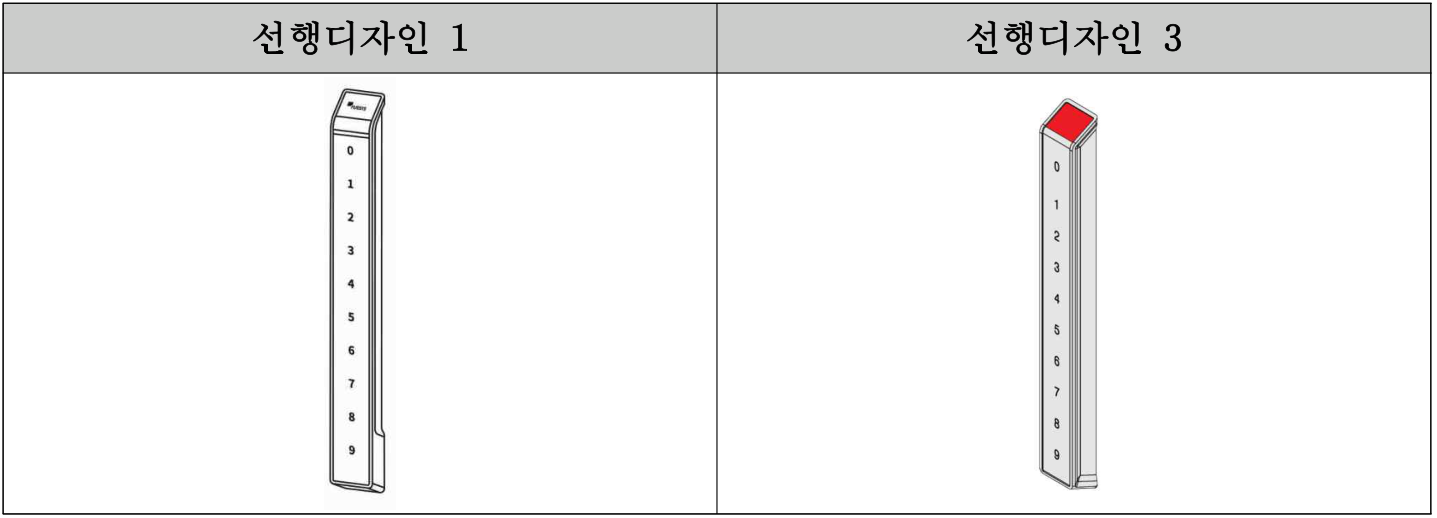
Prior design 3, a furniture handle published in 2019, showed two projecting side-border portions arranged symmetrically. Related door-handle and electronic-key designs also used thick upper and lower regions, thinner middle regions and symmetry. The court considered these ordinary ways of modifying prior design 1. The products were the same or similar in use on cabinet or bookcase doors and drawers, and shared an elongated rectangular body with a central touchpad. Their functional and visual relationship made the combination readily available.
Curvature, numerals and the fingerprint reader
The earlier electronic key already connected its upper and middle portions by a curve. A different degree of curvature did not establish a distinct aesthetic impression. Making the lower transition similarly smooth was an ordinary symmetrical treatment. Changing the starting numeral, the number of digits or additional symbols within the same vertical row was assessed here as a functional variation without particular aesthetic value.
The description of prior design 3 stated that a touchpad or fingerprint reader embedded in the front or upper surface opened the drawer or door, although the reader was not depicted directly in its drawings. The court took that disclosure into account. Choosing a recessed or flush reader, or a square rather than another familiar shape, was an ordinary design technique. The emergency-power portion below the user’s sightline also made little difference to the overall impression. Combining designs 1 and 3 with routine changes therefore sufficed to create the registered appearance.
Explain why the difference required creative effort
For an application or dispute, identifying a smoother curve or an added component is only the starting point. The explanation should connect that change to the overall appearance and show why it exceeds an ordinary combination or modification. Prior-art searches should consider related products with similar uses and appearances, rather than identical product names alone.
Drawings should consistently show the whole form and the relationships between its parts. In a dispute, assess why the cited designs would or would not be readily combined, and what visual features would remain unexplained by the combination. Functional additions and visual creativity should be distinguished. The judgment does not mean that small door-lock differences are never protectable; it rests on the particular design and prior material before the court.
The original figure labels and forms are preserved; the text explains the source material.