
2006 Heo 2592 Trademark refusal
[Legal]
Similarity is assessed through the marks' overall appearance, pronunciation and concept and the likelihood of source confusion. Naturally separable components of a composite mark may be considered independently.
Category | Earlier registered mark | Applied for trademark |
Mark |  | 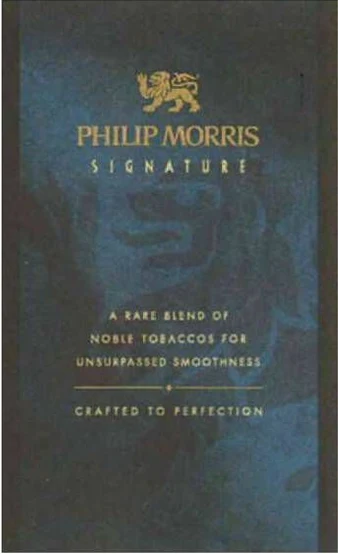 |
Designated Goods | Class 34: cigarettes, cigars, shredded tobacco, leaf tobacco, tobacco cases, ashtrays, cigarette boxes, cigarette filters, tobacco pipes and tobacco pouches, with the specified items made of non-precious metal | Class 34: lighters; matches; pipes; pocket cigarette-rolling machines; raw or manufactured tobacco, namely cigars, cigarettes, cigarillos, hand-rolling tobacco, pipe tobacco, chewing tobacco and snuff; and smokers’ requisites, namely cigarette paper and tubes, cigarette filters, tobacco boxes, cigarette cases and ashtrays, none made of precious metal or its alloys or plated with it. |
[Judgment]
1. Appearance
The applied-for and earlier marks differ in their overall colors, lettering and graphic arrangements.
2. Pronunciation and concept
The application resembles the front of a cigarette packet. At the top is:  with further wording below:
  The smaller lower wording describes the tobacco's smoothness and has little distinctiveness. The upper portion:
  therefore functions as the main source identifier.
with further wording below: The smaller lower wording describes the tobacco's smoothness and has little distinctiveness. The upper portion: therefore functions as the main source identifier.Within that upper portion, the word element:  the lion graphic:
  and the additional wording:
  can be perceived separately.
the lion graphic: and the additional wording: can be perceived separately.When the upper wording:  is pronounced, SIGNATURE can function independently. The applicant acknowledged that the company-name element identifies its cigarette business, while SIGNATURE does not describe the designated goods.
is pronounced, SIGNATURE can function independently. The applicant acknowledged that the company-name element identifies its cigarette business, while SIGNATURE does not describe the designated goods.If the application is identified by SIGNATURE, the earlier mark:  has the same pronunciation and concept.
has the same pronunciation and concept.[Decisions]
The shared SIGNATURE pronunciation and concept made the marks similar overall.
This article reflects the information available when it was published. Contact us to discuss your circumstances.