

Online sellers may face an unexpected sales suspension after an IP complaint. This article examines why responses to Coupang trademark complaints can fail and how a more structured response may help.
Incident Overview
The customer was selling slippers in Coupang and the product was removed due to a trademark infringement report.
The complaint concerned the term 'Jibbitz' in the product title.

The seller simply
- used the term to describe an included component
- on the product sales page.
Its legal significance required a separate review.
Limitations of Existing Responses
The client had already submitted a statement.
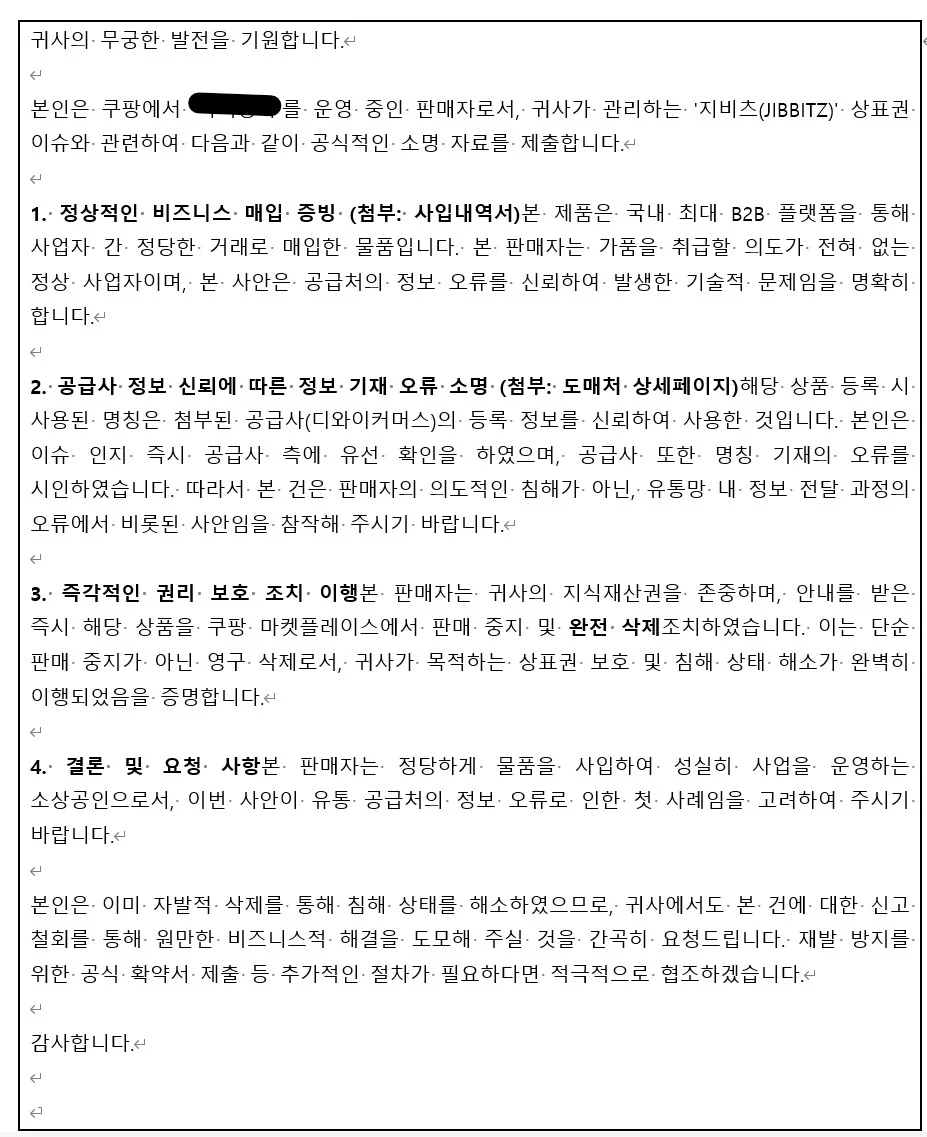
It was a commonly used structure.
- - Purchased from a regular store.
- - I didn't mean to.
- Remove the problem immediately.
But the results haven't changed.
The earlier response explained why the wording had been used, but did not adequately explain why that use should not constitute infringement.
key issues
Trademark infringement does not happen simply because you used the word.
The key is next.
- - Does the expression show the source?
- - Is the consumer aware of a particular brand?
The issue was whether 'Jibbitz' functioned as a trademark in context, rather than simply whether the word appeared.
Response Strategy
IPLEX IP Law Firm has completely restructured its existing response.
The key was three things.
1. Whether the wording functioned as a trademark
The response argued that wording such as 'includes a Jibbitz character' described a component rather than identifying the product's commercial origin.
In addition, it has been used at the same level as the functional and utility keywords in the entire product structure, and has not been independently highlighted as a specific brand.
2. Real Brand Display Presence
The sales page clearly had a separate brand called “popo fashion”.

The response argued that consumers would recognize the goods as 'popo fashion' slippers, rather than as products originating from the complainant.
3. Limits on the effect of trademark rights
Expressions to describe the composition, use, etc. of goods in accordance with Article 90 (1) 2 are not protected exclusively.
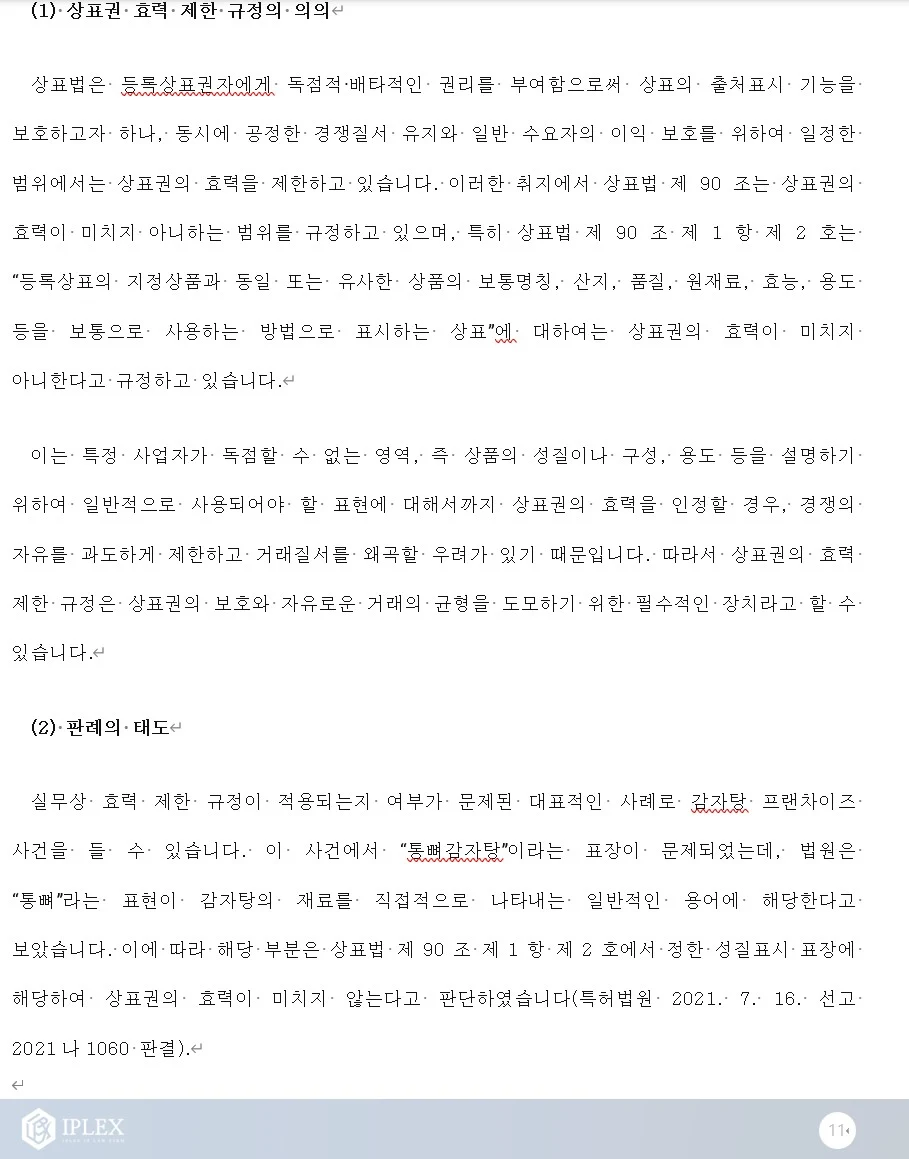
The response also argued that, in the particular market context, the expression was used to describe decorative components. This was a case-specific argument, not a determination that the Jibbitz trademark had become generic.
The Patent Attorney's Opinion
A patent attorney's opinion connected the trademark-use criteria, relevant Supreme Court decisions, and the product listing's effect on consumers. It presented a reasoned non-infringement position tailored to the facts.
result
Initial response submitted by the seller → Suspension remained in place
Revised response supported by legal analysis → Sales suspension lifted
The case illustrates the importance of how the facts and legal arguments are structured.
Key Points of Practice
This is something to remember in the Coupang trademark dispute.
- Simple explanation not solved
- Trademark use is a central issue.
- Source confusion likely structural analysis required
- Consider Article 90 of the Trademark Act.
- A patent attorney's opinion can support the response.
Sellers often focus on lack of intent, immediate removal of the wording, or the absence of harm.
But the real criteria are legal structure, the way we use it, consumer awareness.
This difference changes the outcome.
Conclusion
Coupang is not a legal judgment body. Therefore, a simple explanation cannot be solved.
The key is “how to legally restructure.”
Consultation information
The initial response is very important for trademark rights and design right disputes that occur on platforms such as Coupang and Smart Stores. Approaching the correct structure from the start is the quickest solution than delaying time on your own. If necessary, we will guide you through a customized response strategy based on the actual case.
This article reflects the information available when it was published. Contact us to discuss your circumstances.