

The Patent Court held that registered earphone-case designs adapting travel-luggage features lacked creativity (cases 2024Heo14780 and 2024Heo14803). The decisions illustrate how prior designs and established practices of adapting designs to other products affect the creativity assessment.
In this article, we systematically analyze the facts of the case and the legal basis of the decision, and summarize the practical implications that companies and designers must consider in the design application and management process.
1. Case Studies
In 2020, the applicant filed an earphone storage-case design featuring:
- Four wheels.
- Parallel stripes with constant spacing throughout the surface (grooves)
- A six-sided solid structure
The design was subsequently registered.
The application stated that the design was inspired by travel luggage.
Because the design is similar to the carrier design that the German brand RIMOWA has been selling since 2018, RIMOWA has requested an invalidation process for the design registration in 2023.
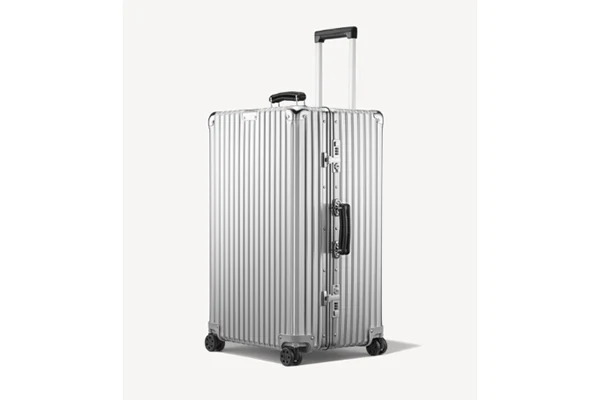
The Intellectual Property Trial and Appeal Board invalidated the registration on the ground that an ordinary designer could easily create it from the prior design. The applicant challenged that decision in the Patent Court, which dismissed the challenge.
2. The Patent Court's reasoning
2-1. Creativity may be assessed using designs for different products
For the creativity assessment, the prior design need not relate to a product with the same use or dimensions.
The following factors were considered:
- Relevance of use/function between goods
- Similarity of basic structure and shape
- Whether the relevant field commonly adapts a design from one product to another
The court found an established tendency to adapt luggage designs to small accessories and cases.
2-2. Could an ordinary designer readily create the design?
The court applied Article 33(2) of the Design Protection Act, which excludes designs that an ordinary designer could easily create from the relevant prior designs.
The court found the design easy to create for the following reasons:
- The prior luggage design was widely known as the RIMOWA style.
- There were already numerous adaptations to accessories and small products.
- Applying the style to an earphone case was a natural extension.
The court therefore regarded the design as a straightforward adaptation rather than the creation of an independent aesthetic impression.
2-3. As long as the dominant feature is similar, the detail difference is not the decisive factor.
Both designs shared:
- A cuboid form
- Parallel grooves extending across the front, back and top surfaces
It is the court's judgment that the difference between wheel presence and detail is only a functional and commercial variation, and that there is no meaningful differentiation in creative judgment.
3. Legal background: Article 33 of the Design Protection Act
Article 33 addresses both novelty and creativity. It excludes designs identical or similar to relevant publicly disclosed designs, as well as designs an ordinary designer could easily create from the relevant prior art.
The Supreme Court has consistently maintained the following standards:
- Whether the design is similar depends on the overall observation (the overall aesthetic)
- Minor differences may carry little weight when dominant features are shared.
- Functional or commercial modifications may fail to create a new aesthetic impression.
- The creativity assessment asks whether the design adds a new aesthetic impression, rather than requiring an exceptionally high level of artistic creation.
The court applied these principles in this case.
4. Practical implications for businesses and designers
1) Statements in an application may be used in a dispute
The applicant's statement that the design was inspired by luggage could support the conclusion that it was an adaptation of a prior design.
2) Designs in fields with common cross-product adaptations need meaningful differentiation
Where a design style is widely applied across product categories, reusing the same visual elements may not establish creativity.
3) Prior design research is required.
If you do not accurately analyze the scope, preference and similarity of the prior design, the risk of invalidation will increase after registration.
4) Differentiation is key to the design.
In order to differentiate the design, a new structural element or original form must be clearly reflected.
Conclusion
Design is brand competition. You need a professional protection strategy. Design right is directly related to brand identity, product competitiveness and market monopoly beyond simple appearance protection. Therefore, from the early stages of design development, it is necessary to conduct research, design differentiation, establish a registration strategy, and prepare for disputes. IPLEX IP Law Firm provides professional services based on multiple design registration and conflict experience. Design is an important asset of the company. IPLEX will work with you to maximize its value through a systematic protection strategy.
This article reflects the information available when it was published. Contact us to discuss your circumstances.