

For a Korean business entering the Gulf, protecting its brand in Qatar requires a country-specific plan. Qatar participates in the Madrid System and applies the GCC trade mark framework, but these arrangements do not create a single registration covering the entire region.
The principal domestic framework is Law No. 7 of 2014 and the 2023 implementing regulations. Distinctive word marks, figurative marks and other qualifying signs may protect both goods and services. The filing route, specification and later management of the right should be considered together.
Choosing a filing route and preparing the Qatar application
A business may file a national application through a local representative or designate Qatar in a Madrid international application. The appropriate route depends on its existing portfolio, intended markets and arrangements for managing the registrations.
A national filing identifies the applicant, the mark and the goods or services to be protected. A foreign applicant without a local domicile should arrange representation by an authorised agent in Qatar.
Prepare the required power of attorney with the appropriate authentication. Check the Arabic translation requirements for foreign-language documents and wording in the mark, including English wording, before filing.
For the international route, an eligible Korean applicant proceeds through the competent Korean IP office as Office of origin, followed by WIPO's international registration procedure. Qatar then decides protection under its own law.
From examination to opposition, registration and renewal in Qatar
The national procedure moves from filing to examination, publication and opposition, and finally registration. Examination addresses the papers filed, distinctiveness, earlier conflicting marks and statutory restrictions. Any objection requires a response or amendment within the applicable period.
After acceptance, the mark is published. An interested third party may oppose within 60 days of publication; the applicant has 60 days from notification of the opposition to submit its written response. These are different starting points and should be diarised separately.
When the registration requirements are met and any opposition has been resolved, the mark is registered and a certificate is issued. Registration takes effect from filing, and protection lasts ten years, renewable for further ten-year periods.
For a national registration, renewal should be requested during the final year of the protection term. A further six-month period follows expiry; failure to renew within that period leads to removal from the register. Madrid registrations require management through the relevant international renewal procedure.

What a Madrid designation of Qatar does—and what still needs local attention
Qatar deposited its instrument of accession to the Madrid Protocol on 3 May 2024, and the Protocol entered into force for Qatar on 3 August 2024. Eligible Korean businesses can therefore include Qatar in an international protection strategy while retaining the option of a national filing.
International registration does not guarantee acceptance in Qatar. Qatar has declared an 18-month period for notifying provisional refusal; an opposition-based refusal may, under the Protocol, be notified after that period. Monitor the designation and any resulting local deadlines.
Qatar also notified WIPO that recording a licence in the International Register has no effect there. WIPO's notice directs holders seeking effect for a licence concerning a Qatar designation to arrange recordal in the national register under local requirements.
That international recordal issue should not be expanded into a statement that every unrecorded licence is invalid. Article 31 of the GCC law requires a written licence but does not generally make national recordal mandatory. Check the particular licence and the effect sought with local counsel.
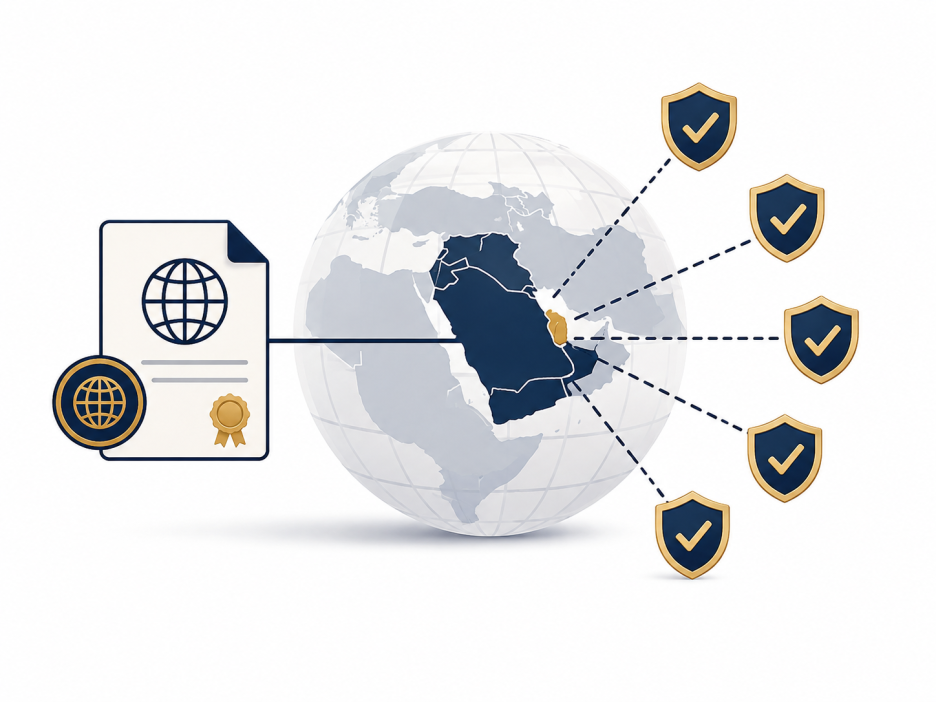
Nice Agreement dates and a workable goods-and-services specification
Qatar deposited its accession to the Nice Agreement on 10 November 2025. The Agreement entered into force for Qatar on 10 February 2026. The deposit and effective dates should be distinguished when describing this development.
The Nice Classification organises goods and services into Classes 1 to 45. It provides a common structure for identifying the scope requested in different markets.
Treaty accession should not be confused with the first use of the classification in Qatar: the 2023 implementing regulations already referred to the Nice Classification. The 2026 development concerns participation in the Agreement.
Select the goods and services needed for the actual business and review their acceptability locally. A class number alone does not define the commercial scope or settle whether goods and services are similar. Consistent portfolio terminology still needs country-specific review.
GCC harmonisation still requires protection in each market
The GCC framework harmonises basic rules on registration, examination, protection and infringement. It does not establish a unitary GCC trade mark obtained by one regional application.
Qatar, Saudi Arabia, the United Arab Emirates, Bahrain, Kuwait and Oman remain separate territories for protection. National applications or individual Madrid designations must be selected as available, with examination and registration handled country by country.
Saudi Arabia's Madrid Protocol accession took effect on 8 October 2026. As at this article's publication, five GCC states participate in Madrid; Kuwait remains outside the Protocol and requires a national filing route.
Earlier use also matters. Subject to the statutory conditions, an earlier user may challenge even a good-faith registration. Clearance should therefore consider brands actually used locally as well as earlier applications and registered marks.
Practical planning for a brand entering Qatar
Review how the word mark and logo will be understood in Qatar, including their Arabic meaning or rendering. Signs contrary to public order or morality, religious symbols and protected state or international emblems may face registration restrictions.
Bring the clearance results, specification and choice of route into one filing plan. A Madrid designation can simplify administration, but it does not remove Qatar's substantive requirements or the need to respond to local examination and opposition.
After registration, maintain a renewal calendar and review licensing arrangements with local business partners. For a licence relating to an international registration, distinguish WIPO recordal from the local steps described in Qatar's notification.
For expansion across the Gulf, map each intended market and its available filing route before launch. Preparing Qatar protection alongside the wider regional portfolio helps reduce avoidable brand conflicts and supports continuity of the business.

The original figure labels and forms are preserved; the text explains the source material.
Discuss a trade mark filing strategy for Qatar and your other target markets.