
Poland is a major Central and Eastern European market within the EU single market. Its population of around 37 million and its role in manufacturing, logistics and consumer goods make brand protection relevant to a European market-entry strategy.
For Korean businesses considering cosmetics, food, electronics or household products in Poland, the filing route should follow the intended sales territory and expansion plan. The national procedure also requires attention after filing, particularly to publication, opposition and continued use.
Selecting a route for Poland
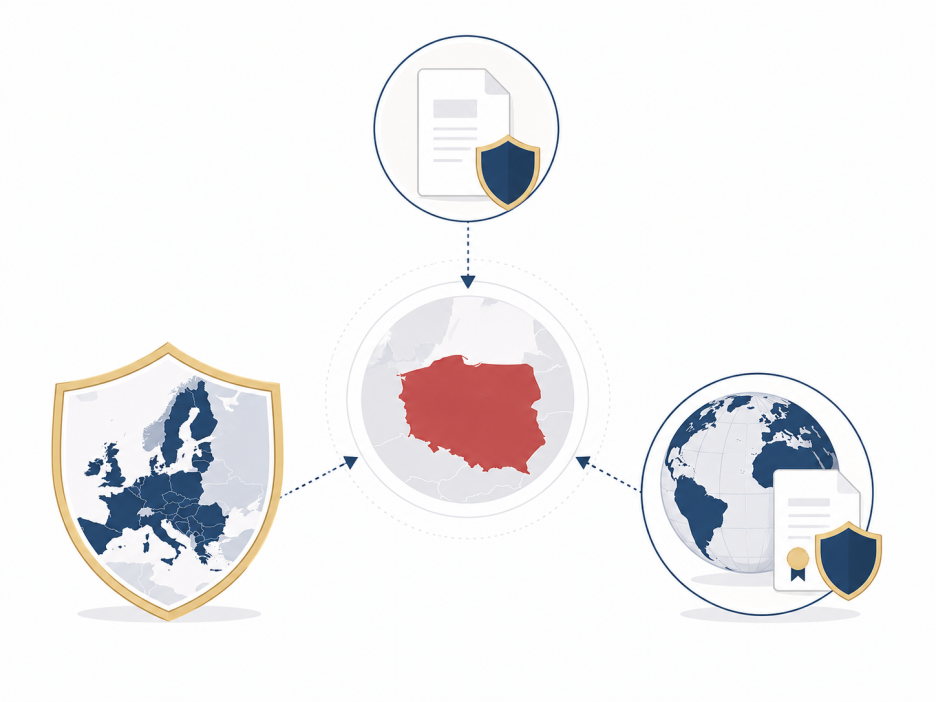
The Polish Patent Office (UPRP) administers national trademarks and applies the Nice Classification to goods and services. A direct national application seeks protection in Poland; an EU trade mark application filed with EUIPO covers all EU member states, including Poland.
The Madrid System offers a further route by designating Poland in an international registration based on the relevant home application or registration. A Poland-only business may consider a national filing, while plans spanning several EU states may justify an EU trade mark. The EU route does not cover every European country.
Signs eligible for Polish trademark protection
A sign must distinguish one undertaking’s goods or services from those of others and be capable of clear and precise representation on the register. Words, figurative signs, three-dimensional shapes, colours, sounds, multimedia signs and holograms can be considered.
The form of the sign alone does not establish registrability. Lack of distinctiveness, descriptive character and conflict with public policy or accepted principles of morality can prevent protection. Assess the sign itself as well as potentially conflicting earlier rights.
Clearance and preparation of the application
A clearance search should cover Polish national marks, EU trade marks and international registrations designating Poland. Reviewing only the national register may miss rights effective in the Polish market.
Prepare the applicant’s details, a representation of the mark and a specification of the goods and services. The specification is organised under the Nice Classification and should reflect the products and services for which protection is sought.

Examination and two separate publication stages
UPRP examines formal requirements and absolute grounds for refusal, including lack of distinctiveness and descriptive character. Application information is disclosed in the online database within two months of filing.
Where no registration obstacle is found, the application is published in the Patent Office Bulletin (BUP). This Bulletin publication must be distinguished from the earlier database disclosure: the three-month opposition period runs from publication in BUP.
How Poland addresses conflicting earlier rights
In Korea, the Office may examine identical or similar earlier marks of its own motion and issue a refusal. Poland’s examination focuses on absolute grounds; conflicts with earlier trademarks and other relative rights are principally addressed through opposition by entitled earlier-right holders.
An earlier mark therefore does not necessarily produce an automatic refusal during examination. If no timely opposition is filed, the application may proceed, but that does not establish that there is no conflict or guarantee registration. Clearance remains essential.
The opposition deadline and settlement period
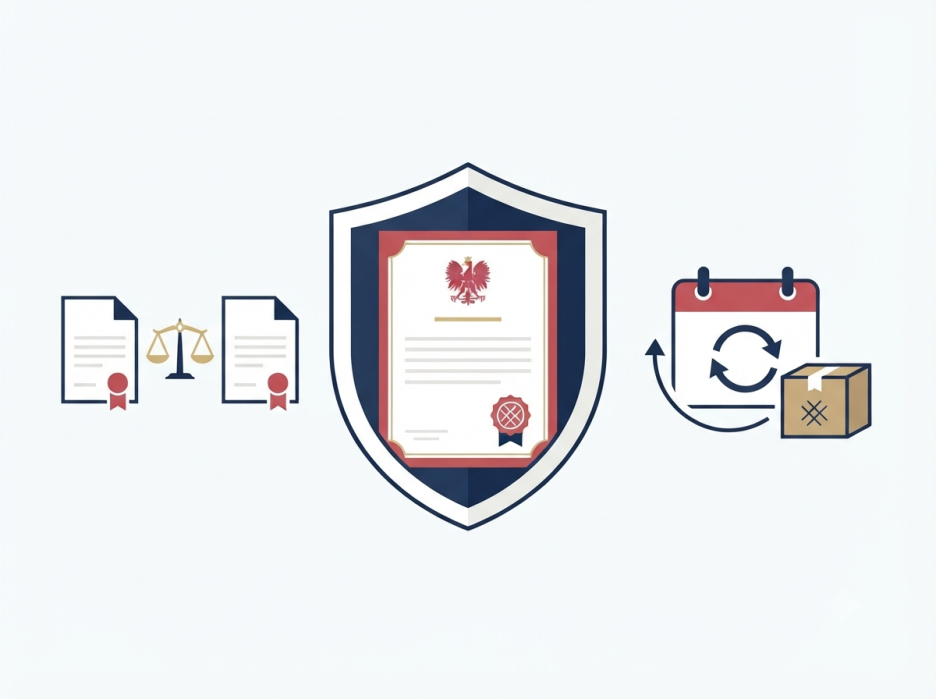
Eligible earlier-right holders may oppose within three months of BUP publication. The period cannot be extended or restored. Applicants and existing proprietors should monitor the relevant publication and prepare their response or opposition strategy in time.
When an opposition is filed, the parties are given an initial two-month period to seek settlement, running from service of the information on the party served last. A joint request may extend that period once, to a total of six months from its commencement. This is a separate timetable from the opposition-filing deadline.
Conditional grant and payment of protection fees
Where no opposition prevents protection and the other requirements are met, UPRP issues a conditional grant decision. An opposition that is finally dismissed may also allow the application to proceed to grant.
The fee for the first ten-year protection period must be paid in full within three months of service of the decision. Publication fees and other steps stated in the decision must also be addressed. Missing the deadline or underpaying the first protection fee can cause the conditional decision to lapse.
Genuine use and evidence after registration
A registered mark may be revoked if it is not genuinely used for an uninterrupted five-year period without proper reasons. Registration alone therefore does not secure indefinite protection of an unused mark.
Keep evidence of actual use in Poland, such as sales records, transaction documents, advertising and distribution materials that connect the sign with the relevant goods or services. Use records should be maintained as part of ordinary brand management.
Ten-year protection and ongoing renewal
The initial term of a Polish national trademark is ten years from the filing date. Protection may be renewed repeatedly for further ten-year periods by paying the required renewal fee within the applicable period before expiry. Renewal and non-use risks must be managed separately.
For a business entering Poland or expanding its European distribution network, the practical plan should combine territorial coverage, clearance, publication monitoring, timely fees and use evidence. Choose the Polish national, EU or Madrid route in light of the actual business footprint.
The original figure labels and forms are preserved; the text explains the source material.
Poland country guide (in Korean)