

On 14 October 2026, the Korean Patent Court examined sales and review photos posted before a patent application was filed (2026Heo10142). It distinguished what the images themselves disclosed about claim 1 from what a skilled person could derive by combining that disclosure with a second reference for claim 4.
The case: a folding phone case with a built-in hinge guard
Korean patent No. 2676210 concerns a case that protects the hinge of a folding phone. The application was filed on 31 October 2023 and the patent was registered on 13 June 2024.
Claim 1 defines a combination of upper and lower case bodies, two hinge guard caps, a card compartment and a passage for inserting and withdrawing the card. Dependent claim 4 adds inclined support surfaces.
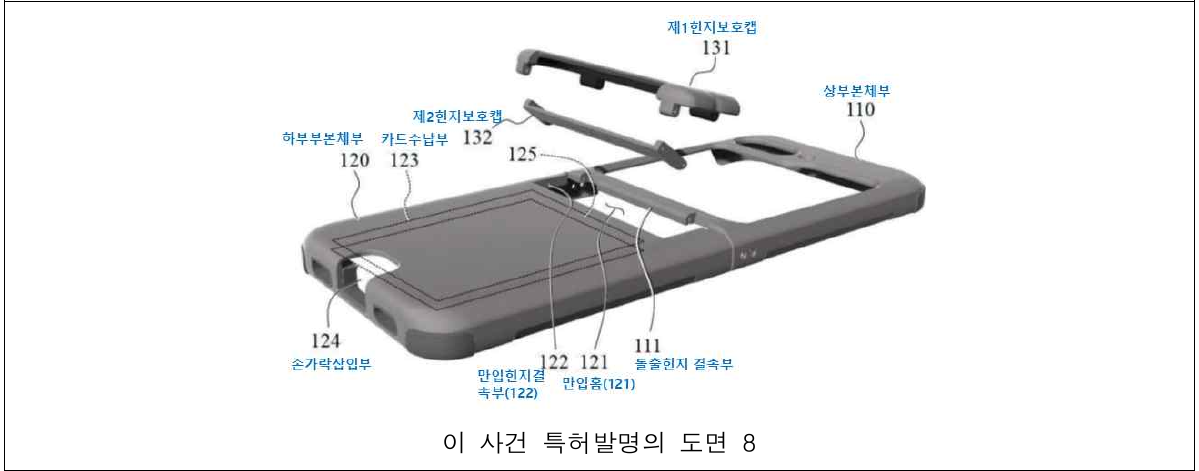
On 1 April 2026 the Intellectual Property Trial and Appeal Board rejected a petition to invalidate claims 1 and 4. In the action to set aside that decision, the challenger introduced product listings and customer reviews from the patent owner’s Smart Store. The court referred to the product disclosed by this material as prior art 5.
What did customers actually see before filing?
An online seller can edit a listing. The question was therefore whether the particular photos relied on in court had been available before 31 October, rather than simply whether they appeared on the page by the time of the proceedings.
Three customer reviews were dated 4, 6 and 25 October 2023; the seller posted a reply on 30 October. All four dates preceded filing.
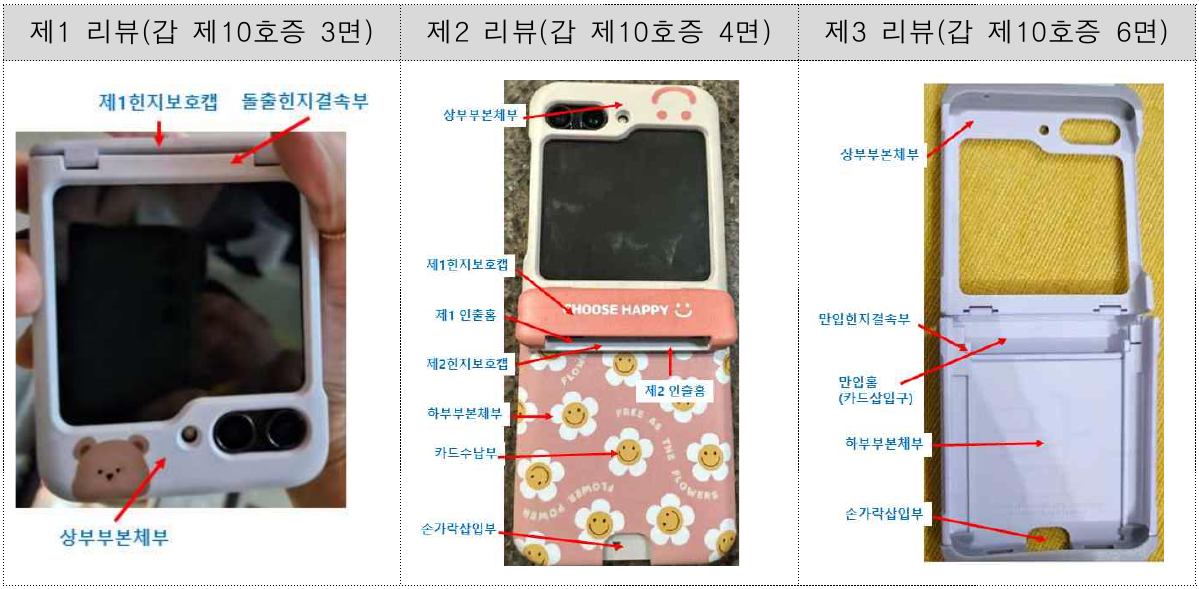
The court also matched the construction, colours and decorative patterns visible in the customer photos to those in the listing. Photos showing the card compartment with the case folded appeared alongside other photos of the product.
The owner had access to records of publication and amendments, or could have requested them from Naver, but produced no records to show a later change to the listing or reviews. The court relied on this finding together with the dates and the visual correspondence. A date displayed on a webpage was not conclusive on its own.
Claim 1: a single product disclosed every feature
Novelty turned on the technical features in the claim, not the resemblance of the products’ outer shapes. The court compared each feature with the product shown in the sales and review material.
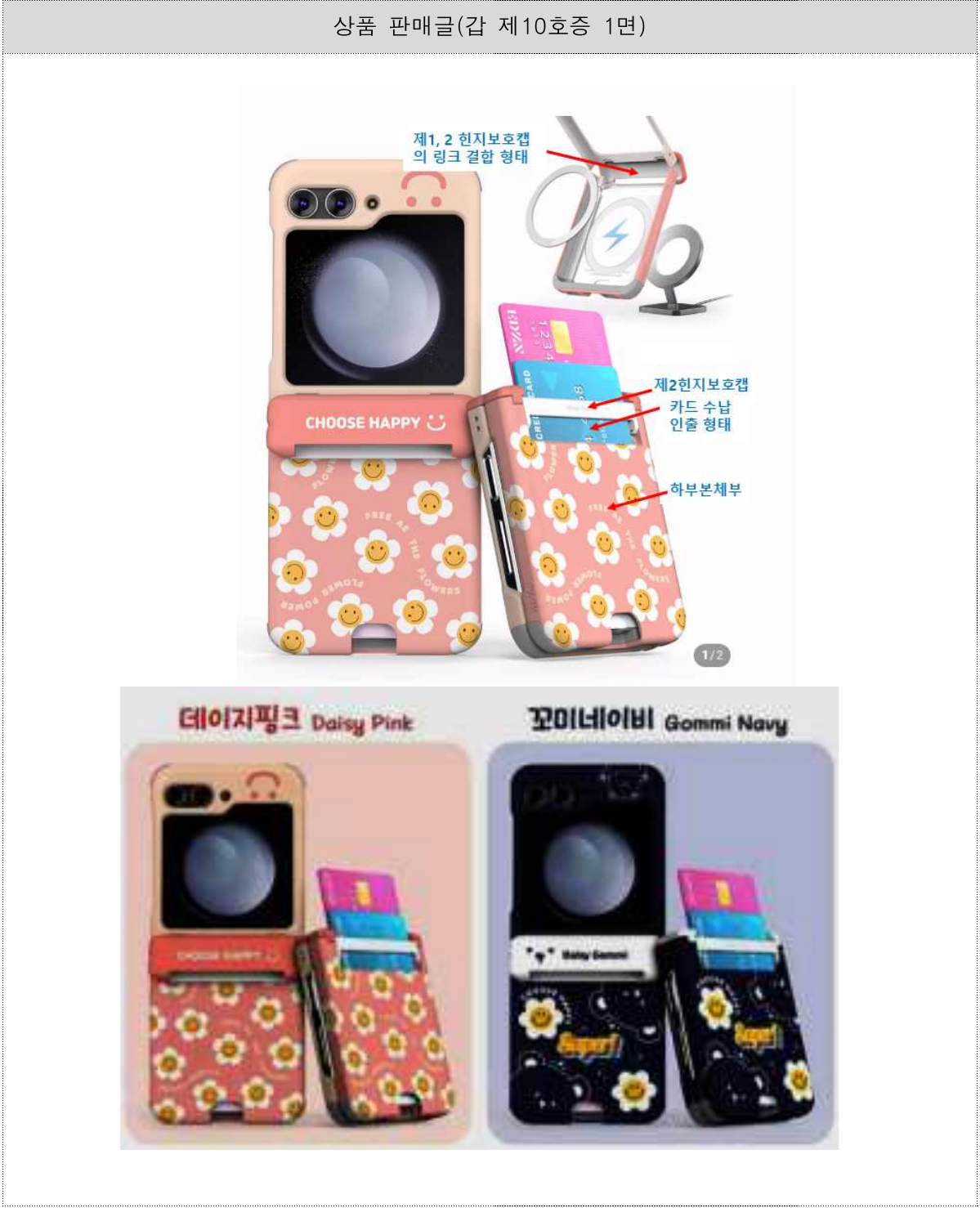
Views of the case open and closed revealed a pivoting connection between the two caps. The listing and reviews also showed the connectors on the case bodies, grooves, the card compartment and the recess for a finger.
Photos of a card being inserted and removed showed that the withdrawal groove was aligned with the card slot. When closed, the caps and the body formed a continuous flat surface. Taken together, the views of this one product disclosed the complete combination in claim 1, which therefore lacked novelty.
Claim 4: what the second reference contributed
The images did not expressly disclose the inclined support surfaces added by claim 4. For that claim the court asked a different question: would a skilled person have arrived at those surfaces using another prior teaching?
Chinese utility model No. 215581302, published on 18 January 2022, was prior art 1. It showed a guide plate inclined towards a connecting member; when the phone was opened, the member overlapped the plate.
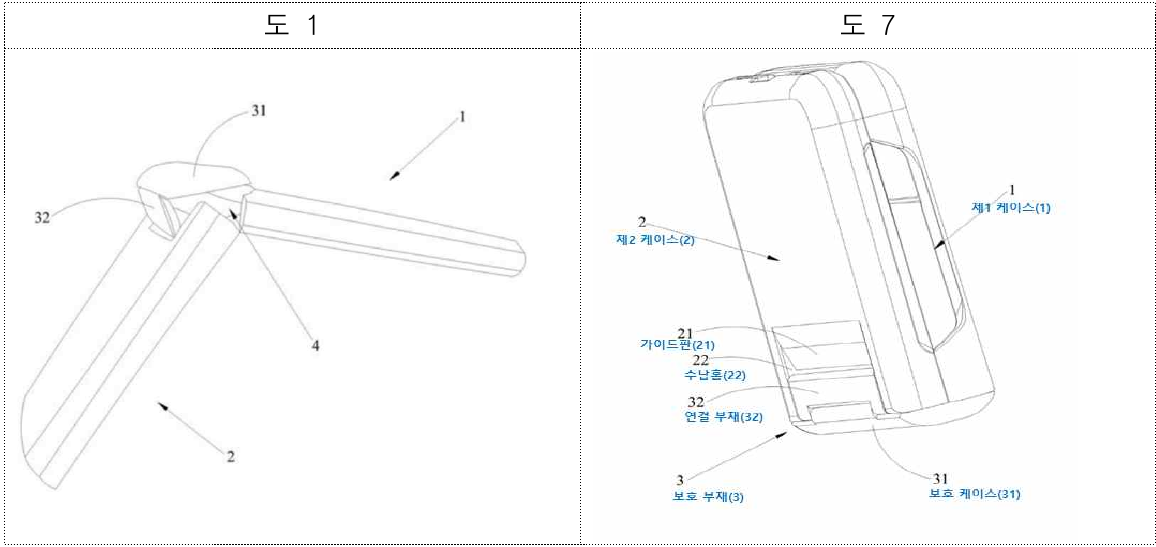
Both references concerned cases for folding phones. A skilled person had a reason to use the guide plate to support the second guard cap more securely. To leave the card slot unobstructed, the support surfaces could readily be placed on either side of the groove.
The combination of prior art 5 and prior art 1 thus rendered claim 4 obvious. The court did not use that combination to establish the lack of novelty of claim 1.
A drafting error and the order setting aside the decision
Claim 4 identified the cap that contacts the support surfaces as the first hinge guard cap. Read with the description and drawings, this was an evident error for the second cap. The court rejected the challenge based on this wording.
The successful grounds were lack of novelty for claim 1 and lack of inventive step for claim 4. The court accordingly set aside the Board’s decision rejecting the invalidation petition.
Practical implications: preserve the date and the configuration
Before launching a product, decide which features to protect and coordinate the filing with decisions on what to show. Even an ordinary demonstration of how a card is removed can disclose how several claimed parts interact.
Keep dated versions of sales pages and records of changes to the product actually shipped. They allow a party to say when a particular view was added and which physical version it depicts.
In a dispute, map each image to a claim feature. Here, the reviews helped date the product, the listing and card demonstration showed its construction, and a separate technical publication supplied the teaching needed for inventive step.
The original figure labels and forms are preserved; the text explains the source material.