
Companies including VUNO, Lunit and JLK Inspection develop AI tools for medical-image analysis. This article examines a Lunit patent aimed at improving detection accuracy.
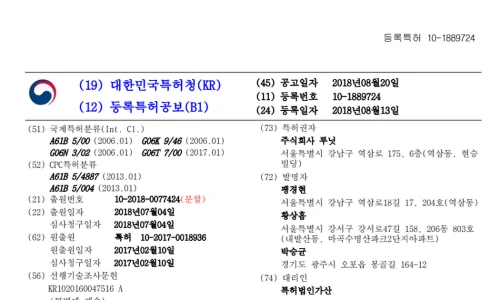
Click the image to view the granted patent.
The patent.
The invention uses a convolutional neural network to distinguish mitotic from normal cells in images. It employs two training stages to improve the predictions.
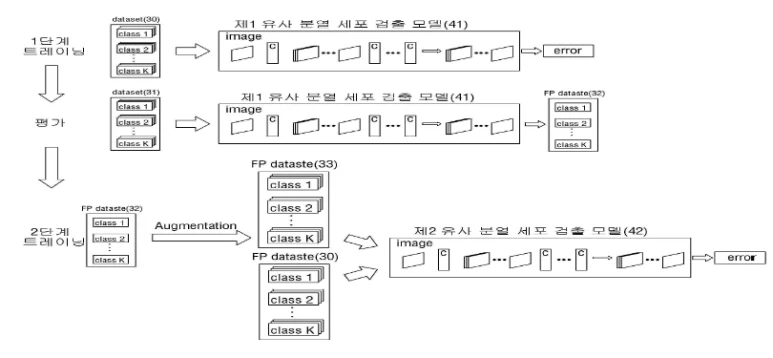
Stage 1 training
The model is first trained on images labeled by a pathologist as mitotic or normal cells.
Preparing for stage 2
After initial training, the model is evaluated to collect false-positive examples: normal cells incorrectly classified as mitotic. These examples are augmented, for example by rotation or added noise, and combined with the original training data. The second stage targets these false-positive errors; a mitotic cell classified as normal would instead be a false negative.
Stage 2 training
The CNN's weights are reinitialized and the model is trained again using the original dataset plus augmented false-positive examples. The patent describes this approach as reducing false positives compared with merely fine-tuning the existing weights.
Opinions on Patents
The author notes that targeted retraining may reduce false positives, while cautioning that overrepresenting those examples could bias the training set. The balance between error types should therefore be evaluated.
This article reflects the information available when it was published. Contact us to discuss your circumstances.