

Hello, this is IPLEX IP Law Firm.
Korea introduced partial refusal of trademark applications on February 4, 2023.
This scheme is designed to expand the opportunity for applicants to secure their rights during the trademark application process and to reduce operational inconveniences.
In the past, if some of the designated goods filed had grounds for refusal, but were not deleted or corrected, the entire designated goods would be rejected. However, now only the goods with grounds for refusal have been rejected, and the rest can be registered as such.
How can an applicant respond when only some goods are refused? Is deleting those goods the only option?
This article explains partial trademark refusal and divisional trademark applications.
What is partial trademark refusal?
In the past, even one of the designated goods of the trademark filed was rejected unless the product was modified. The partial rejection system is an improvement of these inconveniences, so that only goods with grounds for refusal are rejected without any action from the applicant, and the remaining items can be registered without any problems.
It’s as simple as the table below.
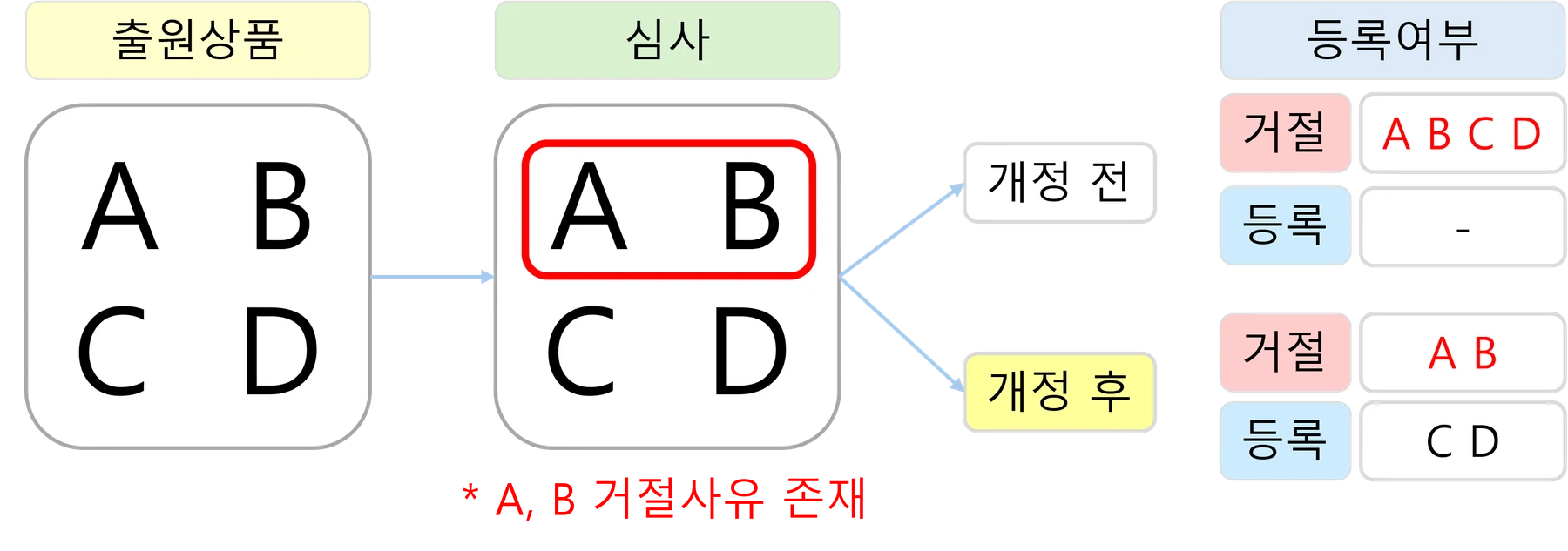
In addition, with the introduction of this system, the following changes were made.
- When appealing a refusal,
the appeal may concern only the refused goods.
- An appeal may also be withdrawn for only some goods.
An applicant appealing a refusal for certain goods can later withdraw the appeal for only part of those goods, providing greater procedural flexibility.
What is a divisional trademark application?
If some of the designated goods are rejected due to a partial denial, how should the applicant respond?
Simply deleting the refused goods and filing a fresh application may lose the original filing date for those goods.
A divisional application may provide an alternative.
The trademark divisional application system allows for independent review of some of the designated goods in a single trademark application.
This means that the trademark itself will remain the same, but only some of the designated goods that are problematic will be able to respond separately, and the products that can be registered will help you to proceed with the registration first, while maintaining your existing application.
However, it is important to note that this scheme is not about splitting the combined trademark (a trademark that combines two or more marks), but rather dividing the composition of the designated goods within the same trademark.
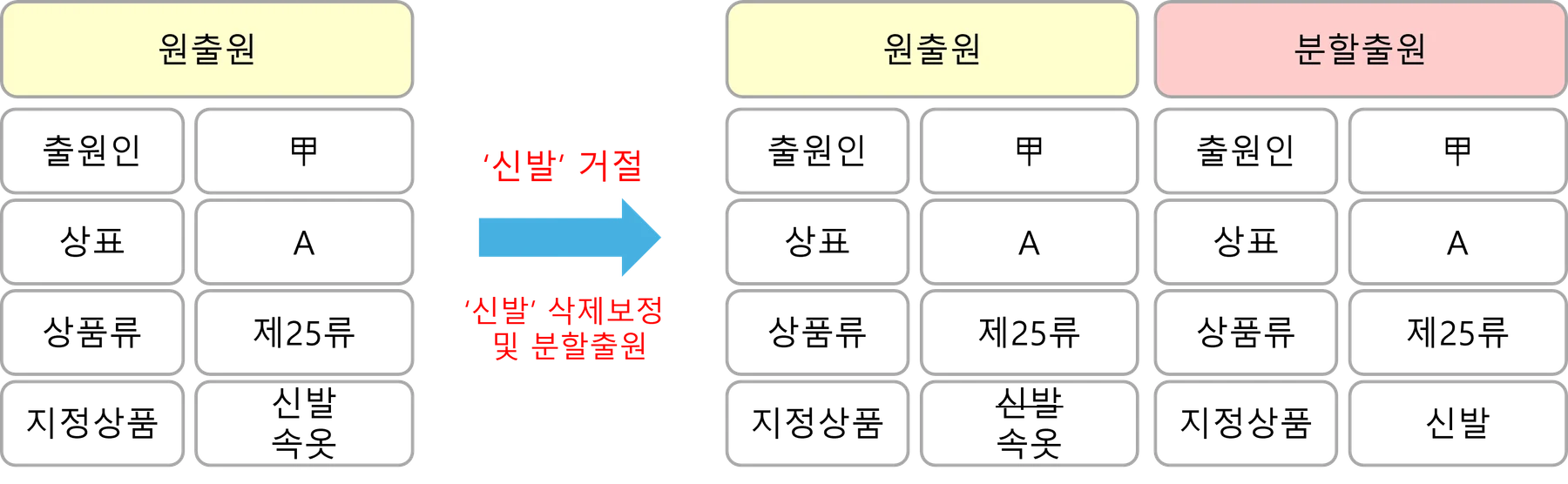
In the example above, shoes and underwear are filed as designated goods, but if only the shoes are rejected, you can remove the shoes from the application and proceed with the split application for the shoes.
Requirements for a divisional application
1. Stay within the original goods and services
A divisional application must remain within the goods and services of the original application. It cannot introduce new goods outside that scope, although a broad term may be divided into more specific goods within its meaning.
If a divisional application includes goods outside the original scope, the office may notify the applicant of the defect. Removing those goods may remedy it. If the requirements remain unmet, the application may lose the benefit of the original filing date and be examined based on its actual filing date.
2. File within the permitted period
A divisional application must be filed within a period when division is legally permitted. Once the relevant proceedings have concluded, such as after registration or a final refusal, the opportunity may be lost. Check the applicable deadline carefully.
Effects of a divisional application
1. Retention of the original filing date
A valid divisional application is generally treated as filed on the original application's filing date.
For certain priority or exhibition-related procedures, however, document deadlines are calculated from the actual divisional filing date.
2. Independence of the divisional application
A divisional application is separate from the original. Rejection or withdrawal of the original does not automatically dispose of the divisional application, and procedural acts in the original do not automatically carry over.
This article reflects the information available when it was published. Contact us to discuss your circumstances.