
Hello from IPLEX IP Law Firm.
India is an important overseas market where Korean companies are expanding, supported by its large population and rapid economic growth. Businesses planning to sell products or services and develop their brands in India should prepare to secure local trademark rights in advance.
India’s trademark system shares some features with Korea’s, but differs in areas including protection for prior users, series trademarks, oral hearings during examination and opposition after publication.
This article reviews the trademark application procedure and key features that businesses entering or preparing to enter India should understand.
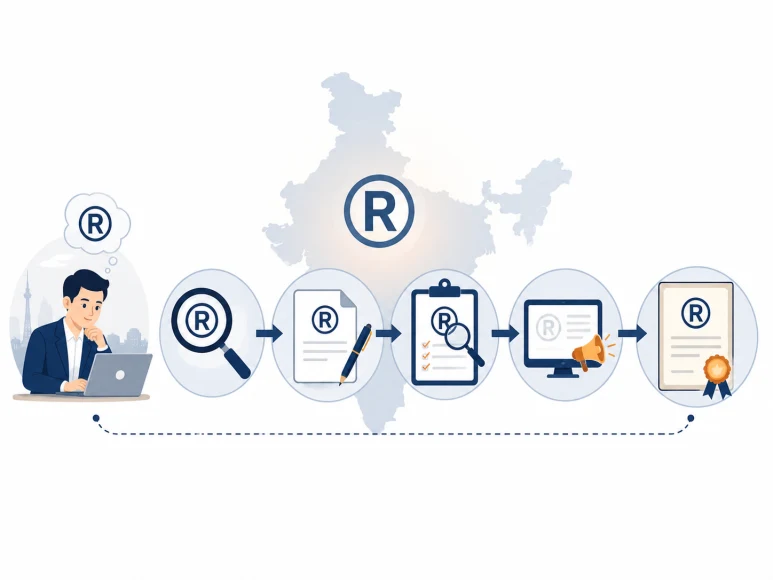
Trademark application procedure in India
The usual sequence is trademark search → filing → examination → reply and, if necessary, hearing → publication → opposition → registration.
(1) Search and filing
First, search earlier trademarks, identify the relevant goods and services under the Nice Classification, and submit application form TM-A. A multi-class application can cover several classes in one filing.
(2) Examination
After filing, the application undergoes a formalities review and substantive examination of matters such as distinctiveness and similarity to earlier marks.
(3) Reply and, if necessary, hearing
If the examiner identifies objections, an Examination Report may be issued, to which the applicant can submit a reply. Deadline management is important: failure to reply, normally within one month of receiving the report, can result in the application being treated as abandoned.
A hearing may take place if the written reply does not resolve the objections or the applicant requests one. Comparable in purpose to opportunities to present arguments during Korean examination and appeal procedures, it allows the applicant to explain its position before the examiner. Indian hearings may be held in person or by video conference.
(4) Publication
If accepted following examination, the mark is advertised in the Trademarks Journal. Third parties may file an opposition within four months of publication.
(5) Registration
The mark proceeds to registration if no opposition is filed or the opposition proceedings conclude in the applicant’s favour.
Overall processing time varies by case and cannot be stated uniformly. India also offers expedited processing: where the request is accepted, examination is ordinarily required within three months of the request. Subsequent replies, hearings, publication and opposition proceedings may also be expedited.
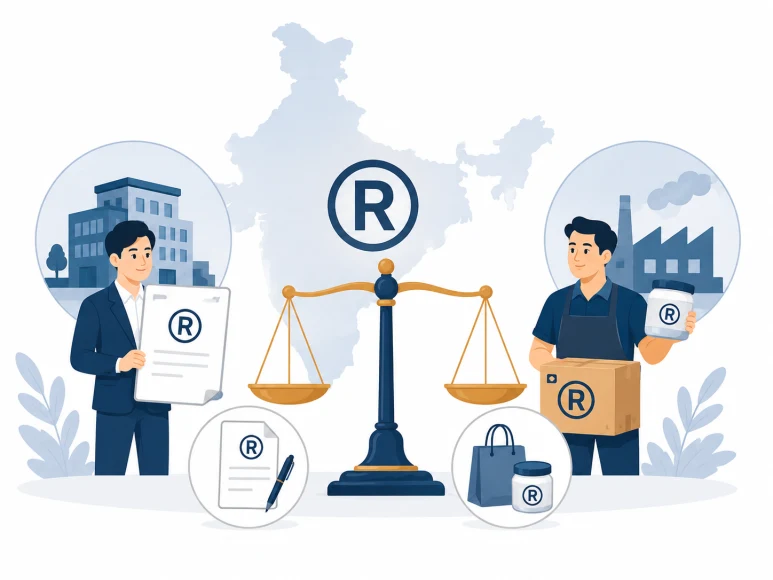
Key features of India’s trademark system
A filing-based system that also protects prior users
India’s trademark system is sometimes described as first-to-use. A more appropriate explanation is a system based on filing priority that also protects the rights of prior users.
A mark not yet used in India can be filed on a “Proposed to be Used” basis. Where use has already begun, the applicant may claim prior use; evidence demonstrating the period and facts of actual use can be important.
Businesses entering India should therefore review actual use and the need to claim prior use at the time of filing.
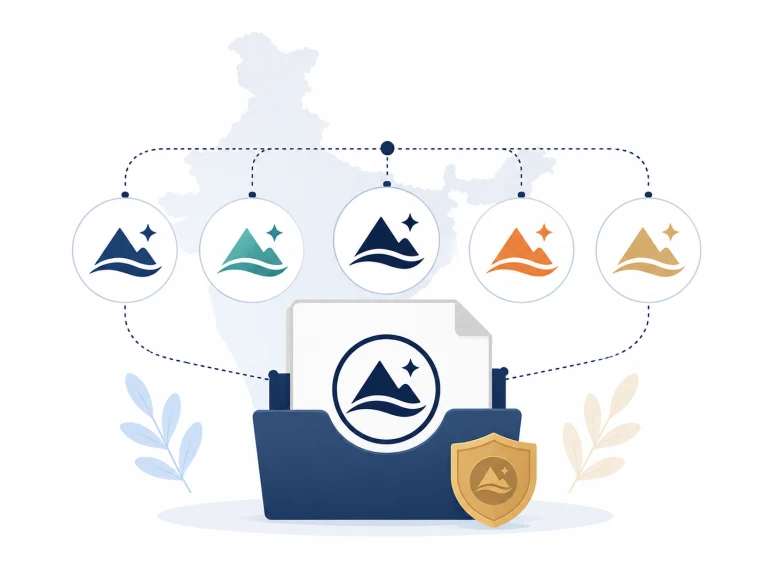
Series trademark applications
Alongside the separate trademark applications commonly encountered in Korea, India offers a series trademark system.
A series application covers several marks with the same basic features but differences in certain elements. It is not possible to group any marks freely: the marks must meet the statutory requirements for constituting a series.
For example, this route may be worth examining when several forms of the same brand differ only in non-essential elements.
This is distinct from a multi-class application, which seeks protection for one mark across several classes of goods or services.
A four-month opposition period after examination
Passing examination does not immediately complete trademark registration in India.
Accepted marks are advertised in the Trademarks Journal and undergo a four-month opposition period from publication. If no third party opposes during that period, registration can proceed.
When assessing the overall time needed to obtain rights, businesses should account for both examination and the opposition period after publication.
Address for service in India and local counsel management
A foreign company without a place of business in India uses an address for service in India for trademark filing and rights management. Management through local trademark counsel is therefore important for Korean companies filing directly in India.
An application may require subsequent replies to Examination Reports, hearings or opposition proceedings after publication. A system for monitoring official communications locally and responding within the prescribed periods remains important after filing.
An Indian trademark strategy should cover the entire process: prior-mark searches, goods and services, actual use and use evidence, replies to Examination Reports, hearings and management of opposition after publication.
India differs from Korea in combining filing priority with protection for prior users, allowing series trademark applications and providing a four-month opposition period after examination.
Businesses preparing to enter India should consider a local trademark strategy from the early stages of their plans, reducing the risk of brand disputes and building a stable basis for overseas operations.
IPLEX supports Korean businesses in securing intellectual property overseas, including trademark applications, prosecution, registration and rights management in India and other major markets.
IPLEX IP Law Firm is an intellectual property practice with expertise in patents, trademarks and designs. We provide professional consulting on the protection of patents, utility models, designs, trademarks and copyright, and on dispute resolution in Korea and abroad. We also handle copyright registration outside Korea, combining technical understanding with practical experience to deliver high-quality IP services.
Original article on the IPLEX Naver blog ↗