

In case 2022Heo5645, decided on 17 August 2023, Korea’s Patent Court upheld the invalidity of a massage-tool design because it was similar to an earlier-filed design. The decision shows why filing dates and visual comparison must be considered together.
Two different prior-design routes
Design No. 1129293 was filed on 21 June 2021 and registered on 23 September 2021. Prior design 2, No. 30-1128049, was filed on 15 December 2020 but published only on 23 September 2021. A separate prior design 1 appeared in a Naver review on 23 February 2021. In case 2021Dang3308, the tribunal held the registration invalid on 11 October 2022 under both the public-disclosure similarity ground and the first-to-file rule. The court upheld the result under Article 46(1), relying on prior design 2, without needing the other ground.
The visually important combination
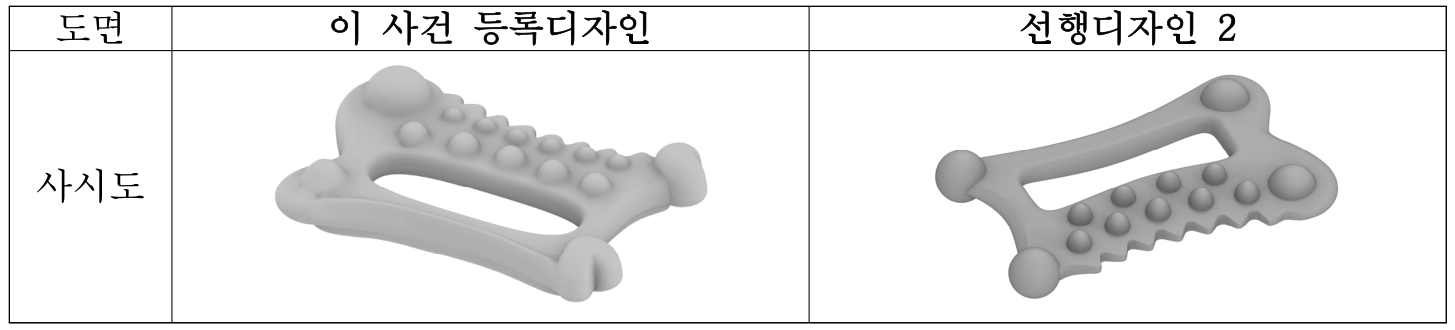
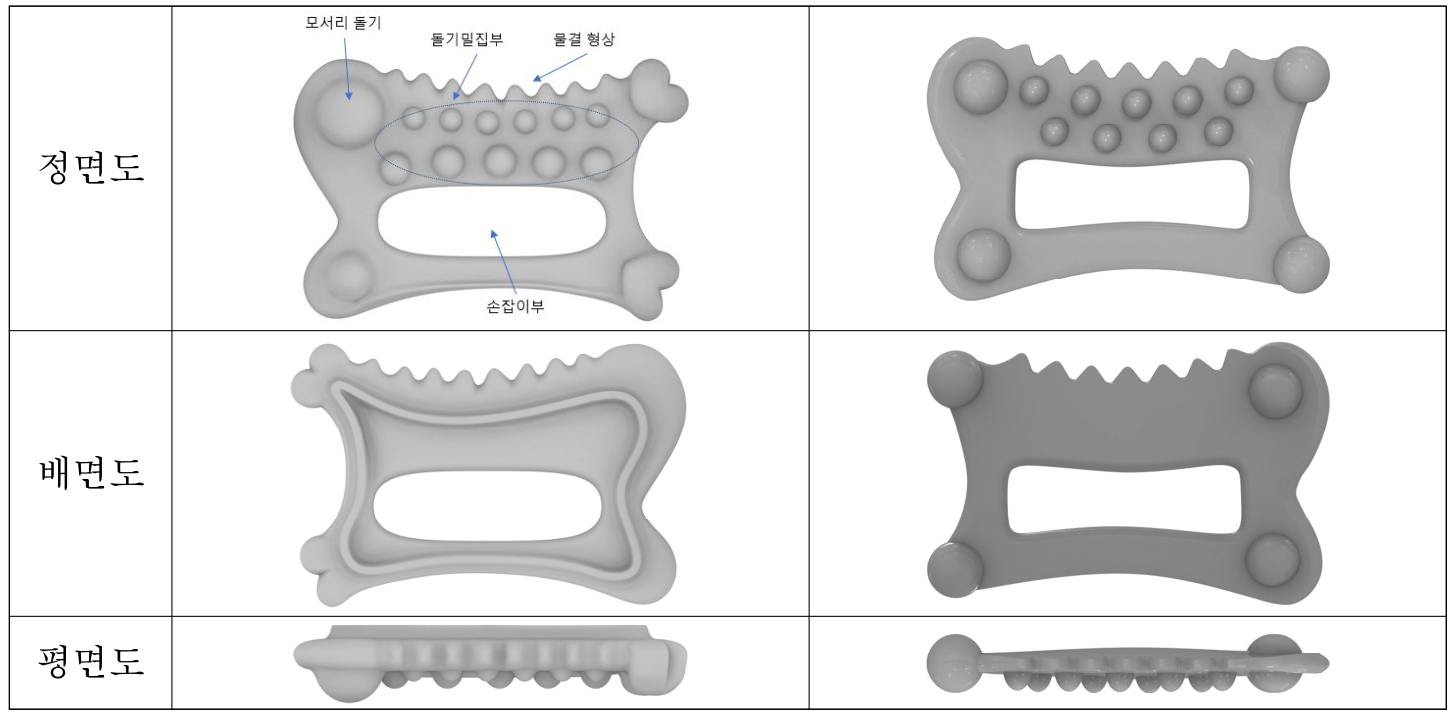
Both tools massage or press the face, neck and other points. Their common design comprised a generally rectangular body, an elongated handle opening below the centre, wavy upper and curved lower edges, and concave and C-shaped sides. Two rows of small studs above the handle and four larger corner studs formed a distinctive, balanced arrangement. The overall combination, rather than a single commonplace component, dominated the impression.
The differences did not change the whole
The handle opening was oval or butterfly-shaped, and the right-hand studs heart-shaped or round. Relative sizes of the left studs, six-plus-five versus five-plus-four staggered small studs, and the size of the upper studs differed. One reverse side had a raised rim or additional corner studs while the other did not. These details and familiar shape variations did not outweigh the shared configuration, particularly when the front and whole article were viewed in use.
Function did not remove every shared feature
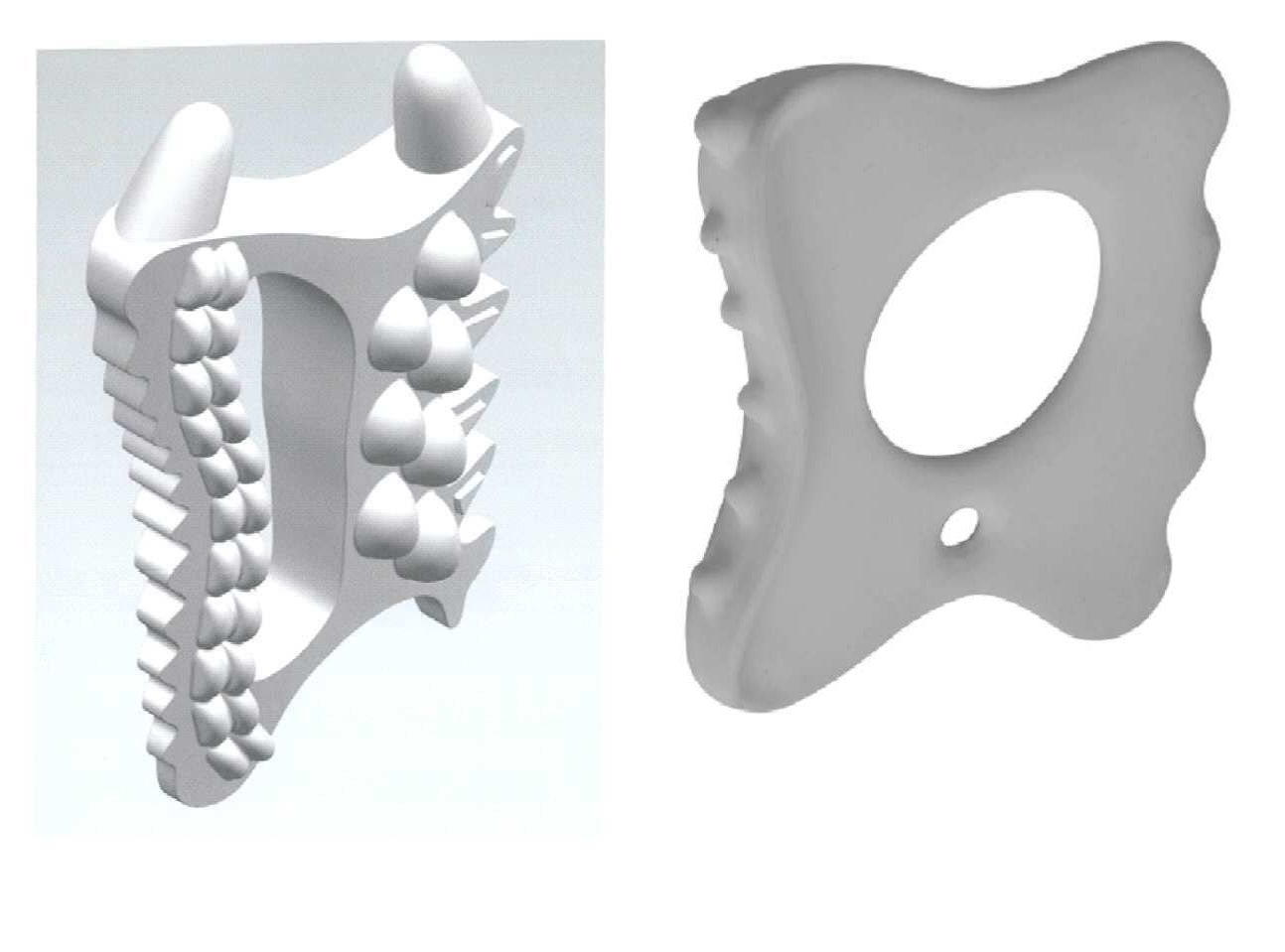
A feature serving a function is not necessarily indispensable to that function where alternative forms are available. Earlier references showed bodies, handle openings, curved edges and studs, but not the same particular four-corner combination. Known components still contribute to the whole appearance. The owner did not establish that the differences embodied an original visual transformation sufficient to change the comparison.
What to check before filing or disputing a design
The court dismissed the owner’s challenge; it did not need to decide the separate public-disclosure ground. Record filing, publication and registration dates separately. A prior application may be relevant under the first-to-file rule even if it was not yet publicly searchable at the later filing date. In the visual comparison, explain the weight of changes rather than relying on the number of altered details.
The original figure labels and forms are preserved; the text explains the source material.