
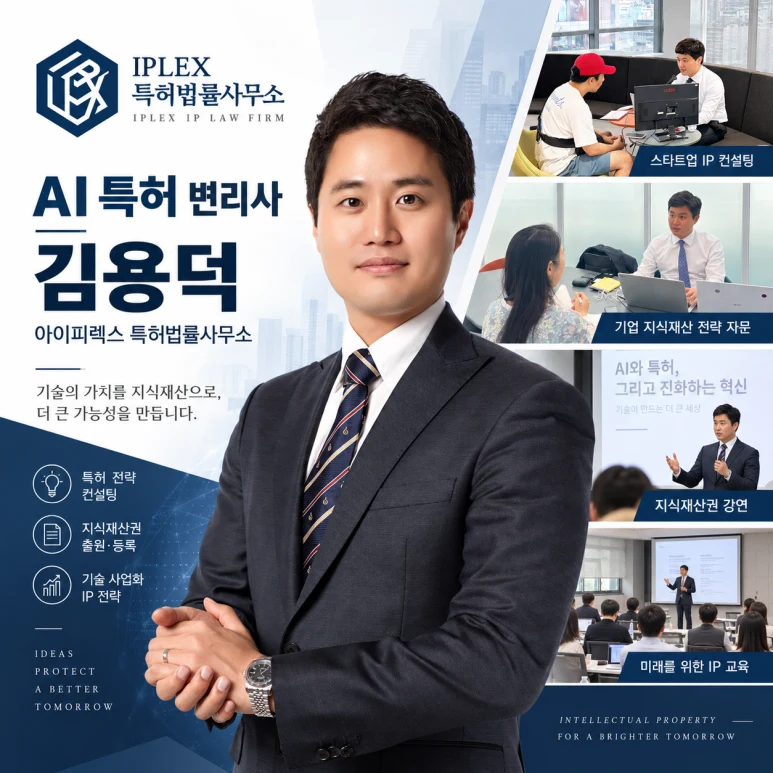
AI/Software Patent Attorney Yongduck Kim
We advise on applications and patent strategy for AI, generative AI and LLMs, machine learning, deep learning and software.
Yongduck Kim is Managing Partner and Patent Attorney at IPLEX IP Law Firm. He studied information, communication and electronic engineering at Soongsil University.
We perform intellectual property advisory work related to patent applications, patent portfolio construction, IP-R&D, AI company technology evaluation, and technology-based special listing, focusing on the artificial intelligence (AI) and software (SW) fields.
In addition to generative AI and LLM, we handle patent work on AI and software technologies applied to various industrial fields such as medical AI, industrial AI, smart factory, computer vision, machine vision, image analysis, big data, communications, robots, finance, and games.

Yongduck Kim’s AI and software patent practice
- Artificial intelligence patent application
- Patents related to generative AI, LLM, and RAG
- AI agent-related patents
- Machine learning/deep learning patents
- Computer vision/image AI patents
- Medical AI/digital healthcare patents
- Industrial AI/Smart Factory Patents
- Big data/data processing patents
- Software/platform patents
- Software patents related to robots, communications, and games
- Building an AI startup patent portfolio
- AI company IP-R&D and competitor patent analysis
- Advice on patents and intellectual property related to technology-based special listings
AI/software patent work currently performed by IPLEX
IPLEX focuses on AI and software patent work, advising companies and universities on applications, patent strategy and related IP matters.
It is not limited to specific machine learning models or generative AI technologies, but covers a wide range of AI and software technologies applied to various industries such as education, medicine, manufacturing, construction, image processing, signal processing, communications, robots, finance, and games.
AI edutech and university artificial intelligence research
In the field of education and edutech, we are carrying out artificial intelligence-related patent work for Curea Co., Ltd., Turing Co., Ltd., Vollab Co., Ltd., and IEA Co., Ltd.
We review various edtech technologies from a patent perspective, such as AI-based education services that analyze educational content and learning data or provide results based on the learner's status and characteristics.
In the field of university research, we are carrying out patent work related to artificial intelligence technology researched in the Department of Artificial Intelligence Engineering at Sookmyung Women's University and the Department of Artificial Intelligence Engineering at Daejeon University.
We analyze the inventions of AI and machine learning technologies developed at universities and are responsible for filing applications to secure actual patent rights for research results.
Medical AI/digital healthcare patents
In the medical and healthcare field, we are working on AI and software-related patents for HAII Co., Ltd., a digital therapeutics company, and Alicore Co., Ltd., a medical technology company.
We examine various inventions developed in the digital healthcare field from a patent perspective, including processing and analysis of medical and healthcare data, and treatment and management technologies using software.
Industrial AI·Smart Factory·Smart Construction
In the livestock industry, we are carrying out patent work related to the artificial intelligence technology of Mtreesen Co., Ltd.
In the smart construction field, we are dealing with AI and software-related technologies of T&Blue Lab Co., Ltd. and Decopia Co., Ltd.
In the smart factory and industrial AI field, we are carrying out patent work on the artificial intelligence technology of Enmetric LLC and AI Nation Co., Ltd.
AI technologies that analyze various data generated at industrial sites to determine status or detect abnormalities and optimize production or operation processes are the main subjects of review.
Computer vision, video AI, digital signal processing
In the field of image processing and computer vision, we are working on artificial intelligence-related patents for Cubeberry Co., Ltd., GiiÖii Co., Ltd., and UOK Co., Ltd.
We examine AI image processing technology that receives image and video data to recognize and analyze objects or states, or generate necessary information.
In the field of digital signal processing, we are carrying out patent work on UNAI Co., Ltd.’s artificial intelligence technology.
In AI patents, how various digital data, including sensor signals as well as images, videos, or text, are processed and analyzed is also subject to important technical review.
Generative AI·LLM·RAG patents
Yongduck Kim handles patent matters relating to Logos AI Co., Ltd.’s large language model technology.
In generative AI and LLM-related inventions, patentability is not determined solely based on the fact that a specific language model is used.
We analyze the following specific technical elements together:
- How input data and context are organized
- Data retrieval and preprocessing structure
- How RAG determines what to search for
- Structure for delivering search results to LLM
- How prompts and contexts are handled
- How to link a model with an external system or tool
- Method of verifying or correcting the generated results
- A structure in which the generated results are utilized in actual services
In the case of AI agents, specific system operations, such as the criteria for selecting which tools to use, the order of execution, the user approval process, failure handling, retries, and exception handling, may also be subject to patent review.
.
AI/software in communications, robotics, and finance
In the field of communications and wireless networks, we are carrying out patent work related to the technologies of SunwaveTec Co., Ltd. and FixDimension Co., Ltd.
In the robotics field, we are carrying out patent work related to robot control and software technology for Korea Robotics Co., Ltd.
Yongduck Kim has handled AI and software matters for Jeju Bank.
We examine technologies that combine software decision logic and actual system structure, such as network control, robot motion control, and financial data processing, from a patent perspective.
Game·Content·Software Patent
Yongduck Kim has handled intellectual property matters for ABUTTON Co., Ltd. in gaming technology.
In the field of games and content, rather than the simple idea or game rules themselves, we focus on the software structure to actually implement them, data processing between the server and client, user interface, content provision method, and technology implemented in the service operation process.

In AI patents, the actual operating structure of the technology is more important than the model name.
AI patents are difficult to judge based solely on the name of a specific algorithm or artificial intelligence model.
Even if the same machine learning or deep learning technology is used, the input data, technical problem to be solved, system configuration, and method of utilizing the results may vary if the applied industry fields, such as education, medicine, manufacturing, image processing, communications, robotics, and finance, are different.
IPLEX looks at the following factors together when reviewing AI technologies:
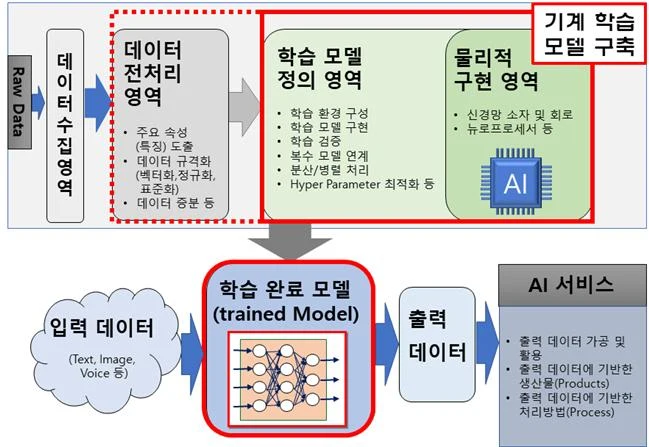
- Types and composition of input data
- Data collection and preprocessing process
- How to organize and clean training data
- Training process of machine learning and deep learning models
- Processing done in the inference phase
- Data output by the model
- How to utilize output results in actual systems
- Function division between servers, terminals, and edge devices
- Connection structure with external systems and API
- Processing flow compared to existing technologies
- Systemic differences resulting from the application of technology
This analysis informs our AI and software patent applications, protection strategies for generative AI, LLMs, machine learning and deep learning, patent portfolios for AI startups, and broader IP advice.
AI and software patent experience before establishing IPLEX
The information below is patent attorney Yongduck Kim's personal experience at his previous affiliation before opening IPLEX.
This experience is separate and distinct from IPLEX IP Law Firm's current client list.
Industrial AI
Before establishing IPLEX, Yongduck Kim handled patent matters for MakinaRocks and BISTel involving industrial data analysis, equipment anomaly detection, prediction and process optimization.
We performed patent work on industrial AI technology that analyzes data generated at manufacturing sites using AI and machine learning, identifies abnormal conditions in equipment, and optimizes production processes.
Medical AI
We performed patent work related to artificial intelligence technology applied to VUNO’s medical data and medical images.
We covered medical artificial intelligence technology that derives necessary information by analyzing medical images and medical data using machine learning and deep learning technology.
Machine vision/video AI
Yongduck Kim handled patent matters relating to SUALAB’s deep-learning-based machine vision and image analysis technology.
We reviewed computer vision and deep learning technologies that recognize objects, defects, or specific patterns by analyzing image and video data acquired from manufacturing sites with AI.
Satellite/Aerial Image AI
We covered SIA's satellite image and aerial image artificial intelligence analysis technology.
We performed patent work related to image recognition and AI technology that detects and analyzes specific objects or terrain information in satellite and aerial images.
Other AI/software performance experience
I was in charge of patent and intellectual property work related to artificial intelligence and software for SELVAS AI, Baidu, and Xiaomi.
We also performed patent work related to software and game technology for Tmax affiliates, Netmarble, and Kakao Games.
Yongduck Kim handled UI/UX and software patent applications for LG Electronics and Samsung Electronics.
Experience with AI company technology evaluation and technology-based special listing
In addition to patent application work, patent attorney Yongduck Kim continues to participate in evaluating the technological competitiveness and intellectual property of AI companies.
AI company technology evaluation
He is serving as an external advisory committee member for Korea Technology Credit Data, SCI Evaluation Information, and Nice D&B regarding technology evaluation of technology-based special listings of AI companies.
During the technology evaluation process, we comprehensively review the following factors regarding the company's core technologies.
- Technology Differentiation
- technological competitiveness
- Business applicability
- Status of securing patents and intellectual property
- Differences from competing technologies
- Link between technology and business competitiveness
- Composition of patent portfolio
The companies he has evaluated include AIMATICS, DeepBrain AI, Seoul Robotics, Nearthlab and RideFlux.
Each company corresponds to a different AI technology area, including image/data-based AI, generative/synthetic AI, autonomous driving and cognitive technology, drones/robotics, and autonomous driving software.
Advising Nota on technology-based listing preparations
Yongduck Kim advised Nota, an AI model-compression and optimization company, during its preparations for a technology-based special listing.
Rather than limiting ourselves to simple patent application work, we also reviewed the company's core technology, patent portfolio, technological competitiveness, and intellectual property strategy.
We advised on how the company’s AI technology contributes to its competitiveness and value, and how IP rights could protect its core technology.
IP-R&D in the AI field conducted with the Korea Patent Strategy Development Institute
Yongduck Kim, a patent attorney, worked with the Korea Patent Strategy Development Institute on IP-R&D and patent strategy work targeting various artificial intelligence and big data technologies.
Key areas of performance include:
- Smart manufacturing based on AI and big data
- Intelligent big data analysis platform
- Machine learning-based RNA analysis
- Industry-specific AI anomaly detection and optimization
- Deep learning-based automotive radar sensor pedestrian recognition
IP-R&D does not stop at simply researching related patents, but also analyzes the structure of the technology and the industrial application environment to review the direction of research and development, competitors' patents, prior technologies, and strategies for securing future patents.
AI patent related books
Yongduck Kim, a patent attorney, has written the following books on the topic of artificial intelligence patents.
A Practical Guide to AI Patent Examination · 2022
This book summarizes the description requirements, patent requirements, and related examination cases for AI inventions.
Strategies for Securing AI Patents · 2024
This book covers patent rights topics that can be reviewed at each stage of AI technology, including training data, data pre-processing, learning, inference, and post-processing.
OpenAI’s Patent Strategy and the Global AI Patent Race · 2025
It covers patent strategies of global AI companies, including OpenAI, and patent competition and utilization strategies that AI startups can refer to.
More than 50 published columns on AI and software patents
Yongduck Kim regularly contributes columns on AI and software patents to AI Times.
We analyze patents disclosed by global AI companies such as OpenAI, Google, Meta, Qualcomm, SAP, and C3.ai, and explain the technical features and scope of rights shown in the patent specifications and claims, as well as the company's technology development direction and patent strategy.
Key contributing topics include the following technologies:
- OpenAI’s generative AI and multimodal technology
- LLM Reasoning and Learning Technologies
- AI agent
- RAG and enterprise AI
- AI-based user interface
- Image Generation AI
- Voice Recognition AI
- AI Avatar
- Medical AI
- Autonomous Driving and Robotics
- Machine learning-based anomaly detection
- Patent strategy of global AI companies
- AI company’s technology-based special listing and patent strategy
What is reviewed in AI patent consultation?
A good AI patent consultation does not end with simply asking “What AI model are you using?”
In order to accurately identify technologies that need to be protected by patents, it is necessary to look specifically at what has changed compared to conventional methods and what changes these differences cause in data processing or system operation.
IPLEX's AI/software patent consultation examines technologies focusing on the following:
- The technical problem you are trying to solve
- Distinct differences from existing technologies
- Input data used
- Data collection and preprocessing methods
- Organization of training data
- How the model learns and infers
- Meaning and content of model output
- How the output results are used in subsequent systems
- Processing structure between server and terminal
- External system and API connection method
- Data flow across services
- Key technological elements to be protected by patents
The technology described by the developer is specified with the above elements and reviewed as a technology configuration that can be protected in the patent specification and claims.
Customer reviews of AI/digital therapeutics companies
IPLEX places importance on not only understanding artificial intelligence and software technology itself, but also accurately identifying the client's requirements and quickly and accurately coordinating the necessary information during the patent application process.
We are working on AI and software-related patent work for HAII Co., Ltd., a developer of artificial intelligence-based digital therapeutics, and received the following customer reviews regarding our actual work experience.
HAII Co., Ltd. Manager Woojin Kang
“Quick, accurate, and neat! It’s great that they always handle my needs well.”
Because artificial intelligence patents often have complex technical structures and actual implementation methods, smooth communication between the inventor and the patent attorney in charge is important.
There is a need to continuously discuss which technologies will be protected by patents, where the core of the invention will be located, and what additional information needs to be checked during the specification writing process.
IPLEX is also conducting patent work in the fields of medical AI and digital healthcare by reviewing technology and checking the client's requirements, schedule, and business situation.
Frequently Asked Questions
- Can all services that use AI apply for an AI patent?
The fact that AI is used does not in itself determine patentability.
It is necessary to specifically review what data is used, how the data is processed, what technical differences exist compared to existing technologies, and what actions and effects the differences produce in the system or service.
- Is it possible to apply for a patent for services using ChatGPT or LLM?
Rather than making a judgment based solely on the fact that a specific LLM is used, the specific data processing method and system structure that is combined with the LLM should also be examined.
For example, you can look into whether there are technical features that distinguish it from existing methods, such as search target selection, RAG structure, context composition, prompt processing, connection to external tools, and verification and post-processing of generated results.
- Can RAG technology be protected by a patent?
Rather than the technical name RAG itself, it is important to examine in detail what information is searched, what criteria are used to select search targets, and how the searched information is delivered to LLM.
The presence of proprietary processing in evaluating or reordering search results, filtering, or validating generated results may also be subject to review.
- What is important in AI agent patents?
For AI agents, not just the ability to generate responses in natural language may be important, but also the specific control structures that occur in the process of performing actual tasks.
Factors such as tool selection criteria, task sequencing decisions, external API execution, user authorization, error handling, retries, and verification of execution results can be reviewed from a patent perspective.
- When is a good time for an AI startup to review its patent portfolio?
You can review your patent portfolio as soon as the core technology of your product or service begins to take shape.
Rather than adding individual patents one by one after the business has grown significantly, you can consider designing the direction of your patent portfolio in advance by considering core technologies, competitors, product roadmaps, and overseas expansion plans.
- What should I prepare before an AI patent consultation?
Consultation is possible even if you do not have a completed patent document.
Tell us about the technology you are developing, the problem it solves, how it differs from existing approaches, its data processing and how the service or system works. We can then identify the technical features to review from a patent perspective.
IPLEX IP Law Firm
IPLEX IP Law Firm's main area of expertise is patent work in the artificial intelligence and software fields, while providing services related to overall intellectual property rights, including patents, trademarks, and designs.
We perform intellectual property work for companies and research institutes, focusing on patent application and patenting strategies related to AI, machine learning, deep learning, generative AI, LLM, data processing, and software technology.
In addition to domestic patent applications, we review overseas intellectual property rights analysis and global patent and trademark strategies, and also perform intellectual property consulting work related to patent portfolio construction and technology-based special listings for AI companies and technology companies.
We also provide a variety of intellectual property services to protect a company's technology and brand, including trademark applications, overseas trademark applications, and securing design rights.
AI/software patent consultation
If you need consultation regarding AI patents, artificial intelligence patents, generative AI/LLM patents, RAG patents, AI agent patents, machine learning/deep learning patents, or software patents, please start by explaining the technology you are currently developing and the parts you consider important in your business.
IPLEX IP Law Firm
17th floor, 625 Teheran-ro, Gangnam-gu, Seoul
Phone: 02-556-1028
email global@iplexlaw.co.kr
Yongduck Kim’s Columns on AI and Software Patents
Key contributions written by patent attorney Yongduck Kim related to artificial intelligence (AI), generative AI, software, and patent strategy can be found below.
OpenAI analyzed by a patent attorney specializing in artificial intelligence, a patent that “manipulates UI in a similar way to humans” Analysis (7)
“Speaking of the intent of the code in natural language”... OpenAI’s ‘code’ explained by a patent attorney specializing in artificial intelligence Description AI’ patent analysis (9)
(14)
This article reflects the information available when it was published. Contact us to discuss your circumstances.