
Hello, this is IPLEX IP Law Firm.
International IP planning includes trademarks as well as patents. A company's name and brand are often among the first assets to protect, and businesses preparing to expand abroad increasingly seek advice on trademark filing.
This time, we’ll look at the trademark.
How to apply
The trademark process takes place in two ways.
1. Direct national applications under the Paris Convention
- Individually apply for trademark registration in each country.
- Applicants applying to other countries within six months of the application date may be granted priority.
- A direct foreign application can be filed without an earlier Korean application or registration, subject to local requirements.
- However, there is a need to prepare the language and documents for each country, and to manage the post-filing procedures separately.
2 International applications under the Madrid System
- It is a system that allows entry into several countries from one source.
- A Madrid application requires a qualifying basic application or registration in the applicant's office of origin.
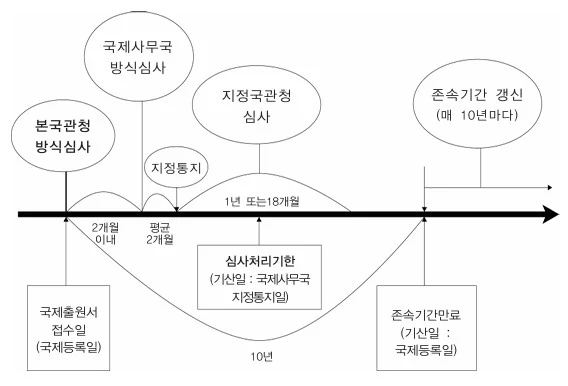
- The office of origin certifies and forwards the international application to WIPO. After formal examination and international registration, WIPO notifies the designated offices.
- Each Designated State shall be judged in accordance with its own laws and, if it finds grounds for refusal, shall notify the International Bureau within a notice period of one year or 18 months. If the grounds for refusal is not found, the international registered trademark is automatically protected.
- To claim priority, the Madrid application must be filed within six months of the qualifying earlier filing. One application can designate multiple jurisdictions.
Compare by Application Type
Comparing the two application methods we introduced earlier, this is the table below.
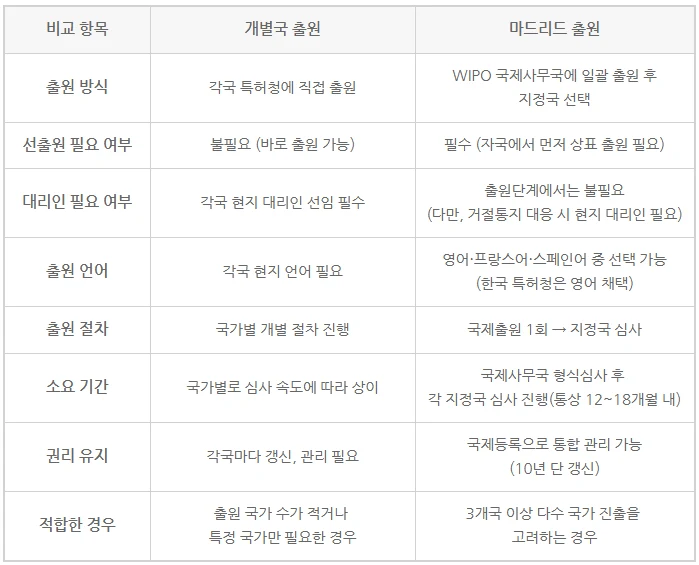
Generally speaking, applications under the Madrid System are cost-effective when they are specified in more than three countries.
Direct national applications may suit businesses without a basic application or registration, or those targeting few jurisdictions. The Madrid route may be advantageous when a qualifying basic mark exists and protection is sought in several member jurisdictions.
Advantages and limitations of the Madrid System
Advantages
- Application Process Simple: Single language, multiple countries available at a single fee
- Reduced costs: No local representation required without grounds for refusal
- Management convenience: Renewal, information change, transfer to one international registration number
- Subsequent designation: additional territories, including new members, may be designated later.
Cons
- Dependency (central attack risk): For five years from the international registration date, the international registration depends on the basic mark. A loss or restriction of the basic mark during this period can affect the international registration.
Review the stability of the basic mark before filing. An application can serve as the basis; waiting for registration is a strategic choice rather than an absolute requirement. - Additional costs: A provisional refusal may require appointment of a local representative and a separate response.
Overseas Application Support Project
The overseas trademark application fee consists largely of domestic agent fee, overseas agent fee, and official payment to the overseas patent office. These costs vary depending on the country of application and are generally higher than the domestic trademark filing costs.
Accordingly, governments and related organizations operate various support projects to support the company's overseas expansion and to reduce the cost of securing overseas rights.
By leveraging this support business, you can effectively reduce the cost of overseas applications.
This article reflects the information available when it was published. Contact us to discuss your circumstances.